…..maintains nothing of such Edict about Nigeria exists in any archive in the world
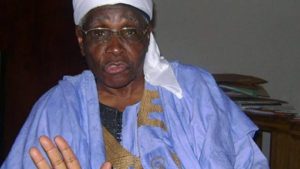
Caption: Major Gen Isola Williamsretd
Former Secretary of Transparency International,TI,Major General Isola Williams, has attacked former Vice chancellor of Ahmadu Bello University, Professor Ango Abdullahi over his claim that Nigeria has expired ten years ago in 1914.
According to the retired General,there nothing of such documentation of such treaty in any archive in the world about the time lag of the country’s continous existence when it was amalgamated in 1914.
Said he in an Interview with Newdwanngr.com,”He is talking crap.There is no documentation of any treaty in any archive in the world.
Professor Abdullahi in his contribution to a dialogue organised by Parliamentary Support Group in Kaduna last week had said that the treaty binding the country together in 1914 had a life span of 100 Years and this has expired in 2014.
Also Read:Lagos Task Force Seizes 344 Motor cycles in raids across the state ….vows to cripple their
NDLEA seizes 5640kg of drugs in six states
Webnar on Parliamentary Reforms in Nigeria: The Parliamentary System 1960-1966
The elder statesman noted:“Nigeria was born in 1914. It was a product of an Edict by the colonial officials that were largely military, in consultation with a few of our elders, about five or six of them. The Sultan of that period. The Shehu of Borno of that period. The Alaafin of Oyo of that period. Obong of Calabar of that period and other names that I have forgotten.
“They sat down and looked at development that was taking place in colonized areas of Lagos, Southern Nigeria and the North. So by 1914, the colonial masters in Britain wanted to solidify their gains so that they could more easily exploit the colony. That was how they sat down and agreed that they would amalgamate the territories of Lagos, South and North. And the wife of the governor general at that time, was the one that gave us our name, Nigeria.
“In the Edict, if you read it, it was clear that we were being encouraged from various backgrounds to come together and build a country called Nigeria. And our leaders at that time agreed that we will try. But we were advised in the details of the Edict that we should be monitoring progress over the years.. but the life of the edict was 100 years. Which meant that the Edict expired 2014, which is 100 years from its formation..
“The question now is that we are now in 2024, this kind of dialogue reminds us that we have a history that started In 1914, and in the conclusion of that Edict, it says if we failed to be a country that we will call our own, and are proud of our country, by the expiration of that period, the various components that were in that amalgamation discussion could go their separate ways.”
Abdullahi said the dialogue was one of the ways to chart a path forward for the country.
Earlier, the elder statesman stated that the adoption of the presidential system of government was a mistake. “This dialogue should really be as objective as passionate if possible to look at some of the things that we did wrongly. One of the things we did wrongly was to bring in a system that did not fit us. If we can, we should work on something. It must not necessarily be a typical parliamentary system from our former colonial masters, it could be something else.”
Speaking further,General Williams said Professor Abdullahi should not be taken serious about the claim adding,”Most Northern politrickians and the upper middle class do not take him serious.
It is the same with the Emirs.”
On the suggestion for a return to Parliamentary system,General Williams is of the opinion that “While pushing for parliamentary system we must look at the example of Canada and the welfare system of the Nordic Countries.
It will be recalled that the retired General Who left the Army as Director of Doctrine and Traning in 1993 in the wake of the annulment of the June 12,1993 presidential election,had few months ago canvasses same opinion at a Webnar in Parliamentary reforms in Nigeria organised by his body, Afstrag and the Parliamentary Support Group.