
By Omolara Akintoye

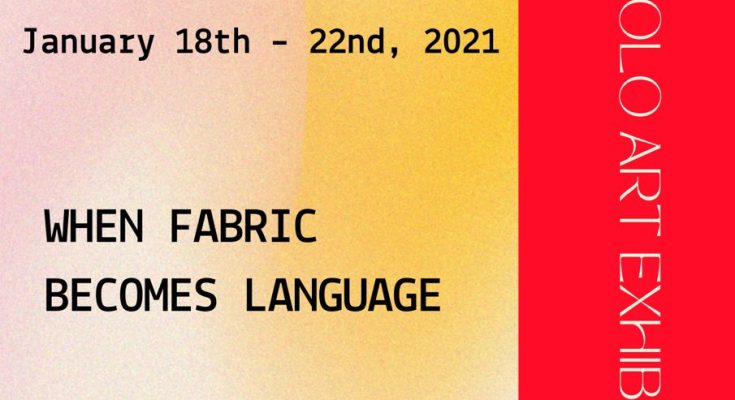
Circle Art Gallery will host ‘When Fabric Becomes Language’, a solo exhibition by Nigerian multidisciplinary visual artist Goodluck Jane, from January 18th to January 22nd, 2021, in Nairobi. The exhibition explores how textiles, particularly African Ankara fabrics, move beyond their traditional roles as clothing or decoration to become dynamic instruments of storytelling, memory, and cultural expression. Jane’s work blends painting, drawing, and mixed media to transform fabric into a visual language, where every pattern, fold, and texture carries meaning, emotion, and identity. Each piece reflects careful craftsmanship and conceptual depth, inviting audiences to engage closely with the material and to consider fabric as a medium that communicates complex narratives and human experiences. Through her compositions, Jane bridges traditional textile practices with contemporary artistic inquiry, offering viewers a thoughtful and immersive exploration of how material can articulate personal, communal, and cultural histories.
At the core of the exhibition is Jane’s sustained inquiry into the ways textiles carry layers of meaning, social significance, and emotional resonance. Fabrics are positioned as active participants in narrative, encoding ideas and memories that speak of ancestry, care, lineage, and community. Through repeated patterns, layered textures, and the interplay of color and form, Jane constructs compositions that function simultaneously as visual objects and conceptual narratives. The exhibition encourages viewers to slow down, observe the subtleties of each work, and consider how cloth, often associated with domesticity or ornamentation, can operate as a sophisticated medium for intellectual, emotional, and cultural expression. Jane challenges conventional perceptions of material, demonstrating that fabric is not inert but a living record of human experience capable of bridging past, present, and contemporary practice.
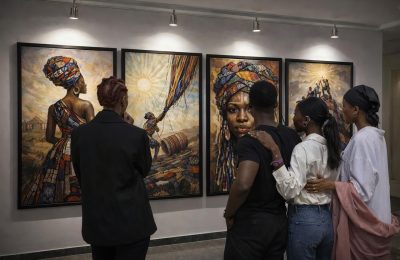
Goodluck Jane’s practice emphasizes the intersections of form, gesture, and symbolism. Many works situate the human figure alongside textiles, highlighting the dynamic relationships between identity, community, and material culture. By combining fabric with paint, paper, and other media, Jane constructs complex compositions that operate on multiple levels: aesthetic, conceptual, and emotional. Every element, from precision-cut patterns to layered surfaces, has been carefully considered to contribute to a larger narrative, ensuring that each work rewards both close inspection and broader contemplation. Through this method, Jane challenges traditional distinctions between craft and fine art, utility and narrative, revealing the extraordinary communicative potential of textiles when approached with both skill and imagination. Through her work, Jane demonstrates that material can be a storyteller, a vessel of memory, and a tool for cultural reflection.
The exhibition’s title, When Fabric Becomes Language, encapsulates Jane’s central artistic premise: textiles can speak. Through her compositions, fabrics do more than cover or decorate, they convey history, memory, care, and collective identity. Repetition, rhythm, and pattern operate like a visual syntax, giving fabric the power to articulate complex ideas and emotions. By presenting textiles as both medium and message, Jane invites audiences to reconsider materiality itself, recognize the eloquence inherent in fabric, and witness how contemporary African visual art can draw on tradition while engaging with modern conceptual frameworks.
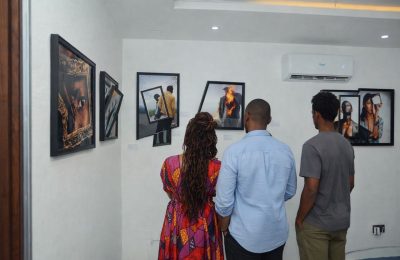
The exhibition is carefully curated to enhance the viewing experience. Works are displayed to allow visitors to appreciate both the tactile qualities and visual impact of Jane’s compositions. Spatial arrangements encourage deliberate movement through the gallery, creating moments of reflection where audiences can observe relationships between texture, color, form, and narrative. Lighting and placement are calibrated to highlight layering, depth, and subtle details, ensuring that viewers can engage fully with the material and conceptual richness of each piece. The gallery design becomes part of the dialogue, complementing the works while supporting an immersive and contemplative experience.
Jane’s artistic process combines technical expertise with conceptual depth. Her background in fashion design and early training in visual arts provide her with a keen understanding of pattern, texture, and material manipulation. These skills, combined with a thoughtful approach to narrative and symbolism, allow her to craft works that are simultaneously precise, expressive, and intellectually stimulating. Each piece embodies a careful balance of craft and concept, demonstrating that technical skill and conceptual rigor enhance one another.
Beyond the formal and aesthetic achievements of the exhibition, When Fabric Becomes Language engages broader conversations about culture, memory, and gender within contemporary African art. By centering textile as the primary medium, Jane emphasizes its historical and social significance while recontextualizing it within contemporary fine art practice. Audiences are encouraged to reflect on the ways materials traditionally associated with domesticity or ornamentation can serve as sophisticated vehicles for storytelling, critique, and cultural exploration. In doing so, the exhibition positions Jane’s work within ongoing discussions about the role of women in the arts, the value of tradition, and the potential for contemporary African artists to challenge and redefine artistic norms.
The exhibition offers audiences a rare opportunity to witness Goodluck Jane’s mastery in translating material into meaning. It is expected to attract artists, curators, students, collectors, and the general public, providing a platform for dialogue around heritage, identity, and contemporary practice. Visitors will encounter works that are visually striking, intellectually engaging, and emotionally resonant, prompting reflection on how fabric can communicate across time, geography, and personal experience.
When Fabric Becomes Language solidifies Goodluck Jane’s position as a leading figure in contemporary African textile-based visual art. Her work demonstrates the capacity of fabric to carry memory, convey narrative, and explore identity on personal, communal, and cultural levels. The exhibition is both a celebration of African textile tradition and a demonstration of how contemporary artists can transform everyday materials into sophisticated tools of expression and reflection. For audiences in Nairobi, it promises a transformative encounter with the possibilities of visual art and textile, highlighting the eloquence, rhythm, and narrative power inherent in fabric.