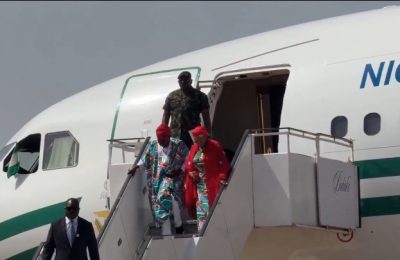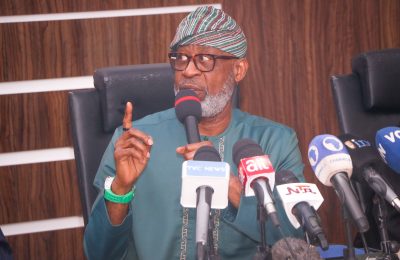

They are not new in politics. Neither are they new to the intrigues which has been their lot since they parted ways in 2023 having refused to step down for each other under the banner of the then leading opposition political party,the Peoples Democratic Party,PDP.
Besides,they have two goals in common- a desperate bid to rule Nigeria and satisfy their goal and perhaps the interest they represent.
As Nigeria inches towards another decisive presidential election, two familiar political figures, former Vice-President Atiku Abubakar and former Anambra State Governor Peter Obi, are once again at the centre of a struggle that could shape the country’s political future.
For both men, the 2027 presidential election represents more than another contest for power. It is a defining moment that could determine the ultimate fate of their presidential ambitions and their places in Nigeria’s political history.
They either make ut now or forget their burning ambition as they would’ve become too old to contest if the ruling party stayed on for another eight years.
Atiku, the veteran politician who has spent decades pursuing the nation’s highest office, is making another attempt to realise a long-held ambition. Obi, whose political movement attracted considerable attention during the 2023 election, is equally determined to convince Nigerians that he represents a credible alternative to the established political order.
However, their individual ambitions have created a significant challenge for the opposition. While both men seek to dislodge President Bola Ahmed Tinubu and the All Progressives Congress (APC), their inability to agree on a common political platform or a single presidential candidate threatens to divide the very constituency they need to defeat the incumbent.
With the presidential election scheduled for January 16, 2027, the battle between Atiku and Obi is increasingly becoming a contest of political strategy, electoral calculations, personal ambition and the difficult choices confronting Nigeria’s opposition.
Atiku’s Long Road to Aso Rock:
For Atiku Abubakar, the presidential ambition has been a defining feature of his political career.
The former vice-president served under President Olusegun Obasanjo between 1999 and 2007, a period during which he acquired considerable experience in national governance, party politics and the management of political alliances.
Since leaving office.
It will be recalled that Atiku never contested for the office but was drafted by then Presidential candidate of PDP, Olusegun Obasanjo,who wanted to compensate his former friend the late Shehu Yaradua ,who lost his life inside late military dictator,Sani Abacha.
Atiku had initially won Adamawa governorship election in 1999 before Obasanjo drafted him into the Vice Presdential ticket.
Since 1999,Atiku has remained a prominent figure in Nigeria’s opposition politics.
He contested the presidency in 2007, 2019 and 2023, but his efforts to secure the mandate of the Nigerian electorate have repeatedly ended in disappointment.
His 2023 presidential campaign, under the Peoples Democratic Party (PDP), culminated in a second-place finish behind Tinubu, while Obi finished third under the Labour Party.
Atiku’s latest bid, however, comes under a different political arrangement. He is contesting under the African Democratic Congress (ADC), with former Rivers State Governor Rotimi Amaechi as his running mate.
His candidacy reflects an attempt to assemble a broader political coalition capable of challenging the APC’s national reach.
Atiku’s supporters argue that his experience, extensive political network and familiarity with national institutions give him an advantage over less established contenders.
They believe he possesses the organisational capacity to bring together politicians and voting blocs across the country’s six geopolitical zones.
His experience in government also provides him with an opportunity to present himself as a candidate who understands the complexities of the Nigerian state.
Nevertheless, his repeated presidential attempts have raised questions about whether the country is ready for another administration led by a politician from an older generation.
For critics, Atiku’s greatest challenge is not simply defeating Tinubu but convincing Nigerians that his leadership would produce a meaningful departure from the political and economic arrangements that have shaped the country for decades.
At 79, the former vice-president is also confronting the reality that the 2027 election could represent one of his final realistic opportunities to fulfil his presidential ambition.
The stakes, therefore, are exceptionally high.
In the midst of this Atiku is facing corruption allegations from his former boss,Obasanjo who had repeated his regret for choosing him as his running citing official indictment from FBI while in office.
Of recent,Atiku was also indicted by the ICC over the Mambilla Power project on which Nigeria had wasted billions of naira without the project being executed.
The EFCC,the anti corruption body set up by Obasanjo had recently reopened investigation into his alleged corrupt practices.
This may be a potential threat to his attempt to ascend the rather elusive throne next year.
Obi and the Politics of a New Beginning:
Peter Obi enters the 2027 contest with a different political story.
Although he has been active in Nigerian politics for years, his emergence as a formidable presidential contender became particularly evident during the 2023 election.
Running under the Labour Party, Obi attracted considerable support among young Nigerians, professionals, urban voters and citizens dissatisfied with the country’s established political parties.
His campaign, which emphasised prudent management of public resources, investment in productive sectors, education, healthcare and improved governance, became a rallying point for Nigerians demanding a different political direction.
The movement popularly associated with the Obidient phenomenon demonstrated the potential of an electorate mobilised around a candidate outside the country’s traditional power structures.
Obi ultimately finished third in the 2023 presidential election. Nevertheless, the scale of his support established him as a significant national political figure and transformed the calculations of opposition politicians.
His supporters believe that the enthusiasm generated during that election remains an important political asset.
However, converting popular enthusiasm into a nationwide electoral organisation is a different challenge altogether.
This is tiresome because the LP,the platform he used them had become polarized into factions while he and his supporters have dissolved into three political parties-the ADC,LP faction and the NDC.
Presidential elections require more than an enthusiastic support base; they demand party structures, credible agents, effective mobilisation, coalition-building and the ability to compete across Nigeria’s diverse political landscape.
Obi’s decision to contest the 2027 election under the Nigeria Democratic Congress (NDC), with former Kano State Governor Rabiu Musa Kwankwaso as his running mate, represents an attempt to address some of these challenges.
The pairing brings together two politicians with distinct political constituencies and experience in different parts of the country.
For Obi, the alliance offers an opportunity to expand beyond the support base that powered his 2023 campaign. Whether it can translate that opportunity into sufficient votes to win the presidency remains an open question. This is because of the split of his former party,the LP into three factions and his leaving the sinking boat caused by his inability to hold the party together.
The Opposition’s Greatest Problem
The most consequential development in the emerging presidential contest may not be the rivalry between the APC and the opposition, but the disagreement among opposition leaders themselves.
Political consultations aimed at presenting a common candidate have continued, with different groups arguing that opposition unity is necessary to improve the chances of defeating Tinubu.
However, the negotiations have exposed competing interests and disagreements over who should lead such an arrangement.
Atiku’s supporters believe his political experience, national reach and electoral history make him a strong candidate for a united opposition.
Obi’s supporters, on the other hand, argue that the enthusiasm generated by the 2023 election demonstrates that he has a compelling claim to lead any credible opposition coalition.
Neither position can be dismissed without examining the electoral realities. Yet neither automatically guarantees victory.
Recent political developments have shown that the search for a common opposition candidate remains unresolved, with Atiku and Obi maintaining separate presidential platforms. Reports have also highlighted disagreements over the terms of a possible alliance and the willingness of candidates to withdraw in favour of one another.
This presents the opposition with a difficult strategic choice.
Should political leaders rally behind the candidate they consider most electable, even if that decision disappoints supporters of other contenders?
Or should they allow each candidate to contest independently and hope that the electorate will determine the strongest alternative to the ruling party?
The first option demands compromise, trust and a credible selection process.
The second allows political competition to continue but risks dividing voters who share a desire for a change of government.
Ultimately, the challenge is whether opposition leaders can place their collective electoral objectives above their individual presidential ambitions.
Who Has the Stronger Electoral Advantage?
Assessing the relative strength of Atiku and Obi requires looking beyond their public statements and campaign rhetoric.
Atiku’s principal advantage lies in his long-standing political relationships, experience in national elections and established networks across the country.
His partnership with Amaechi could also strengthen his campaign’s ability to engage political stakeholders in different regions. The effectiveness of that arrangement, however, will depend on whether its supporters can translate political endorsements into actual votes.
Obi’s strongest advantage is the political enthusiasm associated with his candidacy, particularly among voters who want greater accountability, a more productive economy and a departure from conventional political practices.
His partnership with Kwankwaso could expand his appeal in the North, although the extent to which their respective supporters will unite behind the ticket remains to be seen.
Both candidates, however, face the same fundamental challenge: popularity within particular constituencies must be converted into a sufficiently broad national coalition.
Nigeria’s presidential electoral system requires a candidate to secure the highest number of votes and satisfy the constitutionally prescribed geographical spread of support. A candidate who performs exceptionally well in selected states but fails to build adequate support across the federation may still fall short of victory.
Consequently, the contest will depend on several factors, including voter turnout, regional alliances, party organisation, campaign financing, public confidence and the ability to persuade undecided voters.
As for Obi,the a shifting interest of governors from four of his traditional south east base who had promised to work for Tinubu remains a significant threat as he may not be able to have as much vote as he had in 2023 in Anambra,Imo,Enugu and Ebonyi where Dave Umahi,the Works Minister under Tinubu hails from. He and Soludo are working round the clock to reduce Obi’s influence and get at least 25% of votes for Tinubu.
In reality,neither Atiku’s political experience nor Obi’s popular appeal should be mistaken for an assured electoral advantage.
Tinubu and the Incumbency Factor
While Atiku and Obi compete for the leadership of the opposition, Tinubu remains a formidable contender.
As the incumbent president and candidate of the APC, he has the advantage of leading an established political organisation with extensive structures across the country.
His administration’s economic reforms, however, have generated considerable debate. Questions surrounding the cost of living, inflation, employment, insecurity and the wider effects of economic restructuring have featured prominently in the campaign.
For the opposition, these issues provide an opportunity to challenge the government’s record and offer alternative policies.
Atiku for now,has emphasised economic management, private-sector participation and the need to improve the conditions necessary for investment and employment in his campaign.
Obi in the contrary has based his campaign on productive investment, accountability, education, healthcare and the efficient use of public resources.
But the series of controversial statements he has made of late by asking the Diaspora to stop sending money home,his statements on public and youth programmes like NELFUND, criticism of on going Lagos-Calabar Coastal highway may alienate his supporters who are beneficiaries of the projects especially millions of students beneficiary of NELFUND and residents of settlements and nine states along the Lagos-Calabar Coastal road may rob him of votes.
Politics is a game of numbers everywhere.
For the duo,their challenge is to move beyond criticism and explain, in practical terms, how their proposed policies would improve the lives of ordinary Nigerians.
For Tinubu, the central task will be to convince voters that his administration’s policies deserve more time and that the benefits will outweigh the difficulties experienced by households and businesses.
The election could therefore become a referendum on the government’s performance as well as a contest between competing visions for Nigeria’s future.
Age, Experience and the Question of Political Renewal
Another issue that could influence the contest is the debate over political generational change.
Atiku represents a generation of politicians whose careers developed through the country’s long transition from military rule to democratic government.
Obi, although also an experienced politician, has built much of his national political identity around calls for greater accountability, fiscal discipline and a departure from established political practices.
For some voters, Atiku’s experience represents an important advantage in a country facing serious economic and security challenges. But his inability to shed the alleged corrupt deals still hangs on his neck like the sword of Damocles.
For others, Obi’s message of political renewal offers a more compelling alternative.
However, experience and generational appeal are not sufficient measures of presidential competence.
The decisive questions concern the quality of leadership, the credibility of policy proposals, the ability to build effective institutions and the willingness to accept public accountability.
Both men must also confront scrutiny of their records, political alliances and proposed solutions to Nigeria’s challenges.
Ultimately, voters will have to decide whether continuity with familiar political structures or a different approach to leadership offers the better prospect for national progress.
The Last Battle?
For Atiku, the 2027 election carries the weight of a long political journey marked by repeated presidential contests and an enduring determination to lead Nigeria.
For Obi, it represents an opportunity to demonstrate that the political enthusiasm generated in 2023 can evolve into a sustainable electoral movement capable of winning national power.
As for Obi,his greatest challenge remains whether Kwakwanso his running mate can convert his immense popularity in at least Kano State and by extension the Hausa Fulani North West to vote for Obi considering their political behaviour in the past.
For both Obi and Atiku,they must get strong votes from either or both of South West and North West with traditional block voting pattern to emerge victorious.
But with Tinubus strong hold in South West,South South,and his strong penetration in the North West,North East and North Central,going into the election without a merger by both Atiku and Obi amounts to nothing.
Their rivalry, however, raises a question that neither man’s supporters can afford to ignore: can the opposition defeat an incumbent president if its leading figures remain divided?
A negotiated alliance could strengthen the opposition’s electoral position, but only if it is founded on a transparent process, a credible political agreement and a shared commitment to governance.
An arrangement designed merely to accommodate individual ambitions would be unlikely to inspire lasting public confidence.
Equally, an independent contest by both men would allow voters to choose between competing opposition platforms, but it could make the arithmetic of defeating the APC more complicated.
2027: Wike’s Rainbow Coalition, Tinubu’s deft moves.
Atiku: EFCC begins probe, reopens alleged corruption file
Makinde’s anti-South-West development stand
The consequences extend beyond the ambitions of the two candidates. Nigeria needs credible competition, meaningful policy debate and political parties capable of offering voters genuine choices.
The opposition must therefore demonstrate that its pursuit of power is matched by a willingness to address insecurity, economic hardship, unemployment, corruption, inadequate public services and declining public trust.
Beyond Personal Ambition
The ultimate significance of the Atiku-Obi contest lies in what it reveals about Nigerian democracy.
Presidential elections should not be reduced to a struggle between prominent individuals or competing political camps. They should provide an opportunity for citizens to assess the performance of those in power and determine which alternative offers the strongest prospects for national development.
Atiku and Obi both have substantial political followings, but neither can assume that previous electoral support will automatically translate into victory in 2027.
The electorate is changing, political loyalties are evolving, and the economic circumstances confronting Nigerian households will shape how candidates are judged.
For the opposition, unity may prove strategically valuable, but unity without a credible programme will not solve the country’s problems. Likewise, a candidate who commands a passionate following must demonstrate the capacity to build institutions, govern effectively and unite a diverse nation.
As the January 16, 2027 election approaches, the question is no longer simply whether Atiku or Obi possesses the stronger presidential ambition.
It is whether either man can assemble the political coalition, public confidence and governing vision required to win the presidency.
For Atiku, this could be the decisive chapter in a decades-long quest for Aso Rock.
For Obi, it could determine whether the promise of the 2023 political movement can be transformed into a successful national campaign.
But the final verdict belongs to the Nigerian electorate.
Their decision will determine not only the political fortunes of the two contenders but also the direction of the country for the next four years.
In the final analysis, the last battle for the presidency may be between Atiku and Obi, but the greater battle is for the confidence of Nigerians.