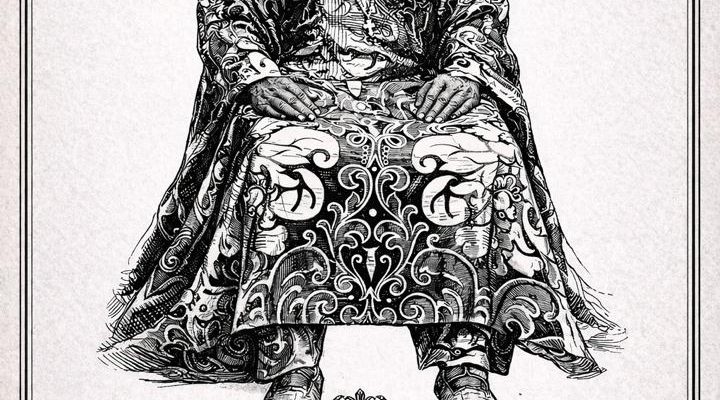

-A Tribute to Late Chief Daniel Olaniyan Olurin on the 50th Anniversary of His Passing — April 7, 1976
By Olusegun Oyero Olurin
The story of Late Chief Daniel Olaniyan Olurin cannot be told without first recalling a dramatic and little-known chapter of Ilaro’s history — a chapter written in courage, sacrifice, and survival.
In November 1891, his father, Olurin, was shot dead at Kerelodi in Ilaro during a violent clash between the people of the town and a notorious bandit group led by men known as Abudu and Kurakura from Abeokuta. The bandits had for long terrorized merchants and traders passing through the town. Determined to end the raids, the people of Ilaro confronted them. During the fierce encounter, the townspeople overpowered the raiders and killed their leader, Abudu, along with several others.
Those who escaped fled back to Abeokuta and traders returning from Abeokuta told the Olu that a larger and more heavily armed force would soon descend on Ilaro and burn the town to ashes.
Faced with the looming threat of war, the Olu of Ilaro at the time, Oba Olugbenle, quickly sent emissaries to the colonial governor in Lagos. The British authorities responded by dispatching a battalion of soldiers who stationed themselves at the outskirts of the town, hoisting the British flag at what is today known as Oke Oyinbo. That intervention effectively placed Ilaro under British protection and altered the course of its history.
For the young Daniel Olurin, then barely in his twenties, the violence was deeply personal. With his father gone and the town in turmoil, he and some of his siblings were taken to safety in Oke-Odan. When peace eventually returned, he came back to Ilaro determined to rebuild his life.
He began modestly, cultivating his late father’s land and engaging in hunting in the surrounding forests. His reputation for hunting dangerous animals — often venturing out at night — soon attracted the attention of European traders in Lagos who sought unskinned animal carcasses. These were shipped abroad, preserved through taxidermy, and sold in England. The young hunter soon found himself engaged in a profitable enterprise.
It was through this relationship that the Europeans introduced him to cocoa cultivation, carefully teaching him how to plant and nurture the crop. In those early days, cocoa required patience — it could take seven years before the first harvest. Many mocked him for planting what they called “strange flowers” that blossomed without yielding fruit. Yet he remained steadfast. When the cocoa finally matured, the harvest brought prosperity.
Also Read:
The Europeans also introduced him to investment opportunities and connected him with a financial adviser known as Pa Andrea, who helped him manage his growing income wisely. By 1939, he had acquired property on Tokunboh Street on Lagos Island. His ventures expanded further into the importation of drinking glasses and dining plates which were sold to merchants at Tom Jones in Lagos.
Among those who also helped guide his investments was an account clerk and money lender who later became the Olota of Ota, Oba T. T. Dada.
Yet beyond commerce, another transformation was taking place in his life — a spiritual awakening that would shape his greatest legacy.
The man who helped lead him into that new path was Reverend Canon Josiah Jesse Ransome-Kuti, the renowned “Singing Minister,” grandfather of the legendary Fela Anikulapo-Kuti and Nobel Laureate Professor Wole Soyinka. Reverend Ransome-Kuti converted Daniel Olurin to Christianity and personally taught him how to read and write.
From that moment, faith became the center of his life.
Balogun, as he was fondly called, became a devoted Christian and an active member of the Anglican Church in Ilaro, serving as both Evangelist and Catechist. His passion for evangelism led to the conversion of many people to Christianity.
However, in 1901, a dispute arose within the church regarding discriminatory wage payments between church workers in Lagos and those serving in Ilaro. Guided by principle and conviction, Daniel Olurin made a bold decision. One Sunday morning, he broke ranks with the Anglican Communion. Gathering palm fronds and sticks, he and his followers held their own church service along Owode Road, almost opposite the Post Office that same day.
Soon afterward, they contacted the African Church in Lagos, which responded by sending a Reverend to Ilaro. From that moment began a new chapter of evangelical expansion.
With tireless energy, he and his fellow believers spread the gospel across Egbado land, founding numerous village churches and strengthening the presence of the African Church in the region.
Also Read:FAO: A Tribute to a Coach of Steel and Conviction
His influence extended beyond the church. When the Olukogbon Ruling House, to which his mother Otegbeye belonged, was being sidelined in the traditional succession system of Ilaro, he joined the struggle for justice. After a long legal battle, the ruling house prevailed, and his uncle Ojobo was eventually crowned the Olu of Ilaro.
Despite his business success, he never lost sight of the importance of education. Encouraged again by Reverend Ransome-Kuti, he committed himself to educating his children — both boys and girls — believing that education was the surest way to sustain family legacy.
His children attended leading schools such as St. Gregory’s College, St. Finbarr’s College, Methodist Girls’ High School, and New Era Girls’ School in Lagos. With encouragement from the cocoa merchant company Roundtree, he eventually sent some of them to England for higher education.
Through cocoa farming, palm oil plantations, trading, and property investments, he built multiple streams of income — all driven by a clear purpose: to educate his children and support the spread of Christianity.
He also supported the vision of Chief Obafemi Awolowo, contributing financially to the early efforts of the Action Group, though he deliberately kept himself and his children away from partisan politics.
His spiritual life continued to deepen. In 1944, he sponsored other Christians who had traveled to the United States to learn about the experience of “Speaking in Tongues” and its teaching in Africa. That same year, he himself received the baptism of the Holy Spirit.
Balogun was known as a disciplined and principled man who had little patience for dishonesty or incompetence. Among his carefully preserved documents was a remarkable legal case in which he sued the British Government’s General Post Office for failing to deliver £100 he had sent to London. In October 1952, he won the case and the money was paid.
Throughout his life, he was known for diligence, integrity, and unwavering focus. He was not a man of social excess. Instead, he devoted his time to reading Christian literature, studying the Bible, and praying daily. His knowledge of scripture was extraordinary — he could quote passages effortlessly from memory.
His faith was not merely spoken; it was lived.
God blessed him both spiritually and materially. He was among the first people in the Western Region to purchase a brand-new automobile.
Yet perhaps the most touching memory of him lies not in his achievements but in a simple family tradition.
Despite his seriousness, discipline, and quiet demeanor, every Saturday evening he gathered his children together for “Tales by Moonlight.” Stories such as Itan Ijapa ati Aja filled the night air with imagination, laughter, and wisdom.
It was his way of passing down culture, values, and love.
And so today, fifty years after his passing, we remember not only the man he was, but the legacy he left behind.
As the scripture reminds us:
“A good man leaves an inheritance to his children’s children.” — Proverbs 13:22
By that measure, Late Chief Daniel Olaniyan Olurin was indeed a good man.