Nigeria’s Monetary Reset: How the CBN Earned Global Central Bank of the Year
In a world where central banks are judged by credibility, discipline, and the ability to restore order in turbulent markets, recognition is never given lightly. That is why the announcement that the Central Bank of Nigeria (CBN) has been named Global Central Bank of the Year at the 2026 Central Banking Awards in London is more than ceremonial applause. It is a powerful signal that Nigeria’s monetary reset is gaining international validation.
To understand the significance of this recognition, one must remember the state of Nigeria’s financial system when President Bola Ahmed Tinubu assumed office in May 2023.
The monetary environment was deeply distorted. The naira was trapped in a web of multiple exchange rate windows. Arbitrage had become a thriving industry. Investors were locked out by a backlog of about $7 billion in unmet foreign exchange obligations accumulated over several years. Confidence in the country’s monetary authority had thinned dangerously.
Nigeria was operating a central banking system that had drifted far from orthodox practice.
It was into this fragile environment that Olayemi Cardoso stepped in as Governor of the CBN in September 2023.
What followed was one of the most consequential policy resets in Nigeria’s modern economic history.
The first decisive move was the dismantling of the maze of foreign exchange windows that had created opacity and rent-seeking. Under Cardoso, the CBN moved to unify the exchange rate framework and introduced a transparent “willing buyer–willing seller” foreign exchange market. The reform restored price discovery and significantly reduced the distortions that had plagued the naira market for years.
Also Read:Tinubu nominates Yuguda as CBN Deputy Governor
Nigeria’s economy has been reset under Tinubu’s bold leadership -Edun
Cardoso seeks collaboration for stronger African credit system
Subsidy removal stabilised economy attracted $8bn energy investments – Cardoso
Equally critical was the decision to confront the backlog of foreign exchange obligations head-on. The CBN initiated a forensic audit of the claims with international consultants and discovered that about $2.4 billion of the supposed obligations were invalid, leaving legitimate commitments to be settled. Over the following months, billions of dollars in verified claims were paid down, including over $2.3 billion in early settlements and additional payments that eventually cleared the entire verified backlog.
This single action reopened Nigeria to international financial flows and signaled to global investors that the country was serious about honoring its commitments.
Confidence began to return.
External reserves improved, climbing above $34 billion in foreign reserves, while inflows strengthened and the gap between the official and parallel market exchange rates began to narrow.
What had once been a currency market defined by chaos gradually moved toward stability.
But the reform agenda did not stop at the currency market.
The CBN launched one of the most ambitious banking sector restructuring programmes in recent history through a sweeping bank recapitalisation policy. The objective is clear: prepare Nigeria’s financial institutions for a trillion-dollar economy by strengthening their capital base. Under the new framework announced in 2024, international commercial banks must raise their minimum capital base to ₦500 billion, national banks to ₦200 billion, and regional banks to ₦50 billion, triggering a new wave of consolidation and capital raising across the financial sector.
The recapitalisation drive is designed to create stronger banks capable of financing large-scale infrastructure, industrial expansion, and cross-border trade within Africa.
At the same time, the central bank began repositioning Nigeria’s rapidly expanding financial technology ecosystem. With regulatory reforms designed to strengthen digital payments, simplify cross-border transactions, and enhance oversight of emerging fintech operators, the CBN is laying the foundation for Nigeria to consolidate its position as Africa’s leading digital finance hub.
Another important shift has been the restoration of orthodox monetary discipline. Clearer policy communication, tighter liquidity management, and stronger regulatory supervision have begun rebuilding the institutional credibility of the central bank.

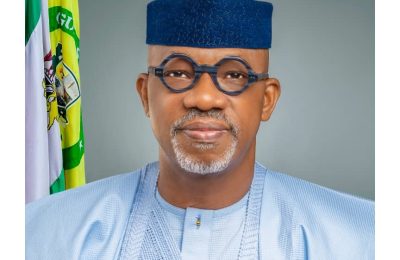
Dr Olayemi Cardoso,CBN, Governor
These monetary reforms have also complemented broader economic actions taken by the Tinubu administration, including fiscal adjustments and efforts to strengthen transparency in public finance institutions.
Taken together, the result is a gradual but unmistakable rebuilding of Nigeria’s economic credibility.
For years, the CBN had been viewed by many global observers as a central bank struggling with policy contradictions. Today, it is increasingly seen as an institution returning to discipline and strategic clarity.
The Central Bank of the Year Award therefore represents more than a symbolic honor. It reflects international recognition that Nigeria’s apex bank is once again aligning with the fundamental principles that define credible monetary institutions.
Economic transformation is rarely immediate. It is built through difficult decisions, policy consistency, and institutional courage.
But moments like this matter.
They tell the world that Nigeria’s monetary authorities are once again speaking the language of credibility, transparency, and discipline.
And in global finance, credibility is the one currency that never devalues