Caption: Pharmacist Adebola Lawal
A Consultant Clinical Pharmacist and CEO, Hugeworth Pharmacy, Pharmacist Adebola Lawal, has issued a petition to the Lagos State Government, warning that the ongoing inquest into the tragic death of Chimamanda’s son risks being fatally compromised and why pharmacists and nurses are excluded from the panel. He stated this among other issues in this interview with Omolara Akintoye
Why Pharmacists must be included
While commending Lagos State government’s decision to institute an inquest as commendable and reflective of its commitment to justice and accountability, Lawal cautioned that the credibility, depth, and usefulness of the panel’s findings would be fundamentally undermined if it remained dominated by a single professional group.
“Healthcare delivery is a multidisciplinary system, not a doctor-only enterprise,” Lawal stated. “Any inquiry that limits itself to one professional group, especially in a case where drug therapy, medication use, administration, monitoring, and clinical decision-making are central issues, risks becoming superficial, biased, and ultimately ineffective.”
Lawal stressed that pharmacists are the only professionals trained and licensed as end-to-end experts on medicines. Their expertise spans drug manufacturing and quality assurance, storage and distribution, prescribing appropriateness, dosing and interactions, administration safety, adverse drug reaction monitoring, pharmacovigilance, and medication error analysis.
He argued that any investigation involving possible medication-related harm cannot be complete without pharmacists. “To exclude them is to investigate drugs without drug experts,” he warned. “Such an exercise would amount to little or more than a procedural formality, producing conclusions that may lack scientific rigour and clinical truth.”
Nigeria’s healthcare system has suffered greatly from this culture, and the public is watching closely, he warned
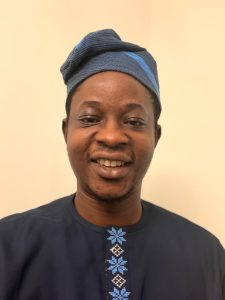
Lawal
Nurses’ Perspective Is Indispensable
The pharmacist also insisted that nurses must be included in the panel. He described nurses as the primary executors of bedside care, central to drug administration, patient monitoring, early detection of deterioration, escalation of care, and documentation of clinical events.
“Their perspective is indispensable in reconstructing timelines, understanding real-time clinical decisions, and identifying systemic failures that doctors alone may neither see nor admit,” Lawal said.
A Call For Transparency And Public Trust
Lawal emphasized that the inquest is not merely about one tragic death but a test of institutional integrity. He urged Lagos State to demonstrate that justice is not selective, cosmetic, or professional-group-centric.
He warned that an investigation excluding pharmacists and nurses would struggle to earn public confidence, and its recommendations, no matter how well written, may be dismissed as incomplete or compromised.
Justice must not only be done; it must be seen to be done, thoroughly, independently, and competently,” Lawal declared. “Anything short of this risks reducing the entire exercise to a symbolic ritual with no meaningful outcome for the bereaved family or the Nigerian healthcare system.”
Nigeria’s Healthcare Crisis: Why Pharmacists Can No Longer Be Ignored
In a broader critique of Nigeria’s healthcare system, the country cannot make meaningful progress while systematically sidelining pharmacists. He argued that diagnosis alone does not save lives; medication use does. When medication counselling, interaction checks, and handling are wrong, the entire effort of diagnosis becomes meaningless.
He highlighted Nigeria’s acute shortage of pharmacists, a crisis he said is being dangerously ignored by the leadership of the health sector. He accused the current Minister of Health of being unwilling to confront the issue, constrained by professional bias and self-interest as a physician rather than being guided by evidence-based health systems thinking.
Lawal cited real-world examples to underscore the dangers. In one case, a cardiologist co-prescribed clopidogrel with omeprazole. Both drugs are metabolised via the CYP2C19 enzyme pathway, but omeprazole inhibits the enzyme, significantly reducing the activation and effectiveness of clopidogrel. This interaction is well-documented and clinically significant. Had the prescription gone unchecked, the patient, already with a history of myocardial infarction, would have faced a high risk of another heart attack or sudden death. The fatal outcome was prevented only because a pharmacist intervened.
In another troubling incident, an insulin-dependent diabetic patient was handed insulin by an endocrinologist without meaningful counselling. The patient, acting in good faith, repeatedly refrigerated, and at times even froze, the insulin after opening it. This denatured the protein structure, rendering it ineffective. The patient’s blood glucose remained uncontrolled, and no one initially understood why. The missing link was pharmaceutical care. Insulin, once opened, must be stored at room temperature, not frozen. This basic drug-handling knowledge falls squarely within the expertise of pharmacists.
“These are not isolated incidents,” Lawal said. “They are symptoms of a broken system, a system that wrongly assumes that prescribing alone equals care.”
A Call for Presidential Action
Lawal urged President Bola Ahmed Tinubu to act decisively. He called for the current Minister of Health to be relieved of office and for the appointment of a competent, neutral health systems expert, preferably a health economist, without professional bias. Such a leader, he argued, would be capable of designing a truly multidisciplinary, patient-centred healthcare framework.
“Until pharmacists are fully integrated into clinical care, policy formulation, and health leadership, Nigeria will remain trapped in this avoidable quagmire, where preventable medication errors continue to cost innocent lives,” Lawal concluded.