
Toba Alabi. tobalabi@yahoo.com
1. Introduction
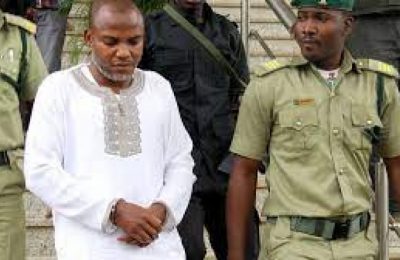
The sentencing of Nnamdi Kanu, leader of the Indigenous People of Biafra (IPOB), to life imprisonment marks a defining moment in Nigeria’s contemporary political history. This development intersects with longstanding ethnic grievances, the politics of self-determination, state security imperatives, and the controversial evolution of IPOB from a separatist movement to an organisation associated, rightly or wrongly, with violent crimes. Drawing from credible newspaper sources, human-rights reports, and scholarly analyses, this paper provides a comprehensive and critical examination of the historical foundations of IPOB, Kanu’s leadership trajectory, the legal and political dimensions of his arrest and trial, and the contested boundary between separatist agitation and violent criminality. The study argues that resolving the crisis in Nigeria’s South-East requires a nuanced approach that confronts both state excesses and extremist tendencies within the movement.
Separatist agitations have persisted in Nigeria since independence, with the South-East region carrying the emotional and political weight of the 1967, 1970 Civil War. IPOB’s emergence in 2012 marked the most forceful resurgence of the Biafra question in the post-war era. The 2025 judgment sentencing Nnamdi Kanu to life imprisonment on charges including terrorism and treasonable felony, reported by Associated Press (2025), The Guardian (2025), and Al Jazeera (2025), has triggered renewed debate about the legitimacy of separatist movements, the limits of state coercion, and the prospects for national integration.
At the centre of the debate is a critical tension: Are IPOB and its leader engaged in lawful political agitation, or have they crossed into violent criminality? This paper interrogates that question by situating IPOB within Nigeria’s political trajectory, analysing Kanu’s activities, and examining the legal and political implications of his trial.
2. Historical Evolution of IPOB
2.1 Origins and Early Development
IPOB was founded around 2012 as a diaspora-led organisation advocating for the re-establishment of Biafra. Chatham House (2017) identifies three key catalysts for IPOB’s rise:
1. The perception of Igbo political marginalisation
2. Unresolved post-war grievances
3. Increasing youth frustration over unemployment and insecurity
IPOB distinguished itself from earlier groups like the Movement for the Actualisation of the Sovereign State of Biafra (MASSOB) by its digital-savvy mobilisation and harder ideological tone. Radio Biafra, broadcasting from London, acted as the movement’s propaganda engine.
2.2 The State’s Response and the Radicalisation Thesis
The Nigerian government designated IPOB a terrorist organisation in September 2017, a proscription justified by authorities on grounds of “threats to national security” (Premium Times, 2025). Amnesty International (2025) chronicled episodes of excessive force by security agencies, including killings and enforced disappearances during crackdowns on peaceful processions.
This repressive environment, several analysts argue (Nimfel, 2022), contributed to the radicalisation of some factions within the movement, culminating in the establishment of the Eastern Security Network (ESN) in 2020.
3. Nnamdi Kanu’s Leadership and Involvement
3.1 Rise to Prominence
Nnamdi Kanu leveraged digital media, charismatic rhetoric, and ethnic sentiment to build a cult-like following. His broadcasts portrayed Nigeria as a failed colonial construct and urged the Igbo to embrace self-determination.
Supporters see him as:
A visionary for freedom
A defender of Igbo identity
A victim of state persecution
Critics, including several Nigerian officials and analysts, describe him as:
A polarising agitator
A promoter of ethnic hatred
The ideological catalyst for violence in the region
3.2 Arrests, Flight, and Rendition
Kanu was first arrested in 2015 for treasonable felony. After being granted bail in 2017, he fled Nigeria during a military operation. In 2021, he was intercepted abroad and brought back to Nigeria under circumstances Reuters described as “controversial” (Reuters, 2021). His supporters called it illegal rendition, while government officials insisted it was a lawful international arrest.
3.3 Influence Behind Bars
Despite detention, Kanu remained influential. Old recordings and alleged directives were repeatedly cited in court as evidence of his continued involvement in IPOB’s activities and in ESN’s alleged violent actions.
4. The Trial and Life Imprisonment Judgment
4.1 Charges and Prosecution
The Federal High Court trial charged Kanu with:
Operating a proscribed organisation
Conspiracy to commit treasonable felony
Coordinating terrorist activities
Inciting broadcasts and hate speech
Threats to public order
Reuters (2024) reported that the prosecution relied heavily on:
Radio Biafra recordings
Testimony from security agencies
Intelligence reports on ESN operations
4.2 Judgement and Sentencing
Reports from AP News (2025), The Guardian (2025), and Al Jazeera (2025) confirm that the court found Kanu guilty on terrorism-related charges and sentenced him to life imprisonment on 20 November 2025.
The presiding judge ruled that Kanu’s actions had gone “far beyond political agitation” and amounted to “coordinated subversion of the Nigerian state.”
4.3 Defence Arguments and Human-Rights Concerns
Kanu’s lawyers argued that:
IPOB’s agitation falls under international norms of self-determination
His speeches were selectively interpreted
Parts of the trial violated due process
Human Rights Watch (2024) expressed concern over:
Restricted access to legal counsel
The secrecy of certain proceedings
The broader pattern of military abuses in the region
The judgment thus remains highly contested.
5. Separatist Agitation or Criminality, The Core Debate
5.1 The Case for Separatist Agitation
Advocates argue that IPOB expresses legitimate grievances rooted in:
Perceived systematic exclusion from federal power structures
Economic underdevelopment in the South-East
Under-representation in security appointments
Historical memory of genocide during the Civil War
Many in the South-East interpret the Kanu trial as a political message rather than a legal process.
5.2 The Case for Criminality
The Nigerian government and several media investigations attribute violent acts to IPOB and ESN, including:
Attacks on police stations
Killing of security personnel
Enforced sit-at-home orders
Arson and public infrastructure destruction
Investigative reporting by Premium Times (2025) and AP News (2025) documents numerous incidents linked by authorities to IPOB or splinter elements, although IPOB frequently denies involvement.
Also Read:Nnamdi Kanu found guilty on seven count FG’s terrorism charge
Kanu sentenced to life imprisonment
5.3 The Problem of Attribution
One of the biggest analytical challenges is distinguishing:
Actions by IPOB
Actions by ESN
Actions by criminal groups exploiting chaos
False-flag operations
Amnesty International (2025) notes repeated instances where both state actors and armed groups obscured responsibility for violence.
Thus, the neat binary between political agitation and criminality collapses upon closer inspection.
6. The Political Economy of Separatist Violence
The South-East has become a zone where:
Political grievances
Criminal enterprises
Elite rivalries
Youth frustration
Diaspora funding
interact to produce a complex conflict environment.
6.1 Economic Dislocation and Youth Mobilisation
The frequent “sit-at-home” orders have caused billions of naira in economic losses. Criminal gangs capitalise on weakened state presence, while unemployed youths find identity and purpose in separatist activism.
6.2 Diaspora Influence
The diaspora’s emotional distance from local realities and their access to digital platforms fuel more radical narratives. Kanu’s broadcasts drew heavily from diaspora energy.
6.3 Security Sector Misconduct
Human-rights reports document:
Extrajudicial killings
Arbitrary arrests
Excessive use of force
These abuses deepen anti-state sentiment and legitimize IPOB in the eyes of local communities.
7. Critical Reflections
7.1 Legal Justice vs Political Justice
Even if the legal process is technically sound, its political implications can destabilise peace if grievances remain unaddressed.
7.2 Risks of Martyrdom
Kanu’s imprisonment may elevate him into a symbol of resistance. History suggests that persecuted separatist leaders often gain more legitimacy.
7.3 A Security-Only Strategy Is Unsustainable
Decades of militarised responses have not eliminated separatist sentiment. A multidimensional approach is essential.
7.4 The Need for Political Dialogue
Without dialogue:
The South-East may remain volatile
Criminal groups will continue exploiting the conflict
Youth radicalisation will deepen
8. Conclusion
The trial and sentencing of Nnamdi Kanu encapsulate Nigeria’s enduring struggle with federalism, ethnic relations, and nation-building. IPOB arose from real historical and structural grievances, but parts of the movement also became entangled in violent actions that complicated its legitimacy. The Nigerian state faces the dual challenge of asserting authority while addressing root causes of agitation.
A purely punitive approach will not resolve the crisis. Lasting peace requires political inclusion, justice sector reform, truth-telling about the Civil War, socioeconomic investment, and mechanisms for dialogue between the state and aggrieved communities. Only then can Nigeria move beyond the cycle of agitation, repression, and renewed conflict.
References
Al Jazeera. (2025, November 20). Nigeria jails separatist leader Nnamdi Kanu for life on “terrorism” charges.
Amnesty International. (2025). Nigeria, thousands killed, hundreds forcibly disappeared, two years of conflict in the South-East.
Associated Press. (2025, May 6). At least 30 dead in southeastern Nigeria attack, ESN suspected.
Associated Press. (2025, November 20). Nigerian court sentences separatist Nnamdi Kanu to life in prison on terrorism charges.
Chatham House. (2017). Calls for Biafran independence return to South-East Nigeria.
Human Rights Watch. (2024). World Report 2024: Nigeria.
Nimfel, C. E. (2022). Framing, separatist agitation and the Nigerian state. Social Science Studies.
Premium Times. (2025, October 20). IPOB linked atrocities, killings in Nigeria’s South-East, flashback.
Premium Times. (2025, November 21). South-East residents, IPOB react to Nnamdi Kanu’s life imprisonment.
Reuters. (2021, July 26). Nigeria fails to bring separatist leader Kanu to court, trial adjourned.
Reuters. (2024, March 19). Nigerian court denies separatist leader Kanu bail, orders trial.
The Guardian (UK). (2025, November 20). Biafran separatist leader sentenced to life on terrorism charges.
Toba Alabi is Professor of Political Science, Defence and Security Studies. (08036787582)
22 November, 2025.