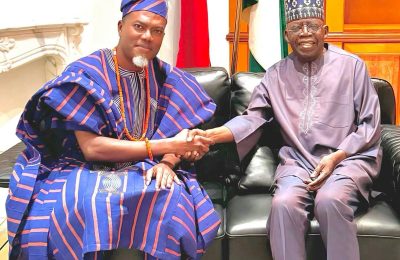
Reno Omokri
I have travelled to more countries than most Nigerians, probably more than any Nigerian, but I cannot be sure. At 96 countries, only a few of my countrymen can say they are more traveled than I am.
From my travels, I can confidently say that the most enduring culture in sub-Saharan is the Lukumi Yoruba culture. And why do I say that?
You would have seen me traverse the Americas if you follow me on social media. And everywhere you go, you find that Lukumi Yoruba culture has endured, whereas other traditions of enslaved people of non-Lukumi origins have not.
You probably watched my video in Cuba, where they arguably speak better Lukumi Yoruba than in Nigeria. In it, you saw me with the locals singing songs to various Orisas, including Yemoja, Sango, and the much-vilified and misunderstood Esu.
The thing is that other enslaved Africans were also taken to Cuba, Brazil, Trinidad and Tobago, Jamaica, Barbados, etc. But little or no traces of their culture endured till this day.
Why?
It boils down to the principle of cultural memory. What is that?
Cultural memory is the ability of a culture to gather memories from its past and infuse them into the present in a way that makes the memory fun and gets the buy-in of the living.
Among the Lukumi Yorubas, cultural memory takes the form of a practice called Oríkì, where griots in the community use poetry and oratory in the form of music to capture the exploits of each family in the community’s lineage.
It is a rhythmic flow of the great things that your family, village, and Lukumi Yoruba clan did and how they relate to you.
Along with the musical Oriki, there is another more esoteric principle. It is known as the O̩fò̩, where initiates in the community speak enchanting incantations that capture the mystical wisdom and essence of Oògùn (medicinal or war charms) and for invoking both malevolent and benevolent spiritual and elemental powers.
Now, between the Oriki and O̩fò̩, as well as the talking drum, which is an ancient means of mass communication, Lukumi Yoruba people were able to achieve documentary cultural memory (a document does not have to be in writing. It just has to be recordable in a format), which serves as a lighthouse for them wherever they are.
Another strong uniting cultural memory is that no matter what branch of the Lukumi Yoruba family you come from, you believe in one God, Eledumare, Olodumare (or Edumale in my Itsekiri language), and you practise divination to that one God through Ifa divination.
Non-Lukumi people often assume that Yorubas have many gods. This is not strictly true. There is only one Ori Tse (Head Creator), Olodumare, and 401 Orishas, like Obatala, Sango, Yemoja, Esu, Ogun, etc. The only living Orisha is always the incumbent Ooni of Ife.
Another way to describe it is that there is one God and many gods who are His children.
Because almost every household had its own Babalawo (Ifa priest), it was impossible to separate the Lukumi from their religion in the new world.
These collective cultural memories followed the Lukumi Yoruba wherever they went, enabling them to identify each other and communicate amongst themselves perpetually. That network ensured the survival and thriving of their culture.
Tribal marks were not as powerful in achieving this because they were so easily identifiable that the enslavers could and did ban them. That is why they were useless as a tool for cultural memory during the Trans-Atlantic Slave Trade.
Even today, whereas almost all Nigerian languages are in regression, with some, like Igbo, Ijaw, and many others projected by the United Nations Educational, Scientific and Cultural Organisation, as headed for extinction if nothing is done to reverse their regression, Lukumi Yoruba and Hausa stand out as languages that are expanding.
But while Hausa is expanding only within West Africa, Lukumi is expanding worldwide.
As a child, my late mother taught me an Itsekiri song that traced my ancestry back to Prince Iginuwa.
I thought the Itsekiri were the only Lukumi people who did this until I encountered someone giving an Oriki to a family during their daughter’s wedding. I was a teenager.
Now, imagine that I was born five hundred years ago, captured by Fulani slavers and taken to Badagry, where I was caught and put on a boat headed for Cuba along with 800 other enslaved people.
Due to being homesick, I started singing my Oriki. As I did that, every other Lukumi on that ship understood me and bonded with me. Right there and then, a community was created, with an understanding of each other and our past.
And once you have a community of people, that unity will create immunity from cultural erosion that will affect others on that slave ship, who, having no form of communication amongst themselves, will be forced to adopt their enslaver’s language as their communication vehicle. And once that is done, their culture begins to erode until it vanishes and is banished.
Sadly, most sub-Saharan African cultures still do not have a cultural memory.
If you meet a typical sub-Saharan African who is not tied to a culture that is rooted in Islam, like Hausa or Swahili, which means that they do not have a script like Hausa Ajami or Swahili Ajami and ask them details about their ancestry, it becomes very vague after their grandparents.
But not so the Lukumi. Because of their indigenous cultural memory.
Also Read:Are Yoruba Muslims truly marginalised?
For the Yoruba of Northern Nigeria
SW already lost their region to Okada invaders- Omokri
And it is still helping them today, such that when most other sub-Saharan Africans travel outside the African continent into Europe and America, they suffer from cultural erosion at a very rapid rate.
They are eager to ditch their native languages, names, fashion, and religion and blend with whatever culture they find themselves in. Sadly, we see this as progress.
However, the most widely spoken African language in the United Kingdom is Lukumi Yoruba. Assume I am lying, and fact-check me. Yoruba is so widespread that you are more likely to get a job with a Police Force, bank, or High-Street retailer in the Greater London Area if you are bilingual in English and Yoruba than if you just spoke English.
What is the point of all of this?
If other sub-Saharan African ethnicities do not find a way to achieve cultural memory, their culture will keep on breeding children who look down on their parent’s culture and proudly demonstrate their ability to speak a foreign language, best European names and generally behave as though they are anything but African.
Precisely the same thing that their ancestors who were enslaved did.
This modern-day slavery is self-imposed and more dangerous than the Trans-Atlantic Slave Trade.
Reno Omokri
Gospeller. Deep Thinker. #TableShaker. Ruffler of the Feathers of Obidents. #1 Bestselling author of Facts Versus Fiction: The True Story of the Jonathan Years. Hodophile. Hollywood Magazine Humanitarian of the Year, 2019. Business Insider Influencer of the Year 2022. 21st Most Talked About Person in Africa, 2024.