
…..also slapped restrictions on more than a dozen US firms
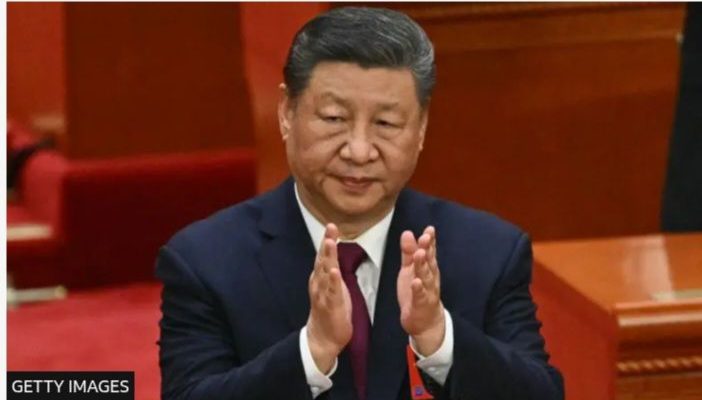
China has slapped retaliatory tariffs of 84% on all US imports, deepening a trade war between Beijing and Washington.
It comes as President Donald Trump had earlier put a 104% tariff on Chinese goods but later raised this to 125%, citing a lack of respect from China.
Trump had announced a 90-day pause on higher tariffs for dozens of countries, but increased levies on China to 125%.
Earlier this month the US president announced a “baseline” tariff of 10% on all countries, with higher rates for his so called “worst offenders.”
The US President said the higher rates will be paused for 90 days, and instead the “reciprocal tariff” will be 10% but that the rate for China will rise again to 125%, because of the lack of respect that China has shown to the world’s markets.
China raised the tariffs on all imported US goods to 84%, up from the 34% previously announced.
The trade war between the world’s two biggest economies shows no signs of slowing down. Beijing has vowed to “fight to the end” and Washington has also indicated that it will not back down.
Apart from tariffs, China has also slapped restrictions on more than a dozen US firms which, among other things, prohibit their executives from entering China or ban them from investing in the country.
White House Press Secretary Karoline Leavitt says the pause means a universal 10% tariff will be in place for all countries, other than China.
China has been planning really carefully for Donald Trump’s onslaught of tariffs and it has both short-term and long-term countermeasures in its arsenal, according to The Economist’s geopolitics editor David Rennie.
Beijing saw the signs as far back as Trump’s presidential campaign that he was going to target China, Rennie tells the BBC’s Newshour programme. Rennie was recently in the Chinese capital where he got to talk to Chinese officials and scholars.
“China likes to plan. It likes five-year plans. It finds it very hard to deal with this mercurial transactional American president,” he says.
“They’ve been preparing really carefully for a long time. They’ve have been doing short-term America-specific defensive kind of preparations and some longer-term attempts to reshape and rebalance their entire economy away from this incredibly high dependence on exports,” he adds.
Take the case of Chinese tariffs on soybeans from the US. Rennie says the levy targets Trump’s support base in the US mid-west and Beijing can get it from Brazil and Argentina.
The thinking in Beijing goes, “What can we target that is gonna hurt Trump voters and get Trump’s attention, and we can buy that from somewhere else,” Rennie says.
China has also filed another complaint with the World Trade Organization (WTO), accusing Trump of engaging in “bullying” tactics.
“Washington’s 50% tariff increase is a mistake on top of a mistake, highlighting the unilateral bullying nature of the US measures,” the commerce ministry said on Wednesday.
Beijing “will firmly safeguard its legitimate rights and interests in accordance with the WTO rules, and resolutely uphold the multilateral trading system and the international economic and trade order,” a spokesman said.