
By Udosen Precious Favour
Despite being an independent and democratic country, journalists in the country are still hindered from performing their duties through various laws and actions of security agents.
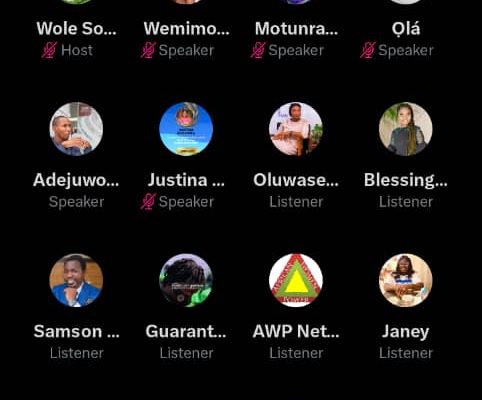
Journalists and other speakers shared their experiences and thought on the issue at a a virtual discussion on X spaces by the Wole Soyinka Centre for Investigative Journalism on the theme “Free nation; gagged press? Nation’s independence and state of press “ to mark Nigeria’s 64th Independence Day celebration.
Niger State Correspondent for The Nation Newspapers, Justina Asishana said the press in the country has not been as free to operate as it should be.
“ There are several Acts and laws that are coming up recently that are meant to prevent journalists and the media from holding government accountable.”
She spoke about security personnels arresting journalists for publishing certain content said to be offensive.
“ When reporting issues connected to insecurity like bandits and we go to security officials, they will tell us we cannot report everything. There is a limit to what you can report. Journalists are accused of being responsible for the increased rate of insecurity and accused of encouraging those involved in insecurity even when they are just reporting about the welfare of those affected by the insecurity.
“This has restricted reporting on terrorism activities and issues that should pop up about those who are affected by insecurity.”
Asishana also shared the experience of how she was sued for defamation and had a court case running for over two year.
“Laws are being used to silent reporters and when journalists are found guilty they are compelled to pay huge fines which affect the media industry and also affects the journalists.
“These laws affect and create challenging environment for press freedom in Nigeria and makes if difficult for journalists to navigate around laws when reporting certain issues especially in the North and South East.”
Regional Editor (West Africa) of The Conversation Africa, Adejuwon Soyinka highlighted the evolution of press freedom in the country since independence till date and recalled his recent experience on August 25th when he arrived from UK and was arrested at the Lagos International Airport by State Security Service said to be a case of mistaken identity.
During the military regime, he said he was arrested for carrying out an interview with military pensioners sleeping along Ikoyi while asking them why they were sleeping in tents by roadside.
He said he was interrupted by two men who introduced themselves as military personnels.
According to him, during the military era, there were rules against media of the press with the military applying force against the media.
Also Read:FG to integrate technology into education infrastructure – Shettima
Late journalist’s daughter wants father, colleague immortalised
The Desperation For Zukerberg’s Money
Lagos demolishes shanties on Coastal road, Maiyegun, Jakande,others
Bill to regulate surrogacy scales second reading in House of Reps
Our youths are protesting on the farms not on the street-Gov Ododo
Amotekun parades suspect for alleged possession of counterfeit currencies
“People got arrested for holding copies of magazines and journalists were arrested for reporting certain news.”
A legal practitioner, Inibehe Effiong, who noted that the role of the media and journalists in a civilized country cannot be over emphasized said when restrictions are imposed on media practitioners and organisations, it does not only affect their responsibility as journalists but it also adversely affects the progress and development of a country.
The Principal/lead counsel of Inibehe Effiong Chambers called for a renewed commitment by all concerned in fighting for a free press.
In her welcome address, the Executive Director of WSCIJ, Mrs Moturayo Alaka acknowledged the relationship democracy and journalism noting that “ Democracy creates a legal frame work for freedom of expression and other fundamental human rights and media diversity.”