
Says anything short of this will keep Nigeria under bondage
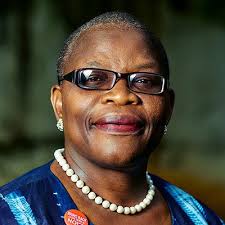
A former Minister of Education,Obiageli Ezekwesili has called for a meeting of the people of Nigeria in order to fashion out a system that could guarantee it’s continued existence.
According to her without doing this Nigeria will continue to move from one crisis of nation building to another.
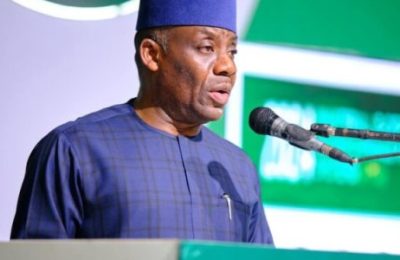
He spoke while delivering the 10th Pastor Enoch Adejare Adeboye Annual Lecture to mark his 82nd birthday at the Redemption City on Saturday.
The lecture is titled, Rebuild,Renew, Restore:”The Need of the Nigerian Nation”
>
Pastor E.A Adeboye Annual Public Lecture, 10th Edition
“Rebuild, Renew, Restore: The Need of the Nigerian Nation”
By Obiageli (Oby) Ezekwesili
Protocols.
Introduction:
1. Distinguished guests, esteemed members of the Redeemed Christian Church of God community, and fellow compatriots, I stand before you with profound honour to deliver the 10th edition of the my and your Daddy’s Annual Lecture- The Pastor E.A Adeboye Annual Public Lecture. I wish to express profound gratitude to our dearest Father – Pastor EA Adeboye- in whose honor this annual lecture is dedicated. I am grateful to the Organizing Committee members for the privilege accorded me to lead this year’s necessary conversation.
>
> 2. Daddy ADEBOYE’s life is marked by unwavering dedication to the positive development of our country and continent. I speak from a place of knowledge gathered over several decades of our father-daughter relationship during which time he would variously act as a Prophet Elijah or Elisha or Nathan to Presidents and other public leaders of our country only according as the Lord directed him for each season. I was in fact a daily witness to several years of Daddy acting in selfless dedication by calling and visiting President Obasanjo to speak truth to power without fear nor favor.
>
> 3. Daddy Adeboye has continued up until now to engage himself in matters of nation building from a spiritual perspective on the basis of his accountability to the Almighty God whom he is completely sold out to unto eternity. Some of his most powerful contributions to framing public discourse on how our country can achieve its manifest destiny have inspired his children far and wide. When Daddy speaks the word of scripture which itself states that “it is the spirit of God which gives illumination because the word of God through His messengers can only be discerned by the Spirit.
>
> 4. It was Apostle Paul who said, “I speak not in the enticing words of man’s wisdom…….” Each one of us who comes to God has their own tailored User-Journey. In my case, it took 1 CORINTHIANS 1:26-29 for me to fully comprehend the concept of the Sovereignty of God when Christ saved my soul in 1993.
>
> 5. For ye see your calling, brethren, how that not many wise men after the flesh, not many mighty, not many noble, are called: But God hath chosen the foolish things of the world to confound the wise; and God hath chosen the weak things of the world to confound the things which are mighty; And base things of the world, and things which are despised, hath God chosen, yea, and things which are not, to bring to nought things that are: That no flesh should glory in his presence.” Enough said.
>
> 6. Our conversation this year is framed as : “Rebuild, Renew, Restore: The Need of the Nigerian Nation.” I gladly take on the responsibility of leading our exploration of this theme, in honor of a distinguished son and friend of God whom those of us who truly know him not by the flesh but by the Spirit can testify is one of rarest selfless patriots that give our Lord no rest until He establishes Nigeria in all the earth. Daddy, your effectual, untiring and fervent prayer for Nigeria shall never be in vain in Jesus name. At the time appointed when your Daddy shall fulfill all His promises to you, concerning Nigeria, all shall consider together and declare that “only the hand of God could have done this” and then the whole earth shall bow at the feet of our Lord Jesus.
>
> 7. I have often found the Einstein quote on solving a problem fascinating. He said, “If I had an hour to solve a problem and my life depended on the solution, I would spend the first 55 minutes determining the proper question to ask… for once I know the proper question, I could solve the problem in less than five minutes”. I have a number of such questions arising from the topic of our focus:
>
>
> 8. What as the basic meanings of Rebuild, Restore and Renew? What inference can we draw from the topic regarding Nigeria in relation to the necessity for a rebuilding, restoration and renewal? Is Nigeria a Country or Nation and does it really matter which one it is? How is the “Need” of a People determined? Is the Need of the Nigerian People to Rebuild, Restore and Renew their Country? If our Need is to Rebuild, Restore and Renew Nigeria, who takes Responsibility for it at a time like this? Are there biblical and contemporary examples of Rebuilding, Restoration and Renewal Agenda to learn from?
>
> 9. First the basic definitions. The pre-fix Re simply means back or again. Fundamentally therefore, all three key words of our topic suggest building back or building again, returning again to what used to be and making new or remaking. What then does it mean to Rebuild, Restore or Renew in relation to Nigeria. To Rebuild is to build something again that has been damaged or destroyed. It implies a return to what used to be before a damage happened. It means to repair or renew a thing to its original state. Hence to rebuild Nigeria is to return it to a certain satisfactory state that once existed before it fell into disrepair or disarray or disorder.
>
> 10. To Restore Nigeria means to try to return it to the good situation in which it was before an unpleasant event happened to it. To Restore is to put or bring back into existence or use; to bring back to or put back into a former or original state. To restore Nigeria is to choose whatever once existed but now gone and bring it back.
>
> 11. To Renew is to resume (an activity) after an interruption, to increase the life of or replace something old: to begin doing something again or with increased strength. To renew Nigeria is to take a thing and give it a fresh impetus- extension via a new life.
>
> 12. Now which of these pre-fixed actions – rebuild, restore and renew- strikes us as potently transformative enough to take Nigeria to an expected end? And what really are the endgame of the rebuilding, restoring and renewing actions? Are they ends in themselves or means to an end? Can the people of Nigeria achieve a consensus state of affairs by which the country functions well for everyone through the triple-R agenda?
>
> 13. As one who believes that Nigeria has consistently and considerably batted below its possibilities, with a humble request for the understanding and indulgence of the framers of this topic, I wish to immediately posit that any action which merely returns Nigeria to a previous state in its checkered history underserves the need of the Nigerian people in our 21st Century world. I believe that a Rebuilding, Restoration and Renewal Agenda will be rather underwhelming for a country that has since passed the rubicon of destabilization and is now closer to a failed country status than mere fragility.
> 14. In situating performance of Nigeria clearly, I have often found comparison with Indonesia extremely revealing. Nigeria and Indonesia uncannily have several similarities- historically both colonized by Britain, politically both had military coups and dictatorships, religious diversity and economically are resource endowed and so forth. Population of Indonesia 275 million and Nigeria 218 million. You will make 57.0% less money in Nigeria Indonesia has a GDP per capita of $5509 as of 2020, while in Nigeria, the GDP per capita is $2207 as of 2020. You will be 4.3 times more likely to live below the poverty line . In Indonesia, 9.4% live below the poverty line as of 2019. In Nigeria, however, that number is 40.1% as of 2018. You’ll live 11.8 years less in Nigeria than in Indonesia. Why? In Indonesia, the average life expectancy is 73 years ( as of 2022. In Nigeria, that number is 55 years. You will be 5.2 times more likely to die during childbirth In Indonesia, approximately 177.0 women per 100,000 births die during labor as of 2017. In Nigeria, 917.0 women do as of 2017. You will be be 35.4% less likely to be literate In Indonesia, the literacy rate is 96.0% as of 2020. In Nigeria, it is 62.0% as of 2018. You will be 2.9 times more likely to die during infancy In Indonesia, approximately 19.7 children (per 1,000 live births) die before they reach the age of one as of 2022. In Nigeria, on the other hand, 56.7 children do as of 2022. You’ll be 37.4% less likely to have access to electricity than in Nigeria In Indonesia, approximately 99% of people have electricity access (100% in urban areas, and 99% in rural areas) as of 2019. In Nigeria, that number is 62% of people on average (91% in urban areas, and 30% in rural areas) as of 2019.bYou will be 3.1 times more likely to be unemployed
> In Indonesia, 5.3% of adults are unemployed as of 2018. In Nigeria, that number is 16.5% as of 2017. You will be 4.3 times more likely to live below the poverty line In Indonesia, 9.4% live below the poverty line as of 2019. In Nigeria, however, that number is 40.1% as of 2018.
> We have no tenable excuses for lagging behind even countries like Indonesia.
>
>
> 14. Our topic when paraphrased reads as “What Nigeria Needs, is to be Rebuilt, Restored and Renewed” and implies there was once a state of affairs that was acceptable but which got lost due to unfair or unfortunate circumstances.
> But was that really the case? Fair enough, but was there ever such a desirable state? Can we sincerely argue that there was ever a status quo ante period in the history of Nigeria that was ideal and desirable enough for us to find our way back to? When was that? And even if it ever were as some would say, during the first and second Republic and before the first coup in 1966, can what we were then be adequately regained by rebuilding, restoring and renewing the country?
>
> 15. We must scrutinize our present quest lest we allowed the luxury of a rose-tinted retrospective of history to hurt and limit our chances for redeeming the time wasted in mediocrity all these decades. It is only by confronting uncomfortable truths that we can do all that is necessary to achieve more, be more and faster too for the sake of our present and future generations. In this speech I make the strong case for Values, Effective Leadership recruitment for the right quality of public decisions, Structural Accuracy for delivering governance effectively and Constitutional standards.
>
> 16. On the bases of all these factors, I take the firm position that what Nigeria needs in its present state is to be BUILT (not REbuilt ). To be built means that Nigeria must begin again at the foundational level. What an opportunity it is to no longer pretend that we can tinker with marginal changes here and there to steady and reposition Nigeria for her greatness. No, peripheral and cosmetic tokenism measures will not build us a nation. We must prepare to first to imagine, second, design and then third, mobilize all the resources necessary to fourth, build a New Nigeria and 5, continuously monitor the nation we are building so that it reaches to be a globally productive, competitive, prosperous, resilient, equitable, just, fair, inclusive and sustainable country.
>
>
> 17. We must therefore intelligently collaborate to design a bold Citizen’s Emergency Rescue Plan Nigeria — our country. Note that I said, Country and not Nation as used by the organizers of this Lecture to frame the topic of our discourse. There is a long walk from being a country to becoming a nation especially in territories with complex diversities like Nigeria. That long walk has become a responsibility that all Nigerians of goodwill can no longer dodge or outsource to a few of their fellow citizens. The opportunity of the Citizens’ rescue action is that it grows into the opportunity for building nation formations. There is a “long walk to freedom” that beckons on all of us who still believe that Nigeria is worth salvaging and it is by it that a nation begins to emerge through those shared experiences, values and aspirations that are discussed.
>
> 18. In my conclusions I talk extensively about Nation Formations but I have a reason to keep them on your radars early on. The critical nation formations which should now be well negotiated through the Citizens Emergency Rescue Plan for Nigeria are in two blocks as I see them:
>
> Block One- The People
> 1. A set of Shared Values of the Nigerian People
> 2. A Rallying Vision of the People of Nigeria
> 3. An Agreed Common Identity which everyone respects and values.
> 4. A Public Leadership Recruitment System for High Quality of Leadership Decisions.
>
> Block Two- The Structures
> 1. A Deep Restructuring Arrangement to agree and design the most appropriate model of Federal System that matches structure with function for the most effective delivery of mandates. A fundamental devolution of power to States as the key federating units thereby reducing the list of items in the Exclusive List as Mandates for the Federal Government.
> 2. Institutions building Agenda
> 3. A New Constitution adopted through a Yes or No Referendum on its provisions.
> 4. A transparent and credible electoral system that deepens our Democracy, efficiently conducts elections so that it regulates and penalizes poor public leadership delivery by politicians to citizens by their power to vote.
> 5. When these nation formations are firmly set up through the active engagement by the Coalition of the Willing, what next is likely to follow? Yes, Nigeria has some of bright spots in its history and they are evident in our globally acclaimed individual drive, creativity, innovativeness, resilience and overall world class potential of a people who tend to excel whenever provided the enablers of success. The Political trajectory of Nigeria much like her entire history has however regrettably remained checkered despite all the spots of brightness that our individual citizens have displayed in the professions, technology, healthcare, entrepreneurship, industry, entertainment, sports and the arts especially in other climes. Nigerians are celebrated for numerous individual achievements but collectively derided for failure to translate all those to collective responsibility for fulfilling the great expectations the world has long wanted for us especially even our sister countries in Africa.
>
> 9. In the book, This House has Fallen by Karl Maire, wrote: When the British lowered the Union Jack and freed a land they had ruled for less than a century, Nigeria was the focus of great optimism as a powerful emerging nation that would be a showcase for democratic government. With the benefit of hindsight, it is clear that such optimism was naive.” Sadly many Nigerians align with this sentiment today and consider Maire to have been prescient because they have watched their own personal optimism for their country frittered away by irresponsible leadership failures to build a nation over the decades and years after independence.
>
> 10. I quote Prime Minister Tafawa Balewa : “Today is Independence Day. The first of October 1960 is a date to which for two years, Nigeria has been eagerly looking forward. At last, our great day has arrived, and Nigeria is now indeed an independent Sovereign nation. Words cannot adequately express my joy and pride at being the Nigerian citizen privileged to accept from Her Royal Highness these Constitutional Instruments which are the symbols of Nigeria’s Independence. It is a unique privilege which I shall remember forever, and it gives me strength and courage as I dedicate my life to the service of our country. This is a wonderful day, and it is all the more wonderful because we have awaited it with increasing impatience, compelled to watch one country after another overtaking us on the road when we had so nearly reached our goal. But now, we have acquired our rightful status, and I feel sure that history will show that the building of our nation proceeded at the wisest pace: it has been thorough, and Nigeria now stands well-built upon firm foundations.” These were the very gushing and giddy words of the first Prime Minister of Nigeria Alhaji Sir Abubakar Tafawa Balewa on October 1, 1960.
>
> 21. There are some known foundational imperatives which help to close the gap that naturally persists among a people of multiple diversity artificially constructed into a common territory by a third party. Such nation formations support the transition from between the time they become an independent country to when the diverse people start to transform into a nation. Our nationalists’ first foundational mistake was to conflate the attainment of independence by the country known as Nigeria as equivalent to its emergence as a nation. They therefore missed out on some foundational imperatives that continue to haunt the Nigerian Union unto this day.
>
> 22. It is significant and instructive that our Bible says in “Psalm 11v3- If the foundations are destroyed what will the righteous do?” I think the answer to that is what Daddy Adeboye was recently alluding to when he said that Nigeria’s problems require spiritual intervention because those who have done everything humanly possible have not succeeded. Upon hearing this rather sobering message from our spiritual father, I wanted to know more deeply how God perceives the state of our country. I found the similarity in two biblical stories. One is the allegory that involved God, Prophet Ezekiel and the Valley of the Dry Bones in Ezekiel Chapter 37. The second is the story of the Men of Jericho and Elisha in the healing of the water of Jericho in 2Kings6. In both lessons, God and man collaboratively turned around two extremely disastrous situations.
>
>
> 23. Without a strong transition from country to nation, the first collapse of Nigeria was bound to happen in 1966. That foundational collapse was followed by a counter coup in 1967, a civil war from 1967 to 1970 and military rules from then with multiple coups in between until the second Republic in 1979 which was aborted by another coup less than 8 months into the second term in 1983. The annulled 1993 election followed after the 10-year run by the military dictatorships and it was not until 1999 that the country returned to democratic government. In all this time- whether military of democracy- Governance failed to deliver the benefits of governance to the people who watched on as government became distorted into becoming a place for easy access to wealth through the practice of endemic corruption by public officials.
>
> 24. It was not surprising that shortly after the novelty of our political independence wore off the troubling underbelly of our nascent democracy was revealed in the rather prescient reading of the situation at that time by the Central Intelligence Agency of the United States in one of its memorandum of 1966. The CIA report reads “Africa’s most populous country (population estimated at 48 million) is in the throes of a highly complex internal crisis rooted in its artificial origin as a British dependency containing over 250 diverse and often antagonistic tribal groups. The present crisis started” with Nigerian independence in 1960, but the federated parliament hid “serious internal strains. It has been in an acute stage since last January when a military coup d’état destroyed the constitutional regime bequeathed by the British and upset the underlying tribal and regional power relationships. At stake now are the most fundamental questions which can be raised about a country, beginning with whether it will survive as a single viable entity. The situation is uncertain, with Nigeria,……is sliding downhill faster and faster, with less and less chance unity and stability. Unless present army leaders and contending tribal elements soon reach agreement on a new basis for association and take some effective measures to halt a seriously deteriorating security situation, there will be increasing internal turmoil, possibly including civil war”.
>
> 25. Can two walk together except they be agreed? Amos 3v4. This scripture provides deep insight as to why nothing significant has so far changed as far as the inter-ethnic- regional-religious rivalry and wars and inherited differences and grievances have remained the same and worsening among the younger generation of Nigerians. A country is a physical and social can be an entirely artificial construct except for homogeneous societies but for diverse societies, moving from a mere country to nation. The power of unity is the heart of emergence of countries into nations.
>
> 26. Had the 1966 date not been included in the intelligence report written fifty eight years ago, anyone would be correct to assume it pertains to Nigeria’s current circumstance. The failure to graduate from “conflict drivers” over six decades of being bound in one territory does painfully validate the now prevalent view that we did not transition out of “conflict triggers” because our Founding Nationalists failed to fully discuss, negotiate and agree them as part of or better still, after their unified fight for political independence from Britain. The only group that has cleverly designed and found the use of power of unity to further their selfish and narrow interests are the political class. Meanwhile citizens who should be on one side united in common purposes are constantly stoked to fight .
>
> 27. Nigeria therefore has not yet laid a firm foundation for becoming a nation. It remains a mere country which even now wobbles to retain the global definition of a country. I consider this the incontrovertible reason why just rebuilding, restoring and I renewing will only return the country to a state of inadequate nation formations and without national identity- a sense of being one, countries struggle to build the consensus that is mandatory for mobilizing society to action. Absence of these imperatives countries eventually crumble as Nigeria have experienced in the previous episodes of failures. moment. The UK Economist Magazine wrote during the 2023 elections that “Nigerian politicians have long won power by stoking divisions along the lines of religion, ethnicity and regional affiliation. But increasingly such splits are turning deadly.”
>
> 29. It is time for the cheated citizens of Nigeria who have borne the consequences of the sophistry of the political class to collectively call for a national meeting between them and their political and public leaders whose actions have similarly undermined the people regardless of their region, religion, language, ethnicity, age and gender. It is time for collective action success. It is time for the kind of tough and candid talk that Nigeria’s leadership class have been avoiding and evading since after independence. That talk will assuredly happen whether we like it or not. There is a Generation of Nigerians who are already asking for this talk. It is better to be deliberate in designing such talks and have it start with acceptance of the necessity for such conversations by all.
>
>
> 30. Leadership matters. As we learned in the era of the Biblical Ezra and Nehemiah, the task of acting in a time of national disaster and discontent first falls on the leaders – more commonly described as the elite of society- to take the initiative and exercise the responsibility of mobilizing the right and relevant action. So who are the “elite class” in the case of Nigeria? These are people who by basic attainment of a loosely defined status are educated or informed and earn a certain band of income. Elite class exercise material influence in politics and nation building. They dominate the political and public service and where that group is expanded, would include the business, religious and other groups of elite in our country.
>
> 31. The abysmal state of affairs of our beloved country Nigeria requires the courageous act of this group loosely called the “political “ or “elite class” to care about delivering Good Governance. However, if we asked all our citizens to “shine their eyes” so they can see with clarity- and not ethnic, religious or language tinted lenses- what do you think will be the near unanimous response of Nigerians today on their belief in political and public leadership class to act with the right quality of decisions for the rescue the country? I think it would be that neither the political nor public services class nor the members of regulatory institutions like the judiciary have the intrinsic incentive to course correct the breaches that destroy our country.
>
> 32. We cannot solve a structural problem with a band aid. All structural problems must be solved with structural solutions. When the military struck in 1966 and abrogated the Federal System of government negotiated by the Nationalists, it centralized governance and laid the basis for the dysfunctional state of governance which we all have to be ready restructure for effective performance. Correcting the foundations of our country should therefore be sine quo non for all nation-builders. It is this process that will ultimately lead to the building of a Nigerian nation beyond a country.
>
> 33. The Elite of every successful society always form the nucleus of citizens with the prerequisite education, ethics and capabilities operating in the political sphere and the public service, providing the great ideas to build the nation and possessing the moral rectitude to always act in the public interest. Access to quality Education ensures that the elite group evolves constantly in every society. For as long as nations have public education systems that function, the poorest of their citizens is guaranteed to move up the ladder and someday emerge as a member of the elite class through academic hard work, strenuous effort and ultimate success at the higher levels of education.
>
> 34. For every society that has succeeded therefore, it has taken such progressively evolving elite class to identify the problems, forge the political systems and processes, soundly articulate a rallying vision and use sound Policies and effective and efficient prioritisation of investments (both public and private) and requisite actions to over time build those strong institutions that outlive the best of charismatic and transformative individuals. But it always does start with quality leadership in the public space investing in a sustained manner for lasting institutions to eventually emerge over time. Institutions do not just happen. In the same manner, nations do not just happen from out of multi-ethnic countries. It does take a deliberate process and prioritization of the value nationhood brings over and above a mere country.
>
> 35. What was characteristic of the last ten years? It has been a period in which very tragic political and socioeconomic policy choices and decisions have emanated from poor quality leadership. We must be ready to call poor leadership for what it is whenever we see it in our polity for the harm it does. This impunity of action by Nigeria’s political class took root gradually “while men slept”. The difference between the governance outcome produced by public leadership of Indonesia and Nigeria is instructive considering how historically, politically, religiously, economically and socially similar both countries are. Whereas the former takes the matter of producing good governance results seriously even within a climate of military dictatorship and fledgling democracy due to the modicum of respect they have for meeting their people’s expectations, the latter feel no such obligation.
>
> 36. The consequence is that the members of Nigeria’s political class are currently laying the stage for the severest economic and social crisis ever experienced in the country while denying responsibility the problem and invalidating the suffering of their citizens. The current nationwide crisis of biting hunger due to skyrocketing cost of living is a major destabilizing factor because it will further compounds the insecurity and instability risks of a brittle country but nothing in the language and conduct of Nigeria’s political class shows they recognize the state of affairs in the land.
>
> 37. Any keen policy scholar observing the policy tools of the incumbent political Party will easily see how the preceding and current administrations unraveled the relative macroeconomic stability it inherited in 2015. Instead, Nigeria grapples with runaway rate of inflation, Naira exchange rate volatility, expansion in grand and petty corruption and overall poor governance coupled with worsening insecurity and internal conflicts as well as the erosion of social contract, cohesion and capital. Typically, the existence of all these can accurately predict a precipitous slide if not deliberately arrested.
>
>
> 38. The current administration does appear by evidence of incoherent policy measures to have lost control. A series of poor quality of policies bad timing and incoherent sequencing of governance decisions have unleashed unbearable, biting effect on the Nigerian people. Publicly available information on monetary and fiscal data and general situation of the country show that the distress will not abate until a comprehensive macroeconomic consolidation program is launched to restore stability and confidence in the Nigerian economy. The country cannot continue on the current path without digging into a hole.
>
> 39. The center is weakening speedily and may no longer hold without a swift launch of what I suggest should be called a Citizens’ Emergency Rescue Plan for Nigeria” to be midwifed by a “Coalition of the Willing” made up of compatriots from across all regions, religions, languages, ethnicities, genders, ages and such like in our Land. But first, the Coalition of the Willing must be unified in purpose first in order to successfully persuade our Nigerian people – across the length and breadth of this land- to unite and collectively stand on one side to ask for the meeting on their Plan to rescue Nigeria. It is time to collectively confront the evident impact on the serial failures, selfishness, unwillingness, incompetence, unsuitability and inadequacy of our brand of “political class” who eat breakfast in the morning while their children are starving.
>
> 40. We must therefore intelligently collaborate to design a bold Citizen’s Emergency Rescue Plan Nigeria — our country. Note that I said, Country and not Nation as used by the organizers of this Lecture to frame the topic of our discourse. There is a long walk from being a country to becoming a nation especially in territories with complex diversities like Nigeria. That long walk has become a responsibility that all Nigerians of goodwill can no longer dodge or outsource to a few of their fellow citizens. The opportunity of the Citizens’ rescue action is that it grows into the opportunity for building nation formations. There is a “long walk to freedom” that beckons on all of us who still believe that Nigeria is worth salvaging and it is by it that a nation begins to emerge through those shared experiences, values and aspirations that are discussed.
>
> 41. The critical nation formations which should now be well negotiated through the Citizens Emergency Rescue Plan for Nigeria are in two blocks as I see them:
>
> Block One- The People
> 1. A set of Shared Values of the Nigerian People
> 2. A Rallying Vision of the People of Nigeria
> 3. An Agreed Common Identity which everyone respects and values.
> 4. A Public Leadership Recruitment System for High Quality of Leadership Decisions.
>
> Block Two- The Structures
> 1. A Deep Restructuring Arrangement to agree and design the most appropriate model of Federal System that matches structure with function for the most effective delivery of mandates. A fundamental devolution of power to States as the key federating units thereby reducing the list of items in the Exclusive List as Mandates for the Federal Government.
> 2. Institutions building Agenda
> 3. A New Constitution adopted through a Yes or No Referendum on its provisions.
> 4. A transparent and credible electoral system that deepens our Democracy, efficiently conducts elections so that it regulates and penalizes poor public leadership delivery by politicians to citizens by their power to vote.
> When these nation formations are firmly set up through the active engagement by the Coalition of the Willing, what next is likely to follow?
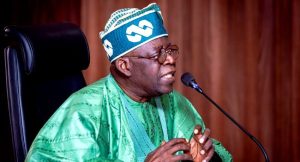
President Bola Tinubu
>
> 42. The process of governance world over has some common or similar institutions which regardless of what happens are expected to continue to be trusted by the people of any nation. The military. The police. The judiciary. The central bank. INEC. The Legislature. The treasury. The bureaucracy. The critical question that we all as Nigerians must ask ourselves is, “How are these institutions functioning these days in Nigeria?” The truthful among us will candidly answer, “do you call those endemically and systematically corrupted and captured establishments, institutions?”
>
> 43. The delegitimization of these entities did not happen overnight, true but today, even the youngest Nigerian child now knows that these institutions have been seriously eaten up from the inside by the cancer of corruption and are now shadows of themselves. They mostly now exist as shells that are devoid of the mandatory legitimacy which citizens confer of other countries confer on their own comparable institutions because they have confidence in them to protect and serve their common good.
>
> 44. Second, the process of governance world over has shown that the quality of leadership decisions substantially differentiate the performance of countries and their people. Where public leaders consistently make the right sets of decisions for the common good of their people, the likelihood of success is guaranteed across the board in such societies. This matter of designing the kind of political leadership that places the needs of their people and the common good of society above theirs found strong intellectual and research resonance for me so I studied it and went on to establish the SPPG- School of Politics, Policy and Governance where we train mid-career average age 34 years old over a ten month period to acquire the Character, Competence and Capacity requisite for ethical, effective and results-oriented public leadership. When Singapore and Indonesia face the world with the Top Performing Team of their Cabinet in a competition for inward investments and Nigeria or other countries in Africa show up with a 5th rate team, the outcomes are already obvious. The fact is we can again draw wisdom from the Bible in Ecclesiastics 10v7. “ I have seen servants upon horses, and princes walking as servants upon the earth.”
>
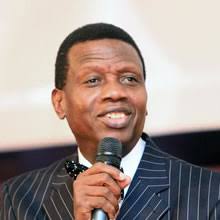
Adeboye
>
> I am not sure how many Nigerians followed the thoughts of the Father we honor today- Oastor E A Adeboye on the Restructuring. I will end my lecture by quoting him. On that day as we listened to him, there was pin drop silence when Daddy Adeboye said : “ Why can’t we have a system of government that will create what I will call the United States of Nigeria? Let me explain. We all know that we must restructure. It is either we restructure or we break, you don’t have to be a prophet to know that one. That is certain – restructure or we break up. “Now, we don’t want to break up, God forbid. In the restructuring, why don’t we have a Nigerian kind of democracy? At the federal level, why don’t we have a President and a Prime Minister?” .
>
> Daddy, like Einstein prescribed, was asking all the right questions on that 2020 Independence Day event on a key nation formation issue that heated up the polity before the 2023 elections and which we know serious adversely impacts the effectiveness functioning of Nigeria. A dysfunctional structure of Nigeria cannot be globally productive, competitive and prosperous. Leaving the matter of the economy aside, when a son of God who is known for his circumspection on sensitive matters spoke like Daddy did 3 years ago by saying “ We all know that we must restructure. It is either we restructure or we break, you don’t have to be a prophet to know that one. That is certain – restructure or we break up. “Now, we don’t want to break up, God forbid” what more can be added to these direct words than to draw strength from the story of Ezekiel and acknowledge that all the developments around us point us to the reality that the Valley of the Dry Bone Moment is already happening to Nigeria. When God asked Prophet Ezekiel a trick question , “And he said unto me, Son of man, can these bones live? And I answered, O Lord GOD, thou knowest.” A valley of dry bones came alive and became a mighty army just because a great Prophet knew that some situations will take only God’s intervening to fix them. God then recruited Prophet Ezekiel to support him in his bone transformation work. All one can say is “Concerning our beloved country, Nigeria, O Lord God, we also say, our situation has reached the stage where all we can say to you, is thou be knowest!