In the words of John Steinbeck, “All war is a symptom of man’s failure as a thinking animal”.
In my humble opinion, l believe the first set of questions we should ask before embarking on any form of war are: How many people can we afford to lose to death?
When will the war end! Who will benefit most in the enterprise of the war?
And, how would the war end, as in the loser or the victor?
The recent coup d’état in Niger Republic has raised concerns about the potential for a brewing war in the country. The coup was led by a group of military officers who overthrew the democratically elected government of President Mohamed Bazoum. The coup has been condemned by the United States, France, the European Union, and the African Union.
On the other side, Russia has been a vocal supporter of juntas in Africa, while the United States has been pushing Nigeria and ECOWAS to pressure the military to restore democracy.
Niger Crisis:Tinubu and the burden of leadership
This has created a classic game theory situation, with the different actors trying to outmaneuver each other in order to achieve their desired outcome.
Meanwhile, in game theory, a game is a situation in which two or more players have conflicting interests and are trying to maximize their own payoffs.
The outcome of a game is determined by the strategies that the players choose.
In the case of the Niger Republic coup, the different actors are all trying to achieve different outcomes.
The junta wants to maintain power, while the United States wants to restore democracy, retain her Surveillance (Drone) station and fence out Russia’s growing influence in Africa.
France being the colonial master wants the status quo to remain intact.
Nigeria and ECOWAS are caught in the middle, and they are trying to find a way to satisfy both the junta and all the foreign interests.
As for the coup architects, their said aim is to break away from French dominance even after decades of “independence”.
The different actors in this game have different strengths and weaknesses.
The junta has the advantage of being in control of the military, but it is facing international pressure to restore democracy.
They are also banking on support from Mali, Burkina Faso and Russia’s Wagner.
The United States has the advantage of being a powerful country, but Niger is not her next border country.
France has the dominating influence and reaps from Niger’s economy, but her influence in all the Francophone countries is rapidly whittling down.
Russia wants to spread its wings over Africa for economic reasons and self esteem having been isolated all over the world for her consequential invasion of Ukraine.
Nigeria and ECOWAS have the advantage of being regional powers, but entertain fears of further ruining their fragile economy.
And, most of the ECOWAS countries has at one point or another experienced military take over and would not want the cancer to spread further.
The outcome of this game is uncertain. It is possible that the junta will be able to maintain power, but it is also possible that the United States will be able to find means to pressure the military to restore democracy.
The final outcome will depend on the strategies that the different actors choose.
Howbeit, there are Implications for Game Theory.
The Niger Republic coup is a reminder of the importance of game theory in understanding international relations. Game theory can help us to understand the different strategies that actors can use to achieve their desired outcomes.
It can also help us to understand the factors that can influence the outcome of a game.
The Niger Republic coup is also a reminder of the importance of international cooperation.
The United States and Nigeria need to work together to pressure the junta to restore democracy.
If they are able to do so, it will send a message to other countries that coups will not be tolerated. But war is not going to work.
According to Avinash Dixit, in Joseph Heller’s novel Catch-22, allied victory in World War II is a foregone conclusion, and Yossarian does not want to be among the last ones to die.
His commanding officer points out, “But suppose everyone on our side felt that way?” Yossarian replies, “Then I’d certainly be a damned fool to feel any other way, wouldn’t I?”
Most readers have come across the prisoner’s dilemma as a treatise in game theory. The police interrogate two suspects separately, and suggest to each that he or she should fink on the other and turn state’s evidence.
“If the other does not fink, then you can cut a good deal for yourself by giving evidence against the other; if the other finks and you hold out, the court will treat you especially harshly. Thus no matter what the other does, it is better for you to fink than not to fink — finking is your uniformly best or ‘dominant’ strategy.”
Of course, when both fink, they both fare worse than they would have if both had held out; but that outcome, though jointly desirable for them, collapses in the face of their separate temptations to fink.
Yossarian’s dilemma is just a multi-person version of the prisoners’ dilemma . His death is not going to make any strategic or meaningful difference to the prospects of victory or that of the vanquished.
As a matter of fact, it is better for him to stay alive than dead. In other words, avoiding death comes out as his dominant strategy. Game theory is about thinking about what other actors are actually thinking.
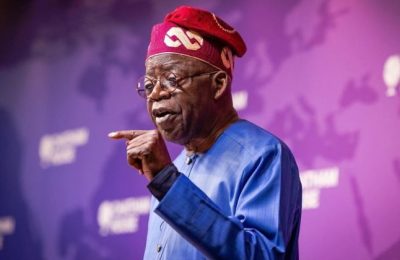
At this moment in the history of Nigeria and under 100 days in office, President Bola Ahmed Tinubu and the
Present leaders of the Ecowas has some difficult decisions to make.
Thank God, that many Nigerians have roundly rejected opening another theater of war for Nigeria inside the neighboring country.
But they are not opposing sanctions set at the Junta.
Our president is not only pragmatic, he is known to be a highly focused person who won’t like to take his eyes off the Nigeria’s big picture. This l can say with mellifluous assurance.
My first encounter with Asiwaju was in 2002 at the Acme Road Secretariat of the erstwhile Alliance for Democracy (AD).
As at that time, of all AD governors in the South West, Tinubu was the only governor in the AbdulKadir led AD party at the National level. All others were with Maman Yusuf.
Meanwhile, Ogun State party was in the AbdulKadir group while our governor was in the Maman Yusuf group. So, a meeting of the INEC recognized State parties was called to Lagos and we attended.
On the eventful day, we had gathered at the Lagos State Secretariat but our factional Chairman Alhaji Tayo Sowunmi and other Excos weren’t called to the high table. We protested, but to no avail, so we decided to walk out of the venue.
At that point, Asiwaju’s car and convoy arrived at the venue but chose to park at the gate area. He must have been briefed. We were politely asked to see him. When we met him, he apologized profusely and there and then called on the women and drummers to sing with him while he held
Ẹ̀mà jẹ́ kája. Ẹ̀mà jẹ́ kája, ohun t’owà ní ilé otópín. Ẹ̀mà jẹ́ kája.….( Don’t let us fight over nothing, we have more than enough on the ground to share)”. From the gate to the podium, he danced holding our chairman’s hand up to the high table and made him seated by his side.
He demonstrated that resolving dispute into harmony is natural to people in this part of the world.
He thought on his feet that day, he applied native dispute resolution method to resolve the dispute into harmony.
Secondly, on that day his speech proved to be prescient. He saw what will happen to AD and the other governors in 2003. He predicted it on that day and it was a prophecy that came to pass. He saw beyond the curve ahead others, and listened to professionals and made the right judgement.
Given his track records from 1999, his ability to make the right and most practical decisions remained legendary.
A decision to avoid war next door should be paramount to this young government and especially to President Tinubu.
Thinking about what others stand to gain is crucial. Knowing that Ammunitions and war machines used in prosecuting war comes mostly from the western world China and Russia.
Also knowing that we cannot afford to lose our young soldiers and people living in the boarder towns and villages to war just because some countries stand to benefit from the war.
Nobody knows when a war will end talk less of number of deaths war will consume.
Russia had thought Ukraine will be overrun in days, but alas, two years on, thousands of lives are still being lost at both ends.
Meanwhile, here are some possible solutions to the prisoner’s dilemma in the Niger Republic war:
A third party, such as the United Nations, could mediate between the parties and help them reach a peaceful agreement.
As a last resort, the international community could impose economic sanctions on the parties to the conflict, in order to pressure them to cooperate.
Russia and Putin’ s private mercenary army- Wagner should be pressured by all well meaning countries in Africa to stay clear of Niger or face alienation.
It is important to note that there is no guarantee that any of these solutions will be successful. The prisoner’s dilemma is a difficult problem to solve, and there is no easy answer.
However, it is important to try to find a peaceful solution to the Niger Republic’s brewing war, as the alternative could be much worse.
Hear the 33rd president of US; Jimmy Carter, “ War May sometimes be a necessary evil. But no matter how necessary, it is always an evil, never a good. We will not learn how to live together in peace by killing each other’s children”.