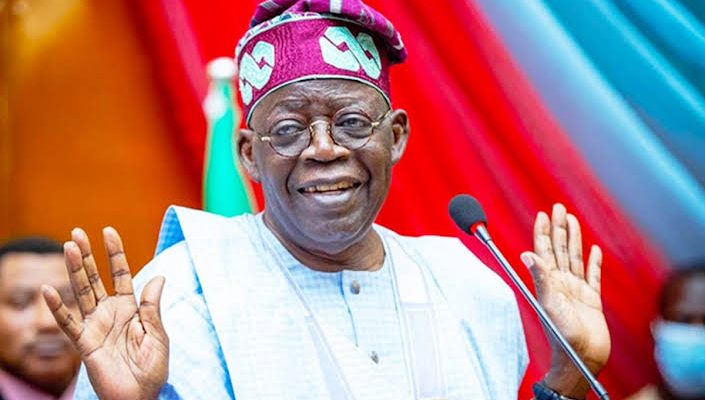

The International Monetary Fund,IMF, has urged the incoming government of President-elect, Sen. Bola Tinubu to take steps to increase the country’s revenue base.
The Resident Representative, IMF Nigeria Office, Ari Aisen, who said this during a virtual forum on the Nigerian debt situation, also advised the incoming government to drastically reduce dependence on debt to fund expenditures.
BMO on IMF 3.2% projections : Buhari is handing over a more resilient economy
According to Aisen, to resolve the debt issues of Nigeria you need to concentrate on revenue and expenditure.
He said that the debt situation had deteriorated because the Federal Government was spending more than it was actually getting in revenues.
“How do you reduce the spending needs of the government? That should be the question.
“It is really about fiscal discipline. People should not permanently spend beyond what they generate in revenue because it becomes unsustainable.
“Eventually some people will come and ask for their money back and some will refuse to give further loans,” he said.
Monday Usiade, Director. Market Development Department at the Debt Management Office, said that the office had a responsibility to manage Nigeria’s debt.
According to Usiade, the DMO receives approval from the authorities based on the difference between revenue position and expenditure, and the actual amount to be borrowed.
“We are at the service of the country, and our job is to look at the best ways, options, sources and all that we can put together to fund the government as approved by the authorities,” he said.
He added that the DMO was transparent in carrying out its functions.
He urged the incoming government to be more concerned about how to narrow the gap between expenditure and revenue so as to limit borrowings.
Meanwhile, economic experts at a recent American Business Council (ABC) Economic Update charged the incoming administration to embrace strategies aimed at tackling Nigeria’s debt overhang for economic growth and development.
Dr Yemi Kale, Chief Economist, KPMG, said that the focus should be on the Consumption, Investment, Government Expenditure, Exports and Imports (CIGXM) economic indices to fully harness the potential of the country’s economy.
Kale said under the CIGXM, Nigeria must begin to boost consumer purchasing power, enhance ease of doing business, provide the right infrastructure, increase public investment and enact fund usage transparency.
He added that the country must increase export tentacles, enhance competitiveness, promote income substitution and address large debt burden and debt servicing ratio to ensure long-term economic sustainability.
“Since 2013, Nigeria’s public debt has increased by almost seven folds and inflation and high debt servicing costs are factors that have raised debt levels.
“Although debt to the Gross Domestic Product remains relatively low at less than 40 per cent, arbitrary borrowing from the Central Bank of Nigeria to cover budget deficit has undermined fiscal prudence.
“The income administration must curtail excessive borrowing by raising revenues from both oil and non-oil sources and engage in prudent budget practices,” he said.
He urged the incoming government to implement fiscal restraint, enhance revenue production through taxation changes, diversify the economy, and successfully control governmental expenditure to lower the debt load and foster economic growth.
Also, Mrs Mokutima Ajileye, the Managing Director, P&G Nigeria said the country’s manufacturing sector needed the certainty and predictability that came with stable and long-termed government policies to increase the sector’s contribution to the GDP.