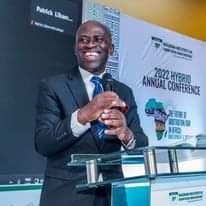

By Sylvester Asoya
Meet Adedeji Odulesi, the Nigerian polyglot who is using his knowledge of many Nigerian languages, including French, to unite men and women
Sylvester Asoya
In this toxic season of ethnic politics, bigotry and prejudice, Adedeji Odelusi, a polyglot, remains a shining example. Odulesi who speaks many Nigerian languages, is teaching his country how to live and co-exist peacefully, in a multi-ethnic and multi-religious country.
It is quite remarkable that young people like Odulesi in show business, activism, entrepreneurship and academia are the hope of Nigeria. Every day, these young persons enrich citizens lives in a special way with their love for country and their deep understanding of issues around unity, diversity and awareness of a common identity.
Unfortunately, this is in sharp contrast with some unpatriotic Nigerian politicians and their followers who desperately want things to remain the same. These people with great power and influence have stubbornly refused to rise above ethnic backgrounds and religious affiliations. Every day, they tell fellow citizens, even on campaign grounds or any other platform for that matter, about their questionable noble births that make them superior to others. The more garrulous ones claim merit and competence based on a lousy promissory note, geographical location and their tribe or religion. This is one of the most telling moments in our history because everything is happening in an election season and few people seem to be paying attention.
First indigenous Catholic priest: How Ezi gave W/Africa Paul Emechete
Therefore, young persons like Odulesi are doing their country a huge favour. They are using their God-given talent and resources to preach peace, unity and national integration without assistance from those in government who are the biggest beneficiaries. Odulesi who speaks nearly a dozen Nigerian languages with a working knowledge of some foreign languages, understands language politics. As a polyglot in a divided country, languages remain very important to him. And he makes no pretense about this love and the fact that knowledge of Nigeria’s ethnic nationalities can easily unite a country like Nigeria. In the course of his patriotic work, he emphasizes what unites Nigeria. He has also discovered many Nigerians, men and women who speak other languages apart from theirs without even leaving their linguistic comfort zones. There is even a Yoruba woman, Chukwunasaokwu with tribal marks from Ibadan who speaks perfect Igbo. The lady who sells beans and bread was born in Enugu and she is proud that today, two of her sisters are married to Igbo men from the South East. As she preaches unity during the interview, she also insists that Nigeria is one, and that people should deal with others without recourse to profiling or ethnic consideration.
Odulesi also shares in one of his short videos, the amazing story of Oluwole Ayorinde, a trader at Ladipo Market, Lagos who got a piece of land for free in Igboland. In yet another video, Odulesi eventually introduces another dimension on the path to Nigeria’s unity when he encountered another polyglot, a prince from Ife, Wole Uchechukwu Adesanmi. The prince whose maternal grandmother hailed from Orlu in Imo State speaks flawless Igbo and in addition, bears Igbo name.
It is very easy to notice the difference in every video in this polyglot’s rich repertoire but the procedures are generally the same. Oftentimes, he goes to people from dissimilar languages, including those with cross-cultural backgrounds with a view to finding out their experiences with people from other parts of Nigeria. The encounters, usually are informative, eye-opening and refreshing because at the end of every interview, it is always obvious that there is just a thin line separating the tribes. And by interviewing and documenting the experiences of Nigerians from diverse ethnic groups, Odulesi is also healing Nigeria in a special way. For instance, his encounter with Muhammad Tijani, a Nupe man who speaks many Nigerian languages, reinforces Nigeria’s oneness and the fact that unity is actually strength.
Another interesting thing about Odulesi is that he is followed by hundreds of people who wait anxiously every day for his next episode. In his response to the Tijani interview, Adegboyega Akinyo, one of his followers describes language as an important component of every society. “Language is a measure of intelligence and a catalyst for understanding and bonding among human beings. Polyglots are also ambassadors of universal love”.
Shamsudeen Yusuf Waliyyi, another follower believes that Odulesi deserves all the accolades he receives almost on a daily basis for his work and passion. He further describes him as Mr. Nigeria and a Pan-Africanist of note. Understandably, the feedback remains encouraging; the comments are also objective and helpful.
In all, Odulesi who speaks fluent Igbo, Hausa and Yoruba, with a working knowledge of many Nigerian and foreign languages, believes strongly that a new Nigeria is still possible. Beyond reaching Nigerians through his ever-stimulating conversations with ordinary and forward-looking people, he also appreciates the intrinsic benefits that awaits anyone with good knowledge of languages. So, Nigeria may have to take a second look at issues that relate to the study of languages.
“As a polyglot, I have been privileged to travel wide and consequently, I appreciate diverse cultures and perspectives. I mingle freely with other tribes and religions. And this opens doors for me as a master of ceremonies. My audience perceives that I genuinely like them and they reciprocate accordingly”.
Yet, outside of Odulesi’s optimism, other Nigerians like Eziahakaego Eziahakaego, another follower of his short videos is expectant about a new dawn in Nigeria. According to him, “one day Nigerians will understand the meaning of the words (peace and unity) which are the last verse of their national anthem”.
It gratifying to note that so much has already been achieved by young people who are refusing to be limited by their realities and the poisonous politics of the older generation. And as things stand at the moment, it is clear that Nigerians are anxious and prayerful as they await that appointed day with great anticipation.
This article was first published in alice, the in-flight journal of Air Peace.