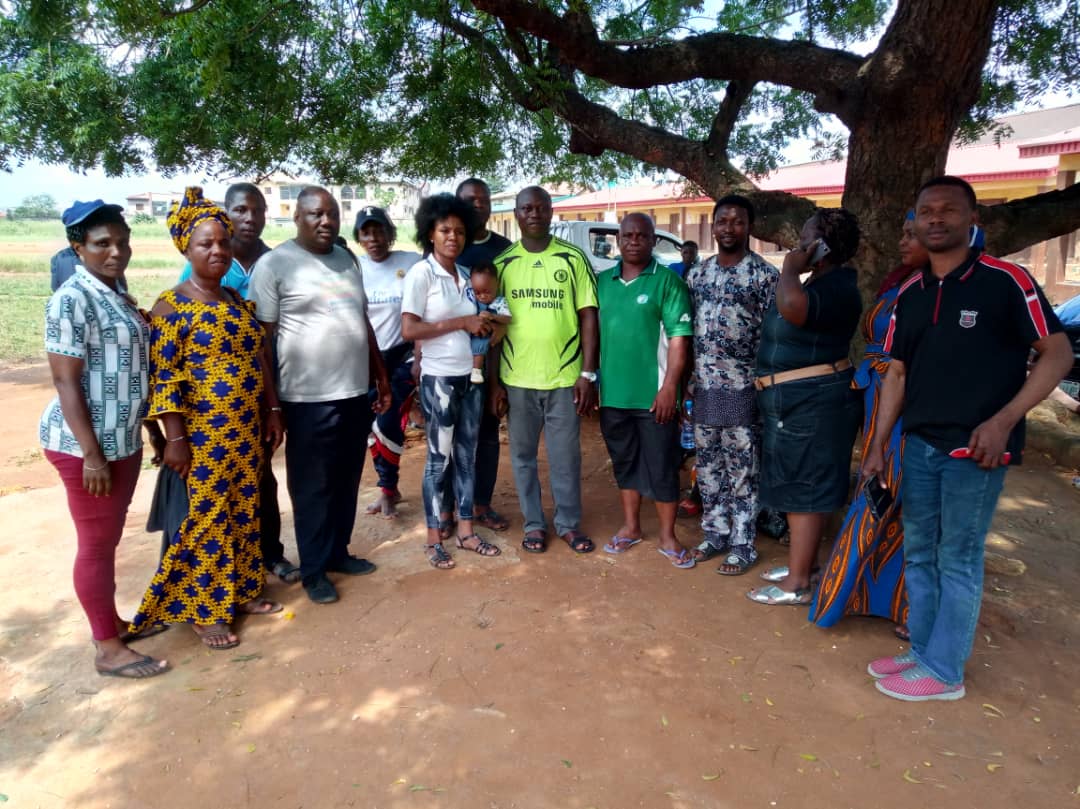

Issues concerning migrating children across the West African boarders were brought to the fore when a Non-Governmental Organisation, Terre Des Hommes (TDH) held a two days workshop for journalists in Lagos recently.
Head of the organisation in Nigeria, Mrs. Peju Osoba tasked journalists and stakeholders in child issues on accuracy of reportage and the need to be sensitive to cases of migrating children.
She however stressed that journalists should be broad minded and emphatic in discovering children on the move than labeling them as victims of trafficking.
Osoba however identified migration and mobility as a global phenomenon which is not particular to Nigeria and west African sub-region alone.
According to her, TDH has handled several cases concerning migrating children and the media should aid NGOs working on the issue by projecting the global phenomenon.
Read also: Breaking: INEC postpones submission of candidates list for 2019 polls
She added that “Through our organisation’s coral project for the protection of migrant children along the Lagos-Abidjan corridor, TDH and its partners: EDNA and AWCY have collaborated with Penpushing Media to train journalists in Lagos on the need to adequately report child protection and migration.”
She explained further that the project is funded by the European Union and implemented in five countries to engage journalists on the role of the media in the protection of migrant children.
Facilitating a session on the theme: Role of journalists in child protection and child migration, former Chairperson of the Nigerian Union of Journalists, Lagos Chapter, Mrs. Funke Fadugba told participating journalists to ensure the use of right terminologies while reporting issues of children in this category.
“Journalists must build a synergy with the civil society groups working on children issues in order to understand the concepts. If the concept is not well understood, there would be misunderstanding and the job would not be thorough,” she said.
Fadugba also advised journalists to ensure they write clean copies of whatever stories they have on migrating children so that their editors would be able to use such reports.
Fadugba also advised journalists to look beyond press releases from organisations and dig deeper into the subject matter.
“As a good journalist you must not only wait on press releases. This is because every organisation has what it wants to push to the media, but when you get your press release, you have to ask questions and do your own research, then ensure to represent the organisation well,” she said.
In her own presentation, themed ‘Protective accompaniment of children,’ Organisation Development Officer of TDH, Ms. Valerie Nwabeke, enjoined journalists to be honest and open when in conversation with migrant children.
“Honest and open conversation are key things when dealing with migrant children,” she said, adding that, “Confidentiality is key as well because these children must be protected while migrating.”
According to Nwabeke who is stationed in Badagry, the Nigeria/Benin borders are not the only route for these children who also use unofficial routes through bush paths.
“Children from Benin Republic often migrate on their own into Nigeria. They move as early as 6am or use the bush paths, she said, giving further information that, “In Benin Republic, children believe they can pick money on the ground when they come to Nigeria, this is the assumption they have been taught so you have many of them migrating.”
She however noted that there is a system whereby, the child is protected through the journey across borders.
“The system makes sure these children on the move are secured. It is true they are migrating but they have to at the same time be assured of protection,” she emphasized.