
Closing the Green Skills Gap: Building Capacity for Sustainable Construction
By
ADEOYE OLUGBENGA ADEWOLU, PhD, FNIA, ISTQB/CTFL
“The world is not suffering from a shortage of green technologies. It is suffering from a shortage of people who know how to apply them.”
“Buildings account for nearly 40% of global energy-related carbon emissions. Yet many of the professionals responsible for designing, constructing and managing buildings have never received formal training in sustainability.”
We need to ask:
Can we achieve sustainable construction without sustainable professionals?
The answer is obviously No.
That becomes the foundation of the presentation.
2. What is the Green Skills Gap?
Taking the audience on the memory lane, in 1975, The United Nations declared that there was no hortage of skills in any area of Nigerian economy. Furthermor, the Food and Agricultural Organisation (FAO) also stated that there was enough food from harvested farm products. They added that the main problem was storage of harvested produce from season to season. Should we not have acted differently?
Meanwhile, at this time, the Nigerian Naira was more powerful than both the US Dollars than the Britih Pounds (UKP) Sterling. Nigerian graduates were turning down overseas job offers in preference for Nigerian offers.
Today, the ‘Japa – Syndromme’ has reversed the trends. What went wrong?
Rather than the N0.65 = US$1.0; and N0.8 = GBP1.0,
we now have – N1,355 = US1$ and N2550 = GB1P
Education is simply preparing our youths for immediate migration to other lands
The Green Skills Gap is the difference between
the sustainability skills the industry needs,
and
the skills currently possessed by professionals.
It affects
Architects
Engineers
Builders
Quantity Surveyors
Project Managers
Facility Managers
Artisans
Contractors
Government regulators
Clients
Why does it exist?
Because
• Universities teach outdated curricula
• Professional training rarely emphasizes sustainability
• Construction technology is evolving rapidly
• Climate change is accelerating
• Regulations are becoming stricter
• AI and digital technologies are changing the industry
3. Why Green Skills Matter
Without skilled professionals,
Green buildings become
✓ expensive
✓ inefficient
✓ poorly maintained
✓ underperforming
✓ “green” only on paper.
Green skills create
Better buildings
Better businesses
Better cities
Better quality of life
4. Skills Required for Sustainable Building Practice – Green Skills can be grouped into categories like.
A. Technical Skills
Technical Professionals should naturally understand
• Passive design
• Climate-responsive architecture
• Building orientation
• Daylighting
• Natural ventilation
• Energy modelling
• Water conservation
• Waste management
• Sustainable materials
• Indoor environmental quality
• Carbon footprint assessment
B. Digital Skills
Modern sustainability depends on technology. Digital Skills Professionals need to be proficient and have the mastery of:
• BIM
• Artificial Intelligence
• Digital twins
• GIS
• IoT-enabled buildings
• Smart energy monitoring
• Building performance simulation
• Data analytics
C. Environmental Skills
Environmental Skills Profesionals must understand:
• Climate change
• Circular economy
• Net-zero buildings
• Life-cycle assessment
• Biodiversity
• Carbon accounting
• ESG principles
D. Project Skills – Professionals also require
• Sustainable procurement
• Green project management
• Integrated project delivery
• Stakeholder engagement
• Risk management
• Performance monitoring
E. Soft Skills
These are often ignored, but they are extremely important. Green professionals need:
• Systems thinking
• Leadership
• Collaboration
• Communication
• Innovation
• Critical thinking
• Problem-solving
• Ethics
• Change management
5. Where Are the Biggest Gaps?
Many organisations still have the biggest gaps in areas such as:
❌ Designers that are unfamiliar with green certification systems
❌ Contractors using wasteful construction methods
❌ Clients focused only on initial costs
❌ Universities teaching yesterday’s technologies
❌ Limited Continuing Professional Development
❌ Poor interdisciplinary collaboration
❌ Weak policy implementation
❌ Lack of skilled artisans
❌ Minimal sustainability measurement
6. Closing the Gap – Present practical solutions can be found in:
Our Universities Need:
✔ Curriculum reform
✔ Sustainability across every course
✔ Industry collaboration
✔ Living laboratories
✔ Research linked to practice
Professional Bodies – Should embrace the following:
✔ Make sustainability focussed CPD mandatory
✔ Introduce Green Skills certification
✔ Encourage interdisciplinary learning
✔ Reward innovation
Construction Companies – Should invest in
• Staff retraining
• Mentorship
• Knowledge sharing
• Digital transformation
• Sustainability champions
• Green performance indicators
Government – Needs to
• Strengthen policy
• Update building codes
• Support training
• Incentivize green construction
• Fund research
Individuals
Every professional should commit to lifelong learning.
Today’s graduate may become obsolete within five years unless they are constantly upskilled with Continuing Professional Development (CPD).
7. Additional Discussion Points
The Green Skills Gap is also a Leadership Gap
Sustainability succeeds when leaders embed it into organisational
culture, budgets, procurement, and decision-making.
AI and Digital Transformation
Artificial Intelligence will not replace architects.
But architects who use AI may replace those who do not.
Green professionals must learn
AI-assisted design
Predictive maintenance
Energy optimisation
Carbon simulation
Automated compliance checking
The Economics of Green Skills
Green skills are not merely environmental—they are economic assets.
Professionals with sustainability expertise are increasingly in demand across consulting, real estate, infrastructure, manufacturing, and public policy. Investing in these capabilities improves employability, enhances organisational competitiveness, and supports national economic resilience.
Green Skills and National Competitiveness
Countries that invest in green skills
attract investment
improve infrastructure
create jobs
increase resilience
become innovation hubs
Green skills therefore represent an economic development strategy.
Green Skills are Everyone’s Responsibility
Not just architects. Everyone contributes.
Clients
Designers
Contractors
Manufacturers
Government
Facility Managers
Financial institutions
Users
Everyone.
Powerful Closing Message
“Sustainable buildings do not emerge by accident. They are conceived by knowledgeable designers, delivered by competent professionals, supported by enlightened clients, and sustained by a workforce equipped with the right skills.”
In conclusion,
“Closing the green skills gap is not simply about training more people. It is about transforming how we educate, how we practice, how we collaborate, and how we lead. If we are serious about achieving sustainable construction, we must invest as much in developing people as we do in developing buildings and other physical infrastructure. The future of sustainable construction will be shaped not only by green technologies, but by green talents.”
Closing the Green Skills Gap: Five Calls to Action
Reform education by embedding sustainability and digital competencies across the built environment curriculum.
Invest in continuous professional development CPD so that practitioners remain current with evolving standards and technologies.
Strengthen collaboration among academia, industry, government, and professional bodies to accelerate knowledge transfer.
Embrace innovation by integrating AI, BIM, data analytics, and other digital tools into sustainable construction practice.
Lead with purpose, recognising that every built environment professional has a role in delivering healthier, low-carbon, and resilient communities.
A call for FREE, and Compulsory Education from Primary to University Level.
Nigeria can afford to educate its children FREE, but there is an important distinction between being able to afford it and being able to fund it at the level required for good-quality education.
Let me put some realistic numbers around the question.
1. What does it cost to educate one Nigerian child for one year?
There is no single national figure because the cost varies enormously between:
public and private schools;
primary and secondary education;
urban and rural areas;
feeding arrangements;
teacher salaries;
infrastructure;
textbooks and learning materials;
transport;
electricity and ICT;
security; and
Whether we are talking about basic education only or a comprehensive package.
For government-provided public education, I would use the following broad planning estimates for 2026:
Education level
Estimated annual public cost per child
Primary
₦150,000–₦300,000
Junior Secondary
₦200,000–₦400,000
Senior Secondary
₦250,000–₦500,000
Average basic education
about ₦200,000–₦350,000
These should be understood as planning estimates, not official government capitation figures.
Interestingly, Nigeria’s Ministry of Education’s own education-sector analysis found that government spending per secondary student was almost twice that of primary students, reflecting the higher cost of education as children progress through the system.
So, for a simple national calculation, let’s use ₦250,000 per child per year.
2. What would it cost to educate all Nigerian children?
This is where the numbers become very interesting.
Nigeria has approximately 105 million children and adolescents aged 0–17years
But obviously, not all 105 million are school-age children.
If we use approximately 50–55 million children as a reasonable planning population for primary and secondary education, and spend:
₦250,000 × 50 million children, it will give = ₦12.5 trillion per year.
At ₦300,000 per child, we will get ₦15 trillion per year.
At ₦350,000, we will get = ₦17.5 trillion per year.
So, the approximate national cost of providing reasonably decent universal public basic education at somewhere around:
₦12–₦18 trillion annually – this depends on the standard of education being contemplated.
And that is a much more useful figure than simply asking how much parents pay in school fees.
3. But there is an important problem with this calculation
Nigeria does not necessarily have to spend ₦250,000–₦350,000 cash per child.
The government already owns and provides many of the essential assets:
school buildings;
land;
teachers;
administrative structures;
textbooks;
laboratories;
libraries;
ICT infrastructure;
school furniture.
Therefore, the marginal cost of bringing an additional child into an existing public school can be considerably lower than the total cost of creating a complete education system for that child.
This is particularly important because Nigeria has millions of children who are currently outside the education system.
UNICEF’s latest reporting continues to put the number of out-of-school primary-age children at more than 10 million, while its 2024 analysis reported about 8.1 million junior-secondary-age children out of school.
So Nigeria is facing two different bills:
Bill A — educating children already in school
And,
Bill B — bringing millions of excluded children into school.
Bill B requires substantial investment in new classrooms, teachers, sanitation, security, transport and learning materials.
4. Can the Nigerian government afford it?
In principle, yes.
But not comfortably under the present fiscal structure.
The Federal Government’s proposed 2026 education-sector allocation is about ₦2.4 trillion, representing roughly 4% of the total federal budget.
That ₦2.4 trillion, however, is not simply money for primary and secondary school children.
It covers a much broader education system, including:
universities;
polytechnics;
colleges of education;
UBEC;
federal institutions;
teacher development;
infrastructure;
education administration;
research and other programmes like The Open University (NOUN).
For example, the 2026 proposal includes approximately:
₦966.9 billion for universities;
₦382.0 billion for polytechnics and colleges of education;
₦633.3 billion for education parastatals;
₦155 billion for Unity Colleges.
So the ₦2.4 trillion should not be compared directly with the ₦12–₦18 trillion estimate above.
5. Here is the bigger issue
The most useful question is NOT:
“Can Nigeria afford to educate every child?”
The more important question is:
“What is Nigeria choosing to spend its available resources on?”
Nigeria’s education allocation remains far below the international benchmark recommended by UNESCO, which calls for approximately 15–20% of government expenditure or 4–6% of GDP for education.
The 2026 education allocation is reported at only about 4% of the total federal budget.
That tells us something important.
Nigeria’s problem is not simply that education is too expensive.
It is also a problem of:
prioritisation + revenue + allocation + efficiency + accountability.
Read Also:Construction Work to Begin on $7bn Ogun Deep Sea Port in November — Abiodun
Building Collapse kills Six family members in Enugu
Ikoyi building collapse: Construction started before approval was granted – LASBC
Ajuwon Building Collapse:Abiodun orders full probe,warns against violation of Building regulations
Collapsed Lagos Building Occupants Ignored Distress Signs – Residents
6. Could Nigeria make basic education completely free?
Yes — but “free” needs to be properly defined.
Government could realistically provide:
Free tuition
Free textbooks
Free basic learning materials
Free school meals for vulnerable children
Free basic healthcare screening
Free examination fees
Teacher salaries paid by government
Basic ICT access
Safe classrooms
Water and sanitation
That would be much more expensive than simply declaring:
“Basic education is free.”
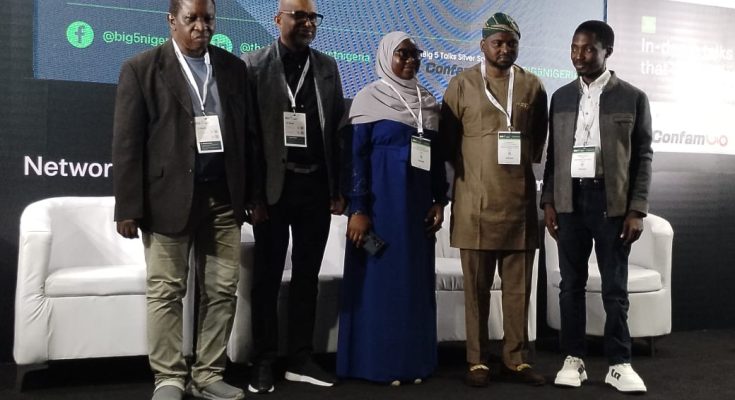
Panelists at the event
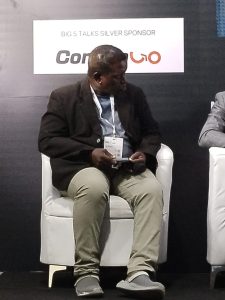
Dr Adeoye Adewolu,lead Speaker
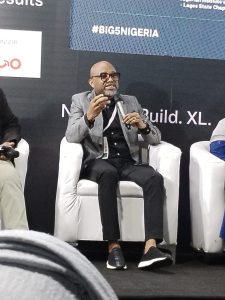
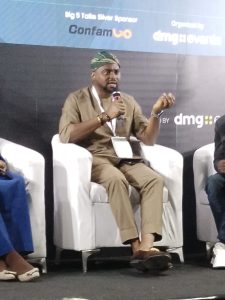
In fact, Nigeria already officially provides free and compulsory primary education. Yet, millions remain outside the system. UNICEF notes that primary education is officially free and compulsory, while about 10.5 million children aged 5–14 remain out of school according to its current education overview.
That demonstrates that legal free education does not automatically produce accessible education.
7. There is another way to look at the economics – Suppose Nigeria decided to spend:
₦300,000 per child × 50 million children
That is:
₦15 trillion annually.
That sounds enormous.
But consider what education produces.
A properly educated population eventually produces:
doctors;
engineers;
architects;
teachers;
scientists;
entrepreneurs;
skilled technicians;
software developers;
researchers;
farmers using modern technology;
construction professionals;
manufacturers;
administrators;
business owners.
In other words, these are potential ‘Boko-Haram’ and ‘Hoodlums’ converted to useful components of human capital and responsible citizenry. Imagine what Kwame Nkrumah did in Ghana in 1961 and imagine President Bola Ahmed replicating that like he did on Fuel Subsidy Removal and the Financial Market in 2023. For life, his name will NEVER be forgotten. I see hope:
Education is not simply expenditure. It is human-capital investment.
The economic consequences of not educating children are also enormous.
A child who never receives adequate education is much more likely to remain trapped in low-productivity work and poverty at best, and in hooliganism, early child pregnancy, Boko Haram at worst.
Nigeria’s own recent child-development evidence is alarming: UNICEF reported in 2025 that two out of every three Nigerian children live in multidimensional poverty.
8. So, can Nigeria afford it?
My answer is YES: Nigeria CANNOT afford NOT to educate its children.
But Nigeria probably cannot suddenly spend ₦15–₦18 trillion additional money every year on education without major changes to its fiscal system.
A more realistic strategy would be a 10 year education investment cycle. Indeed, I propose a 30-Year period of Educational Investment Emergency for Nigeria. This period mut be implemented in ten-year Cycles/periods.
Education MUST be removed from Concurrent List and be placed an Exclusive List with highest priority by successive Governments. This Education Emergency Cycle must be planned and implemented outside election circles.
For example:
Strategy
Approximate annual additional investment
Bring out-of-school children into school
₦1–2 trillion
Improve teacher recruitment/pay/training
₦1–2 trillion
Rebuild classrooms/infrastructure
₦1–2 trillion
Textbooks/ICT/learning materials
₦500bn–₦1tn
School feeding & vulnerable children
₦500bn–₦1tn
Total additional investment
₦4–₦8 trillion/year
This would be in addition to existing education spending and would need contributions from the federal government, states, LGAs, private sector and development partners.
The important thing is that Nigeria would not necessarily need to find all the money in one year.
To boost IT Education and Food Production, during the first ’10-Year Cycle’, NYSC Graduates should be automatically employed on a Two-Year Mandatory Fintec Training and Mechanised Agriculture programme to boost Food Production and enhance Technological Advancement in the country.
In return, the post-NYSC batches of such Corps Members would be able to support themselves, create employment, and be empowered to earn enough money (in hard currency) to stabilize themselves in life. During the 2-year period, they should be paid a minimum of N250,000 monthly salary to make the scheme attractive and workable.
Members of the Nigerian Armed Forces and the PNigeria Police Force should also be mandated to embark on any course of their choice at the National Open University (NOUN) and upon successful completion, be paid a minimum monthly salary of N250,000.
9. And there is a fascinating comparison
An IMF analysis of Nigeria previously estimated education spending at around US$203 per student in 2019 and showed that expanding enrolment, infrastructure, class sizes and teacher remuneration would require significant additional fiscal resources.
That gives us some perspective.
Nigeria is not fundamentally incapable of financing education.
The country has a revenue problem and an allocation problem.
And there is also a productivity problem.
If government spends money but:
teachers are absent;
classrooms are poorly constructed;
textbooks don’t reach schools;
contracts are inflated;
infrastructure deteriorates;
funds are released late;
children remain out of school;
then increasing the budget alone will not solve the problem.
My conclusion
A reasonable 2026 planning figure, would give an estimate of:
₦200,000–₦350,000 per Nigerian child per year for decent FREE public education, with higher costs for secondary education for the disadvantaged or remote communities.
For approximately 50 million school-age children, that implies roughly: ₦10–₦17.5 trillion per year.
But Nigeria does not necessarily need to find the entire amount as new expenditure because a significant public education infrastructure already exists.
And therefore:
Yes, Nigeria can afford universal quality basic education — but it would require education to become a much higher fiscal and political priority.
The really interesting question is where Nigeria could find the extra ₦4–₦8 trillion per year without increasing the tax burden on ordinary Nigerians.
That is actually a question worth modelling. I can break down Nigeria’s 2026 federal budget and show, line by line, how ₦5 trillion could potentially be redirected to education without increasing VAT or income tax.
For records, the Federal Government recently declared a savings of ₦15.2 trillion from the Fuel Subsidy Removal over the first 30 months.
Simple arithmetics show that in ten months, the country saves more than ₦5 trillion from fuel subsidy. Simply add that to the existing ₦2.4 trillion annual budget and the figures .
By Dr Adeoye Adewolu,Phd,FNA
.
ISTQB/CTFL
adeadewolu@yahoo.com ; aoadewolu@bellsuniversity.edu.ng Tel: +234 806 709 0770
Being paper presented at Big 5Construct Nigeria,Lagos September 24,2026