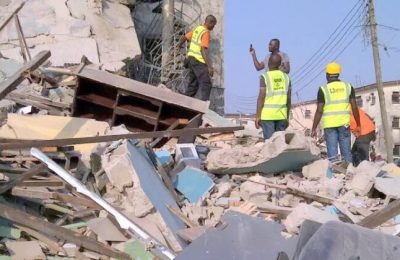
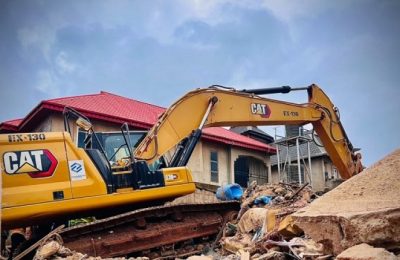
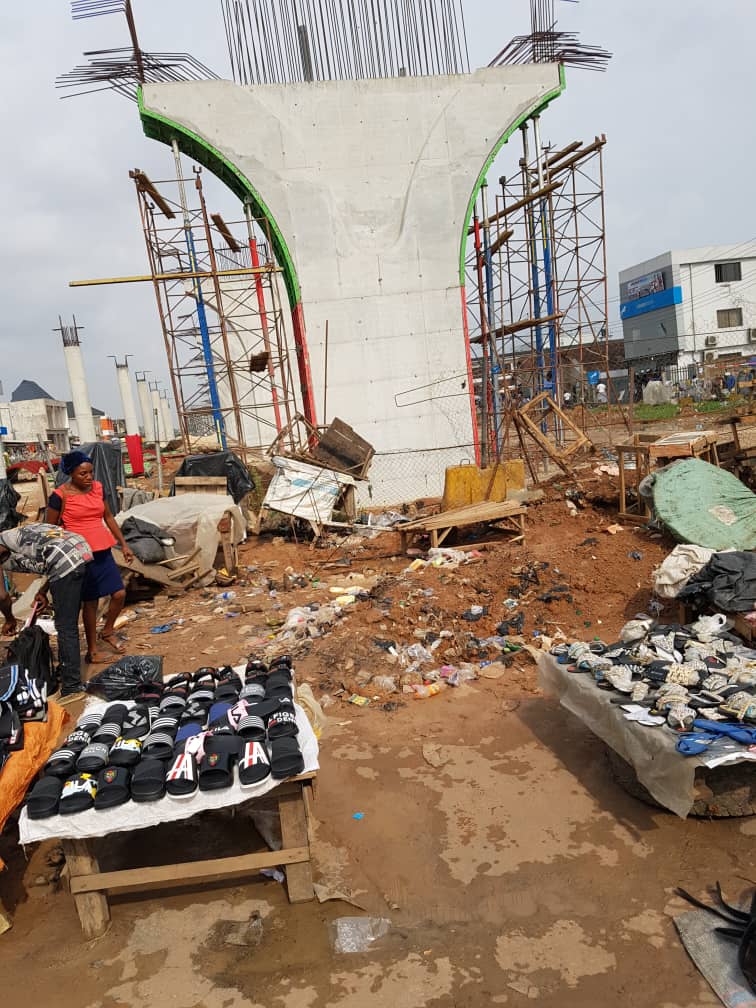
Flooded community picture used for illustration
No fewer than 347 persons were displaced by mudslide and flooding triggered by torrential rainfall in parts of Cross River in August, the State Emergency Management Agency (SEMA) has said.
The Director-General of CR-SEMA, Mr Efa Nyong, disclosed this in an interview with the News Agency of Nigeria (NAN) in Calabar on Tuesday.
Nyong said the figure comprised 167 persons rendered homeless by a mudslide in Calabar and about 180 internally displaced persons (IDPs) affected by rainfall in the Central Senatorial District.
He said that the affected persons were being sheltered at various locations in Calabar and parts of the Central Senatorial District.
According to him, the incidents underscored the growing disaster risks facing communities across the state and the need for residents to take preventive measures seriously.
“Basically, two things are happening. They are happening out of natural occurrence and, secondly, out of human activity.
Read Also:Flood alert: Niger govt warns River Kaduna communities over Shiroro dam release
Ogun Issues Fresh Flood Alert, Urges Residents in Vulnerable Areas to Relocate
“That is all that is happening currently in the state as regards disasters,” he said.
The SEMA boss, who assumed office on July 14, said he had visited communities in the Southern and Central Senatorial Districts to sensitise residents on disaster prevention and preparedness.
He said the sensitisation campaign would soon extend to the Northern Senatorial District, after which the agency would commence a statewide advocacy programme using billboards, radio advertisements and town criers.
Nyong particularly warned residents against indiscriminate dumping of refuse, saying the consequences could be felt several kilometres away from where the waste was dumped.
“For instance, when people throw waste indiscriminately, it may not show its impact immediately where it is dumped. Its impact could be a couple of kilometres away from where the activity was carried out,” he said.
On fire outbreaks, he urged residents to switch off electrical appliances when not in use and promptly replace faulty bulbs, cables and other electrical components.
He also advised households and businesses to upgrade their electrical wiring where necessary to ensure that cables could safely carry the electrical load.
Nyong commended the agency for its response to recent incidents of mudslide, flooding and fire outbreaks across the state.
He explained that disaster response followed a coordinated structure beginning at the local government level.
According to him, the Local Emergency Management Committee (LEMC) served as the first point of response, with the vice-chairman of each local government coordinating community-based emergency response.
He said incidents beyond the capacity of the local response structure would be escalated to SEMA and, where necessary, the National Emergency Management Agency (NEMA).
“Where we cannot manage it at the level of the state, we push it further to NEMA, where they now manage it at that level.
“When they cannot manage it at that level, we begin to seek international assistance,” he said.
He described the Nigerian Red Cross Society as a major partner in the agency’s response, particularly in providing temporary accommodation and assistance to displaced persons.
Nyong said it was difficult to place a fixed monetary value on damage caused by disasters because the cost of restoring damaged property and infrastructure fluctuated with prevailing economic conditions.
“We cannot quantify it because if you want to bring it back to what it was, we don’t know the current state of the naira.
“I can buy something for N1,000 today and go back tomorrow, and it is N2,000. So I will not put a figure,” he said.
The SEMA boss said the state government was making efforts to restore the livelihoods of disaster victims, particularly those who lost their homes and businesses.
He said SEMA was providing shelter for some displaced persons at its office, while others were being accommodated at Red Cross facilities.
He added that individuals and private organisations had donated relief materials, while the state government had also provided relief materials and financial assistance.
According to him, the immediate objective was to stabilise the affected persons and enable them to return to their communities or secure alternative accommodation.
“We are doing quite a whole lot until the people stabilise, to be able to integrate back into their community or look for somewhere else to stay.
“That is what we are doing at the moment,” he said.(NAN)