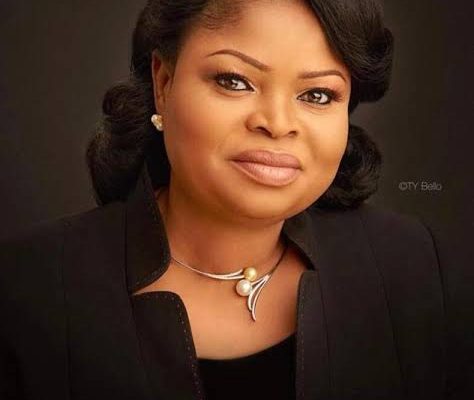

The office of Senior Special Assistant to the President on Sustainable Development Goals has constructed 120000 classroons all over Nigeria as parts of its efforts to bring development to the country and enable Federal government achieve its goals.
This was disclosed by Senior Special Assistant to the President on Sustainable Development Goals,Princess Adejoke Orelope-Adefulire during her remark at the Gazelle News Anniversary Lecture.
This feat she said also involved special health intervention projects undertaken and completed all over the 36 states of the country.
Full Remarks below:
Special Remarks
By
H.E. Princess Adejoke Orelope-Adefulire, OFR
Senior Special Assistant to the President on Sustainable Development
Goals
At the Gazelle News Anniversary Lecture And Award Night
Theme: Driving Grassroots Governance with Public-Private
Partnership: The Gains, the Challenges
Radisson Blu Hotel, Ikeja, Lagos State
Wednesday, 15th July, 2026
Protocol…
It is a great pleasure for me to join you this morning at the Anniversary Lecture and Award Night of The Gazelle News. Let me begin by expressing my profound appreciation to the Publisher, Management and Editorial Team of this highly respected media organisation for the honour of inviting me to serve as the Mother of the Day. I sincerely congratulate you on yet another anniversary and commend your unwavering commitment to quality journalism and constructive national discourse.
The media has always played an indispensable role in shaping societies. Beyond informing the public, it stimulates conversations, promotes accountability and, perhaps most importantly, inspires action. That is why today’s lecture is particularly significant. It reminds us that development is not only about government policies; it is about the collective responsibility of every stakeholder to improve the lives of our people.
The theme before us—Driving Grassroots Governance with Public-Private Partnership: The Gains, the Challenges; could not have come at a more appropriate time. If there is one lesson the world has learnt over the past decade in implementing the Sustainable Development Goals, it is that development cannot succeed in isolation. Governments cannot do it alone. The private sector cannot do it alone. Civil society cannot do it alone.
Development partners cannot do it alone. Even communities themselves cannot do it alone.
Lasting development happens only when everyone works
together.
This is precisely why the architects of the 2030 Agenda devoted an entire Goal (Goal 17) to Partnerships for the Goals. They understood that partnerships are not simply another item on the development agenda. They are the engine that drives every other Goal.
For us at the Office of the Senior Special Assistant to the President on Sustainable Development Goals (OSSAP-SDGs), this has never been just a guiding principle; it has been our way of working from the very beginning. When the Office was established, we recognised that if the SDGs were to become meaningful to ordinary Nigerians, they had to move beyond policy documents, conference halls and development reports. They had to be seen, felt and experienced in communities across the country. That conviction has shaped everything we do. Rather than waiting for development to trickle down, we deliberately took the SDGs to the grassroots.
We understood that the success of the Sustainable Development Goals would not ultimately be measured by the number of meetings held or policies drafted. It would be measured by whether a child in a rural community could learn in a decent classroom; whether a pregnant woman could access quality healthcare close to home; whether a young person could acquire skills to earn a living; whether vulnerable women could rebuild their lives; and whether communities could genuinely feel the impact of government. That has remained our philosophy. It is also why partnerships have been central to our work.
Over the years, OSSAP-SDGs has consciously built strong vertical partnerships with Federal Ministries, Departments and Agencies, State Governments, Local Government Councils and State SDG Offices to ensure that development priorities are coordinated from the national level right down to local communities. At the same time, we have strengthened horizontal partnerships across institutions, breaking traditional silos and encouraging collaboration among government agencies whose mandates intersect in delivering sustainable development.
Our partnerships extend far beyond government. We have continued to work closely with the United Nations, development agencies, civil society organisations, academia, traditional institutions, faith-based organisations and community-based groups, recognising that every stakeholder has something valuable to contribute.
We also understood very early that the private sector is not merely a financier of development but a strategic partner in development itself. It was in recognition of this that the Office established the Private Sector Advisory Group on the Sustainable Development Goals (PSAG) – a platform that brings together leaders of industry to mobilise private sector expertise, innovation, investment and leadership in support of Nigeria’s sustainable development aspirations. Today, PSAG continues to demonstrate that when government creates the right platform, the private sector willingly becomes part of the solution.
Indeed, the work of OSSAP-SDGs stands today as practical evidence that public-private partnerships can transform lives when they are built on trust, shared responsibility and a common vision.
Over the years, the Office has worked assiduously to ensure that we reached every corner of Nigeria. That commitment inspired our intervention in education. Today, every one of Nigeria’s 360 Federal Constituencies has benefited from at least one fully furnished block of six classrooms delivered through the
Office. Beyond this, we have facilitated the construction of over 12,000 classroom blocks, rehabilitated hundreds more and supplied millions of exercise books and thousands of computers to schools across the country.
For us, these are not simply construction projects. Every classroom represents children whose dreams have been given a better chance. Every desk represents hope. Every school represents an investment in Nigeria’s future.
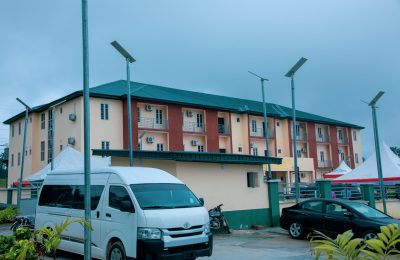
In the same vein, healthcare has received the same attention because development begins with healthy people. Across the country, the Office has delivered fully equipped 100-bed Renewed Hope Mother and Child Specialist Hospitals, 80-bed
Mother and Child Centres, as well as 40-bed and 20-bed Primary Healthcare Centres, bringing quality healthcare services closer to women, children and vulnerable populations who previously had limited access to such facilities.
Behind every one of these facilities is a simple story. A mother who survives childbirth. A newborn whose life is saved. A child who receives timely medical care. A family whose future is preserved.
Also Read:OSSAP-SDGs berths in Ota,Commissions 40 Bed PHC, Police Headquarters+Photos
Nigeria Emerges as Africa’s Reference Point for Sustainable Development Financing
We have equally recognised that infrastructure alone does not eliminate poverty. People must also be empowered to create wealth. That is why the Office has established and equipped Skill Acquisition Centres across the country, enabling thousands of
young people and women to acquire vocational and
entrepreneurial skills that lead to self-reliance and economic productivity.
Across the 36 States of the Federation and the Federal Capital Territory, the Office continues to empower at least 500 women in each state and the FCT with practical skills, equipment and startup support, enabling thousands of families to improve their livelihoods and become economically independent.
When we empower women, we strengthen families.
When families become stronger, communities become stronger.
As Nigeria continues to pursue inclusive and sustainable development under the leadership of President Bola Ahmed Tinubu, GCFR, we must continue to deepen collaboration across all sectors. Government must continue to provide leadership. The private sector must continue to invest in innovation and shared prosperity. Civil society must continue to mobilise communities and strengthen accountability. The media must continue to inform responsibly and inspire positive action. Citizens themselves must continue to embrace ownership of development initiatives. Only then can we truly fulfil the promise of leaving no one behind.
As I conclude, let me once again congratulate The Gazelle for providing this important platform for national reflection and dialogue. I also congratulate today’s award recipients for their outstanding contributions to society. May today’s conversations inspire stronger partnerships, deeper collaboration and renewed commitment to taking development closer to the people.
Thank you for your kind attention.
God bless The Gazelle News
God bless Lagos State.
And God bless the Federal Republic of Nigeria.