
Once again, the country is in the mood of another electoral cycle.
The cycle is to usher in a new government in 2027 after the four year tenure of the ruling government headed by President Bola Tinubu of the All Progressives Congress,APC as stipulated by the 1999 constitution drafted to usher in the fourth republic.
Next years election makes it the 14th since the country gained independence from British rule in 1960.
The first election to usher in the First Republic was conducted in 1959 granting powers to the then three regions which makes the Federation.
It is worthy of note that because no clear winner emerged from the election held on December 12,1959,the three major political parties then,the Northern Peoples Congress,NPC, National Council of Nigerian Citizens,NCNC and Action Group ,AG,led by late Sir Ahmadu Bello,Dr Nnamdi Azikwe and Chief Obafemi Awolowo respectively there had to be an alliance to form a government under the Parliamentary system patterned after the British system.
As a result , an alliance has to be formed between two of the parties to form alliance in the National Assembly to be able to form the Federal cabinet.
During the election,the NPC polled 134 seats, NCNC 81 seats and AG 73 seats while other Independent parties and candidates won 24 seats.
As a result, any two parties among the three dominant parties that came together in an alliance will form the govgovernment.
Also Read:My presidential ambition represents a movement – Atiku
ADC Crisis: Obi–Kwankwaso group may dump party for PRP or NDC
Governor Makinde and his 2027 gamble
Between both NPC,NCNC and AG, Dr Azikwes NCNC became the beautiful bride as his party was courted by both the NPC and AG..two parties that represented two opposing ideologies…Conservative and Social democrats as AGs welfarist policies was recognised then.
The decision of Dr Azikwe to team -up with the NPC thus marked the beginning of schism among and between the three leading parties in the country.
The schism also led to the parting of ways in 1963 between NPC and NCNC.
This record is necessary to situate the genesis of the rampant change of political allegiance by today’s politicians . It has not only removed ideology in our practise of party politics but has created a strange diffusion such that the difference between the ruling party and the opposition now scattered in different directions is likened to that of the difference, if any, between six and half a dozen.
That is if there is any difference among today’s inconsistent politicians changing party allegiance like a mother, change his baby’s pampers.
Since the beginning of the Fourth republic, three leading politicians have changed parties at least five times between 2007 and today such that the frequency of their changing of political party membership make them candidate for the Guiness book of records .
Atiku Abubakar:
Though he won elections as Governor of Adamawa State in 1999 on the platform of the Peoples Democratic Party,PDP, Alhaji Abubakar Atiku, a disciple of the late Major General Shehu Musa Yaradua,was later drafted into the Presidency before he was sworn in and made vice president by General Olusegun Obasanjo who obviously wanted to compensate his former chief of staff Supreme Headquarters and late friend, ShehuYaradua who died under General Sani Abachas detention.
But hardly had the then Obasanjo government settled down had Atiku started plotting how to unseat his boss .
Obasanjo in spite of limited role for the vice President under the 1999 constitution entrusted the running of the economy to the Turaki who in the words of Obasanjo “became rich such that he can feed a country of 300 million for 400 years”.
This statement in his book My Watch underscore the genesis of Obasanjos mistrust for his former vice.
On account of this,Atiku,who reluctantly yielded the second term to Obasanjo, joined then Senator Bola Tinubu led Action Congress of Nigeria,ACN, to contest the Presidency in 2007.
He was defeated by former Katsina Governor and younger brother of Shehu Yaradua,Umaru Yaradua imposed by Obasanjo in a widely disputed election.
Atiku again jumped ship back to the PDP in 2011 ,contested in the primaries against Goodluck Jonathan.
In furtherance of his ambition, Atiku ran back to the newly formed All Progressives Congress ,APC in 2013,contested the presidential primaries against Kwankwaso and Buhari but lost to the Katsina born former military ruler who eventually won the Presidential election in 2015 after his fourth attempt.
Barely six months into Buharis regime,Atiku returned to the PDP he vowed never to return back to.
He lost the election to Buhari in 2019.
He again contested under PDP in 2023 against Tinubu who also defeated him. It will be recalled that him and Peter Obi parted ways with the later protesting over Atikus decision to contest against the understanding among the party that a Southerner should succeed Buhari.
Atikus decision to bend the rule ruffled not a few feathers among whom is Nyesome Wike,the Rivers governor who joined forces with others to ensure Tinubu emerged as President in 2023.
True to type, Atiku some months ago sauntered with David Mark,Rauf Aregbesola, Rotimi Amaechi into the little known African Democratic Congress,ADC all with the aim of being the presidential candidate since Wikes faction have taken the upper hand in controlling the dying PDP.
Today, only Atiku,Mark ,Amaechi ,who is also nursing Presidential ambition, are left in the party as Obi left in annoyance barely three months after he joined ADC from his fractious Labour Party .
Today, no strong politician beside Atiku is left in ADC, also in the throes of death like its predecessor the PDP.
It is apparent that Atiku will emerge as its candidate.
It is as sure as anything that Atikus name will be on the ballot for making his fifth debut as a presidential candidate.
Peter Obi:
Those who are in shock that Peter Obi,who swore to high heavens before late Biafran war lord,Emeka Odumegwu-Ojukwu,he won’t leave the APGA must have seen the other side of their leader who rose to popularity after the Endsars protest.
Today,Obi has moved from APGA on which platform he became governor on March 17,2006 after he won the election in court having lost in 2003 to Chris Ngige of the PDP.
Though he was impeached in 2006 but was reinstated by the Court of Appeal on February 9,2007.
He was re-elected for second term in 2010 and his tenure ended March 2014.
But hardly had he left office in 2014 that he joined PDP on October 7,2014 from APGA.
Obi,was chosen as a running mate in 2019 but resigned from the PDP in May 2022 when it became obvious he won’t get the ticket in 2023.
He shared same passion with Atiku who believe he must get the presidential ticket to remain in a party even when he couldn’t build a structure to emerge in the primaries.
Obviously Obi detest primaries but wanted a platform that will dash him the ticket just for the asking.
Obi joined LP in 2022 to contest 2023 presidential election on the parties platform but came third after Atiku.
Inability to shift ground on who takes the ticket robbed him and Atiku of the 2023 elections.
With the self- inflicted crisis which left his Obedient Movement stranded in LPv self -contrived internal crisis of leadership, Obi moved to ADC in March 2026.
Again,when the ghost of Atiku controlling the direction of ADC appeared to Obi,he jumped ship along his new bride,Rabiu Kwankwaso again to National Democratic Coalition,NDC formed by former Bayelsa governor Seriake Dickson.
Today, it is still not sure whether Kwankwaso who recently admitted the North won’t support a South East man,will not ditch Obi and pitch his tent with Seriake Dickson,the promoter of the NDP platform.
Whatever it is, Obi for obvious reasons is only interested in a party that will crown him as a presidential candidate.
He obviously got his match in Atiku,who also showed his hands early and ‘pushed’ Obi out of ADC.
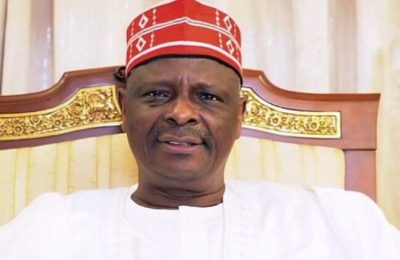
Senator Kwankwaso:
In the embattled leader of the Kwankwasiyya movement in Kano state,it is another season of political horse trading which has dominated and Influenced his career since he joined partisan politics in 1992.
Though, he bore the trademark of late Kano leader of the Talakawas,Aminu Kano,his shifting political allegiance over the years is a direct betrayal of sort of what he claim to stand for.
In the past four electoral cycles,he has also traversed the PDP, ANPP, NNPP, ADC and lately the NDC in his bid to assert political relevance.
Having ruled Kano State for eight separate years within the present fourth republic, Kwankwaso cannot today claim he has total control of the movement which catapulted him to prominence.
After what appears to be a fruitless attempt to get President Bola Tinubu some deep political concessions bordering on becoming vice presidential candidate to replace incumbent Kashim Shettima, he has recoiled to ethnic politics which restricted his followership to Kano state .
He obviously used his mass appeal in the state as a bargaining point to draw-out Peter Obi,always preoccupied with a ready made platform to climb to Presidency though without reliable political structures.
Is it possible to hastily build structure for a new party like the NDC and use same to compete and snatch power from a ruling parry with 30 states under its control?
It is surprising that Kwakwanso who has lost incumbent Governor Kabir Yusuff and Mallam Shekarau who are both part of the Kwankwasiya movement in Kano state with some filtering followership in neighbouring Katsina, still believe such is enough to win the Presidency.
It is surprising how within the spate of three months he joined the hijacked ADC , he again fell out and move to another party ostensibly for fear of Atiku who inspite of schism in the party appears set to clinch the Presidential slot.
It is also surprising how Kwankwaso who recently declared it is unthinkable for him to get the North to vote for a Peter Obi ticket suddenly discovered a change of attitude of Northern voters and now queued behind Obi under the relatively new NDC Platform.
Both he and Obi just appeared as an itinerant politician always looking for a ready platform to actualize their ambition.
If at the end of the day, the Obi/Kwankwaso ticket failed to get the required support to win the Presidential election it should not be surprising if Kwankwaso dumps Obi thereafter in his preparation for 2031 with Obi now being used as a stepping stone .
In a situation where the different political tendencies who met in Ibadan four weeks ago to proclaim commitment to a single presidential candidate turned their back on the promise days after the Summit.
How come all the parties..the Illegal PDP,ADC, have all produced three different presidential aspirants namely Atiku,Obi and now Makinde who have all thrown their hats into the ring.
This speaks volumes of a divided house not capable of defeating the incumbent.
It is wishful thinking for Atiku,Obi,Kwankwaso,Makinde and even Amaechi to believe they could muster strength individually to defeat the ruling APC candidate in the presidential election with 30 governors behind him.
Politicians are same old selfish, greedy and self conceited beings who refused to join forces for a Change as they call it even when they have no known program than the urge to be in power for self sake.
Time will tell.