
Stakeholders in the South West on Thursday convened in Ibadan to deliberate on the operational framework for state policing.
This is just as the Development Agenda for Western Nigeria (DAWN) Commission spearheaded efforts to prepare the region ahead of anticipated national reforms.
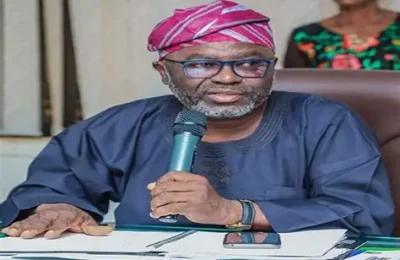
The technical session, tagged “Foundational Imperatives for State Police in South West Nigeria,” was held at the Dipo Famakinwa Conference Room, DAWN Commission headquarters, Cocoa House, Dugbe, Ibadan. It was moderated by Dr. Adewale Adeagbo and drew participants from the security, academic, legal, and civil society .
In his remarks, the Director-General of DAWN Commission, Dr. Seye Oyeleye, said the meeting was convened in response to growing momentum at the federal level for the creation of state police, noting that the South West could not afford to be unprepared.
“Yes, we know that the present federal government, headed by Asiwaju Bola Ahmed Tinubu, Mr. President, has put the issue of the creation of state police at the forefront of the measures they are taking on security.
“Once he came into power in 2023, he started talking about state police, and late last year into this year, they ramped up the call that we need state police,” he said.
Oyeleye explained that with a bill already before the National Assembly, the region had resolved to begin developing a guiding template that would shape the operation of state police across the six South West states.
“What we now decided to do was that this thing is going to happen. The bill is already at the National Assembly. So, at the South West end, we said we are not going to wait until state police starts before we decide to have a template—a common ground on how we believe state police can operate efficiently in South West Nigeria,” he said.
He emphasised that while a national framework might exist, regional peculiarities must be considered in designing an effective policing system.
According to him, “there will be a common template, but we have individual peculiarities.”
“That is why we are a federation. The mistake we don’t want to make again is this ‘one size fits all’ approach,” he added.
The DAWN DG also defended the current Nigeria Police Force, attributing its challenges to inadequate manpower relative to the country’s population.
“If you have a population of over 200 million people and about 450,000 active policemen, how effective can that be? So what we are trying to do is come up with a guiding template for the six states,” he said.
Oyeleye disclosed that the outcome of the meeting would be transmitted to South West governors as a foundation for policy direction, expressing confidence that state policing could become operational by early 2027.
“We believe by the first quarter of 2027, state police will become a reality. That is why we are doing this now,” he stressed.
Addressing concerns over potential abuse of state police by governors, he described such fears as outdated, citing the experience of the regional security outfit, Amotekun.
“The fear that it will be abused is no longer tenable. We have had Amotekun operating since 2020 in South West Nigeria, and no one can say a governor has abused it. We are now in a social media age; the slightest thing, everybody knows,” he said.
Oyeleye further clarified that Amotekun and state police could coexist within the region’s security architecture.
“Having Amotekun and state police, they are not mutually exclusive. They can exist side by side, it is up to the governors. They may even decide that Amotekun will serve as forest rangers,” he explained.
In his contribution, Professor Isaac Olawale Albert of the Institute for Peace and Strategic Studies, University of Ibadan, stressed that the focus should now be on how to implement state policing effectively rather than debating its necessity.
“Our president has, in my own consideration, decreed state policing into existence. What we are discussing now is not whether state police will be embraced, but how,” he said.
Albert warned against replicating the shortcomings of the federal policing system, urging stakeholders to adopt a research-driven and analytical approach.
“We cannot jump into state policing without interrogating what is wrong with the federal police. If we do not adopt a rigorous intellectual approach, we may end up with state police behaving like the federal police we are criticising today,” he said.
The Professor of African History, Peace and Conflict Studies also called for the integration of lessons from existing formal and informal security structures, including community-based initiatives.
“Many communities have already established their own policing structures. Amotekun is one of them. We must draw lessons from these systems to build a police structure that is trusted by the people,” he added.
Also speaking, the Executive Director of Journalists for Democratic Rights, Mr Adewale Adeoye, emphasised that state policing must be people-centred and reflective of local realities.
“State policing is not just about the government; it is also about the people. Security must be owned by the people. They must be involved in the conception, the process, and the implementation,” he said.
Adeoye noted that the South West must develop a distinct policing model aligned with its unique security challenges.
“The nature of crime in the South West is not the same as in the North East. State policing here has to reflect our own conditions. We want a structure that commands public integrity, transparency, and meets global standards,” he said.
Also Read:
State Police:Disu gives implementation Committee marching order
Land Dispute in Ilaro: Families allege Police Interference in a Matter Already Before Court
He further underscored the importance of humane policing, adding: “Policing is about human beings first. Officers must have compassion, must care for the people, and must protect both lives and strategic assets.”
The meeting featured contributions from security experts, retired senior police officers, academics, legal practitioners, and private sector actors, with some participants joining virtually, including senior legal practitioners.
Deliberations are expected to culminate in a comprehensive regional template to guide the implementation of state policing across the South West once enabling legislation is enacted.