
Toba Alabi. tobalabi@yahoo.com
Introduction
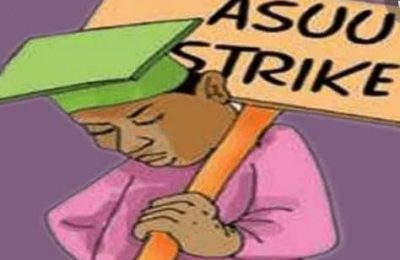
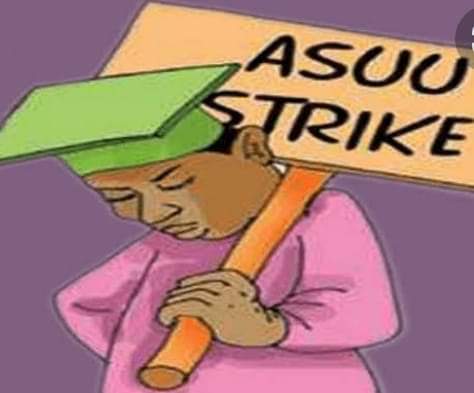
The Academic Staff Union of Universities (ASUU) has long been at the forefront of advocacy for quality public higher education in Nigeria. Yet, the persistent implementation deficit in agreements with successive governments has perpetuated cycles of industrial action, crippling the nation’s university system and destabilizing the academic calendar. As of 2025, ASUU is poised to commence a full-blown strike on 21 November, highlighting the government’s continued inability or unwillingness to address fundamental issues such as earned academic allowances, university revitalization, and institutional autonomy. This paper examines the historical trajectory of ASUU, government relations, evaluates the implications of recurrent strikes for national development, and interrogates how the persistent neglect of academic labor undermines Nigeria’s socio-economic and intellectual future. The analysis situates ASUU’s struggle within the broader context of governance failure, fiscal mismanagement, and the marginalization of intellectual labor, arguing that the ongoing impasse represents not just an education crisis but a direct threat to Nigeria’s long-term competitiveness and social stability.
Nigeria’s public university system has historically been both a symbol of national aspiration and a site of profound structural neglect. Established to produce the intellectual capital necessary for socio-economic development, universities have instead become arenas of contestation between academic staff and government authorities. Central to this contest is the Academic Staff Union of Universities (ASUU), whose primary mandate is the defense of professional standards, staff welfare, and the quality of higher education. Over the decades, ASUU has negotiated agreements with successive governments, most notably the landmark 2009 ASUU, FGN Agreement, which promised revitalization of the university system, payment of earned academic allowances, and protection of institutional autonomy. However, the persistent failure to fully implement these agreements has entrenched cycles of strikes, frustration, and declining educational outcomes.
The looming full-blown strike set to commence on 21 November 2025 represents the latest and perhaps most critical manifestation of this long-standing impasse. It underscores the continued erosion of trust between ASUU and the Nigerian state, while raising urgent questions about the government’s commitment to human capital development. The strike is not merely a labor dispute, it is a symptom of a deeper structural and policy failure, reflecting decades of underfunding, neglect, and the politicization of higher education. The consequences extend beyond the academic calendar, the disruption of research, intellectual stagnation, and the erosion of international confidence in Nigerian degrees threaten the nation’s socio-economic progress.
This paper seeks to examine the current ASUU, government dynamics, with particular emphasis on the factors precipitating the 21 November strike. It interrogates the historical, financial, and policy contexts of the dispute, analyzes the implications for students, universities, and national development, and situates ASUU’s struggle within broader debates about governance, accountability, and the valuation of intellectual labor in Nigeria.
The ASUU-Federal Government 2009 Agreement: A Historical and Structural Overview
The 2009 Agreement between the Academic Staff Union of Universities (ASUU) and the Federal Government of Nigeria remains one of the most far-reaching documents in the governance of Nigerian higher education. Signed after years of negotiation, the agreement aimed to address chronic underfunding, infrastructural decay, declining academic standards, and poor conditions of service across the university system. It was conceived as a comprehensive framework to restore quality and competitiveness in Nigerian universities and to improve the welfare of academic staff whose intellectual labour is central to national development (FGN–ASUU Agreement, 2009).
Also Read:ASUU to resume nationwide strike
The agreement rested on four major pillars. The first was funding, where the Federal Government committed to revitalizing universities through targeted financial injections based on needs assessments. This understanding was reinforced by subsequent government investigations which documented severe infrastructural deterioration, overcrowded facilities, and outdated teaching and research equipment in public universities (Needs Assessment Report, 2012). The second pillar was conditions of service, including improved salary structures, earned academic allowances, and an increased retirement age of 70 for professors—measures designed to retain experienced scholars and reduce brain drain.
The third pillar focused on university autonomy and academic freedom, emphasizing the role of University Councils, the authority of the Senate in academic matters, and the need to shield universities from excessive governmental interference. Autonomy was recognized as essential for intellectual creativity, research freedom, and institutional stability. The fourth component addressed legal and administrative reforms, including amendments to relevant statutes to ensure transparent governance and alignment with global best practices.
Despite its broad scope and transformative potential, the 2009 Agreement has suffered a chronic implementation deficit. While ASUU has consistently demanded full and faithful execution of the document, successive administrations have selectively implemented sections, delayed timelines, or introduced stop-gap measures that fail to address root structural problems. This pattern of incomplete implementation has resulted in recurring industrial disputes, prolonged strikes, and deep frustration among academics and students. The persistent failures have also raised fundamental questions about Nigeria’s policy priorities, political will, and long-term commitment to higher education development.
In essence, the 2009 ASUU–Federal Government Agreement symbolizes both promise and contradiction-representing a clear blueprint for transforming Nigerian universities, yet hindered by poor execution and insufficient funding. Until the government treats the agreement as a national development imperative rather than a bargaining document, the systemic crisis in higher education will persist and the aspirations of millions of young Nigerians will remain unfulfilled.
The Eight-Month ASUU Strike Under the Buhari Administration: A Damning Indictment of Governance Failure
The eight-month ASUU strike of 2022 under the Muhammadu Buhari administration remains one of the darkest episodes in the contemporary history of Nigeria’s higher education system. It was not merely a labour dispute; it was a brutal exposure of a government’s indifference to knowledge, its contempt for intellectual labour, and its catastrophic mismanagement of a sector that should be the engine of national development. For eight long months, universities were shut down while government officials shifted blame, ridiculed lecturers, and carried on with an arrogance that betrayed their disdain for the very institutions that produced them. The strike symbolised a tragic collision between an academic community demanding dignity and a political elite that saw education as a nuisance rather than a national priority.
At the heart of the crisis was the government’s refusal to honour the 2009 Agreement, an agreement it voluntarily signed and repeatedly recommitted to. Instead of addressing long-standing issues of revitalisation, earned academic allowances, infrastructural collapse, and university autonomy, the Buhari administration adopted a posture of hostility and provocation. Ministers openly mocked ASUU, dismissed legitimate grievances as “entitlement,” and engaged in political theatrics while the nation’s universities rotted. The government’s body language was clear: education could wait. Scholars could wait. Students could waste months of their lives. Nigeria’s future could be paused without remorse. It was a disturbing reflection of a regime that saw security, health, and education as burdens rather than responsibilities.
The consequences were devastating. Millions of students lost an academic year, many slipping into depression, crime, drug abuse, and hopelessness. Research collapsed. Laboratories and libraries remained dead spaces. International collaborations were suspended. Meanwhile, the children of the political class continued their studies uninterrupted in the United Kingdom, Canada, and the United States. The contradiction was obscene: those who refused to fund Nigerian universities proudly posted pictures of their children graduating abroad while Nigerian students languished at home, victims of a callous political elite and a failed educational vision.
More disturbing was the deployment of the “No Work, No Pay” policy, weaponised not as a lawful tool but as a punitive measure to humiliate lecturers and break the union. It reflected a government more interested in punishment than progress, more committed to showing force than showing leadership. Instead of negotiation, it embraced confrontation. Instead of dialogue, it adopted propaganda. Instead of investing in universities, it poured resources into political patronage, frivolities, and corruption. The message was unambiguous: intellectual labour was expendable, and lecturers were disposable.
In the final analysis, the eight-month ASUU strike exposed the Buhari government as one of the most anti-intellectual administrations in Nigeria’s democratic history. It damaged the university system, undermined global confidence in Nigerian degrees, and derailed the academic trajectories of an entire generation. The strike will be remembered not only for its duration but for what it revealed, a government that failed to protect the future, failed to honour its commitments, and failed to treat education as a national emergency. It stands as a damning reminder of how nations decline when ignorance is enthroned and knowledge is despised.
ASUU Under the Tinubu Government: Broken Promises and Persistent Frustration
Since President Bola Ahmed Tinubu assumed office, the Academic Staff Union of Universities (ASUU) has faced a challenging and frustrating landscape in its negotiations with the government. Despite repeated promises to “keep universities open” and protect academic standards, the administration has demonstrated a pattern of partial gestures, delayed implementation, and inconsistent commitments, which has continued to undermine the nation’s university system.
A key flashpoint has been the renegotiation of the 2009 ASUU-FGN Agreement, which outlines critical commitments on earned academic allowances (EAA), university revitalization, and staff welfare. In April 2025, the Federal Government announced the release of ₦50 billion for earned allowances to academic and non-academic staff, a move publicized by Education Minister Tunji Alausa (Alausa, 2025). While intended to show commitment, ASUU rejected this payment as insufficient relative to the total arrears owed and the broader structural reforms required (ASUU, 2025). The union has consistently emphasized that their demands extend beyond ad hoc payments to include predictable annual allocations for revitalization, improved staff welfare, and respect for university autonomy.
Budgetary allocations under the Tinubu administration suggest partial recognition of the crisis. The 2025 Tertiary Education Trust Fund (TETFund) allocation stood at ₦940.5 billion, signaling some prioritization of tertiary education (NUC, 2025a). Yet, ASUU maintains that these funds do not address fundamental deficits in infrastructure, laboratory equipment, libraries, or research capacity, nor do they resolve arrears on salary increments and allowances that have lingered for years (NUC, 2025b). Consequently, the measures taken are perceived by academics as reactive and symbolic, rather than systemic and transformative.
Negotiations have also been marred by mistrust and communication failures. ASUU has publicly criticized the government for “hurriedly packaged” offers that fail to align with previously submitted proposals, while warning of possible strike action if meaningful agreements are not reached (ASUU, 2025). The union views these delays as indicative of a government more focused on political optics than the sustainable development of the university system. For the Tinubu administration, the challenge has been bridging the gap between declarations of intent and actual delivery on financial and structural commitments.
The experience of ASUU under Tinubu illustrates a broader crisis of governance in higher education. While some financial interventions have been made, the persistent implementation deficit, inadequate structural reform, and slow engagement with union demands signal that academic labor remains undervalued. Unless the government moves beyond token gestures and commits to a transparent, enforceable, and holistic framework, the future of Nigeria’s public universities, and the students who depend on them, remains uncertain.
The 21 November 2025 ASUU Strike: A National Crisis and the Bleak Future of Nigerian Higher Education
The impending full-blown strike by ASUU, set to commence on 21 November 2025, marks yet another climax in the protracted struggle between Nigeria’s academic labor force and successive governments. This strike is not merely an episodic labor dispute, it is emblematic of a systemic failure to prioritize education, value intellectual labor, and honor negotiated commitments. The strike is a response to unresolved arrears on earned academic allowances (EAA), inadequate funding for university revitalization, and persistent encroachments on institutional autonomy. It underscores the government’s chronic neglect of public higher education, a sector whose decline has direct implications for Nigeria’s socio-economic competitiveness and intellectual sovereignty.
Over the past decades, universities have endured cycles of industrial action, each triggered by governments’ partial, piecemeal, and often insincere interventions. The 2009 ASUU, FGN Agreement, widely hailed as a blueprint for transforming Nigerian universities, remains largely unimplemented despite repeated reminders and partial payments. In the context of the Tinubu administration, ASUU has publicly decried government offers as inadequate and misaligned with the union’s demands. While the administration has released funds for some allowances, structural deficits remain unaddressed. Laboratories and libraries remain dilapidated, research is underfunded, and universities struggle to attract and retain qualified academics. The 21 November strike therefore represents a culmination of long-standing grievances, highlighting the persistence of governance failures, fiscal mismanagement, and the undervaluation of academic labor.
The implications of the strike are severe and far-reaching. Millions of students will face disruption of their academic programs, with potential delays of an entire academic session. Research output will decline further, eroding Nigeria’s competitiveness in global knowledge economies. International partnerships and collaborations, already fragile, may be jeopardized. Beyond the universities, the strike threatens the broader socio-economic development of Nigeria, as a poorly educated workforce undermines innovation, productivity, and human capital formation. The recurring nature of strikes also sends a damaging signal to investors, policymakers, and the international community, questioning Nigeria’s capacity to sustain credible institutions of learning.
At a deeper level, the 2025 strike exposes a moral and political failure, the inability of the state to translate promises into action, to prioritize education in national budgeting, and to respect the professional dignity of academics. The strike is thus not just a defense of personal benefits, but a defense of the nation’s future. The Nigerian government’s response, or lack thereof, will determine whether the country continues on a path of intellectual stagnation and declining competitiveness, or whether it recognizes the centrality of higher education to national development.
In essence, the ASUU strike scheduled for 21 November 2025 is a stark warning that the future of Nigeria’s universities, and by extension the nation itself, hangs in the balance. Unless the government demonstrates political will, fiscal commitment, and structural reforms that address the union’s demands, the cycle of strikes and educational disruption will persist. The nation cannot afford further procrastination, as the price of neglect is not only the loss of academic years but a bleak, uncertain future for Nigeria’s intellectual and socio-economic growth.
Conclusion
The ongoing disputes between the Academic Staff Union of Universities (ASUU) and the Nigerian government reflect more than a simple labor disagreement; they reveal a systemic neglect of higher education in the country. Chronic underfunding, irregular payment of earned allowances, and repeated failure to implement agreements have not only demoralized academics but have also undermined the quality of education and research. This persistent instability erodes public confidence in the university system and threatens the intellectual development of Nigeria’s youth, who are the country’s future leaders and innovators. Without decisive policy reforms, sustained investment, and sincere dialogue between all stakeholders, the nation risks a continued cycle of strikes, educational decline, and a bleak and uncertain future. Urgent attention is needed to prioritize higher education as a cornerstone for national growth and social stability.
References
Alausa, M. T. (2025). Federal Government releases ₦50 billion earned allowances to university workers. Vanguard Newspaper, April 2025.
ASUU rejects FG’s ₦50 billion earned allowance. (2025). ThisDay Newspaper, April 26, 2025.
Federal Government of Nigeria & Academic Staff Union of Universities. (2009). FGN-ASUU Agreement. Abuja: Federal Ministry of Education.
Federal Republic of Nigeria. (2012). Report of the Government Committee on the Needs Assessment of Nigerian Public Universities. Abuja: National Universities Commission.
National Universities Commission (NUC). (2025a). Monday Bulletin, 10 February 2025.
National Universities Commission (NUC). (2025b). Monday Bulletin, 12 May 2025.
Toba Alabi is Professor of Political Science, Defence and Security Studies. (08036787582).
10 November, 2025.