Beyond genocide, there are four plausible reasons why Tinubu, as a person, and Nigeria as a nation, are in the direct firing line of Trump—and by extension, the USA. While other compelling reasons exist, they are classified and not yet ripe for public consumption.
This article will focus on the four reasons concerning US trade and foreign policy that particularly bruised the ego of President Donald Trump, pushing him to his pointed, revenge-driven statements.
Let’s start with the defense contract. The economic and political relationship between Nigeria and the US is complex and evolving. In 2018, Nigeria successfully purchased A-29 Super Tucano military aircraft from the US to fight terrorism. The aircraft were fully paid for, supplied, and actively deployed despite opposition from some US senators and Nigerians living abroad. A $346 million munitions and precision weapons package, including bombs and rockets, was also ordered to complement the air battle. However, that sale has since been put on hold.
Meanwhile, a geopolitical reorientation in Nigeria’s defense sector became visible. In 2021, Nigeria signed a military technical cooperation agreement with Russia. By March 2024, Nigeria revoked its military cooperation agreement with the US. Shortly after, Russian military instructors arrived to provide ‘assistance’. This was a major decision. Tinubu indicated a clear diversification of Nigeria’s security partnerships away from exclusive reliance on the West—a bold and unprecedented move.
In August 2025, the US Defense Security Cooperation Agency notified Congress of the potential sale of the $346 million munitions package to Nigeria. Because the deal requires Congressional approval, it came under scrutiny. A source close to a Republican congressman who is firmly opposed to the deal said, “The stated goal is to help Nigeria combat terrorism and illicit trafficking in the Gulf of Guinea. However, how can the Russians be allowed to go near our devices and equipments?” The schism between Nigeria and the US has been blamed squarely on Tinubu’s presidency.
Furthermore, the Nigerian government provided unprecedented financial support to the unsung Nigerian military workshop, Buffalo Engineering and Technical Services Limited (BETSL). This enabled them to produce Unmanned Aerial Vehicles (UAVs) superior to imported drones, as they are built to resist heat and other inclement weather conditions in Africa.
Nigeria has also massively supported the innovation and production of the ‘Begua’ Armoured Personnel Carrier (APC), Tracked Personnel Carrier (TPC), Mine-Resistant Ambush Protected (MRAP) vehicles, Buffalo APCs, and the Vanquish. Private companies involved include Techno-EM Global Solutions Limited, Imperium Industries, Proforce, and Innoson. The military units involved are the Army Command Engineering Depot (CED) and BETSL.
Another significant advancement in Nigeria’s quest for military independence is small arms and munitions production. I can authoritatively confirm that Nigeria can now produce military-grade bombs, assault rifles, and bullets, thanks to the Defence Industries Corporation of Nigeria (DICON) and local private companies like EIB Stractoc Limited. This development is to the chagrin of international arms suppliers, who not only charge exorbitantly but attach extraneous privileges or quid pro quo conditions to their supplies. These practices are now gone for good. The above is a major reason for Trump’s decision.
Another significant blow to Nigeria’s foreign relations with the West, causing major geopolitical shifts and tension, was Nigeria’s defiance of the West’s “instruction” not to join BRICS. This instruction, laden with threat, persisted during the tenures of Presidents Jonathan and Buhari. Rumor has it that the leverage on Buhari was his ill health, given his dependence on the London Clinic. The levers on Jonathan’s remains unknown, at least for now.
Why is Nigeria’s BRICS partnership so important to China and the US? In 2024, Nigeria officially became a “partner country” of the BRICS bloc. As for Tinubu, this arrangement is a strategic step to elevate Nigeria’s geopolitical influence and gain access to new funding sources, like the BRICS New Development Bank, for infrastructure projects. Analysts note this alignment could create tensions with Nigeria’s traditional Western partners, including the US—which it did. But why is Nigeria so significant to China and Russia?
The answer is in plain sight. Nigeria is important due to its large population and economy, abundant natural resources like oil, and strategic position as a regional leader in Africa. China sees Nigeria as a major market and source of oil, while both China and Russia are interested in military cooperation, strategic alliances to challenge the Western-led global order, and new investment opportunities in infrastructure.
As of today, November 3rd, China is executing a strategic, multi-pronged plan to internationalize the Yuan (RMB) and establish a viable alternative to the US dollar-dominated global financial system. A cornerstone of this strategy involves using gold to bolster the Yuan’s credibility and creating the infrastructure to support Yuan-denominated lending for infrastructure projects in African nations like Nigeria. This shift aims to reduce dependency on the dollar, mitigate foreign exchange volatility, and reshape global development finance. The primary target is Africa, and the first target is Nigeria.
This framework is deeply annoying to Trump. China’s strategic initiatives to internationalize the Yuan, bring about financial decoupling, and promote the Cross-Border Interbank Payment System (CIPS) as an alternative to SWIFT (Society for Worldwide Interbank Financial Telecommunication) are central to this. Presently, SWIFT is the global network that banks use to securely send and receive messages about financial transactions.
The aim of BRICS and CIPS is to achieve bilateral currency swap agreements with central banks, especially Nigeria’s. The expected outcome is to reduce reliance on dollar-based payment systems and facilitate trade and lending in Yuan. How will they achieve this gigantic shift?
Gold becomes the go-to instrument. Gold has always been stable. The dollar became the world’s reserve currency after the world wars. To challenge its dominance, gold, not the Yuan, becomes the competitor. China has moved to establish the Shanghai Gold Exchange. To ensure gold price stability, a specific 200-day average price mechanism is being established, among other methods, to manage volatility, enhance the Yuan’s credibility as a store of value, and provide a stable, high-value asset base for lending.
Also Read:Trump Is Not After Nigeria but China — The Hidden War for Nigeria’s Soul
Cook docked for allegedly stealing gold jewellery worth N4.5m
For physical infrastructure, China is building “Gold Corridors”: a network of gold vaults linked to the Shanghai Gold Exchange International (SGEI) in Africa and hubs like Hong Kong, Dubai, and Singapore. The objective is to create a decentralized, secure system for gold-backed transactions outside Western hubs. Although gold is not classified as a High-Quality Liquid Asset (HQLA) under Basel III, industry analysis demonstrates it behaves like one, showing low credit risk, deep market liquidity, and stability during crises. Nigerian brains have been involved, and the West knows. Guess why nothing has been said about the attempted coup by Western governments?
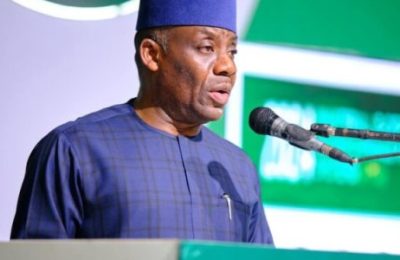
For the global financial system, this represents a steady move towards a multipolar monetary system. It will gradually erode the dollar’s monopoly and offer developing nations more financial autonomy. For Nigeria, it provides an avenue to address our massive infrastructure funding gap. Now, guess why the President of Nigeria placed Dele Alake in the highly strategic mining industry? China is currently buying gold, and the US has been moving its gold reserves from England back to the US since January 2025. Gold is going to be the new magic, and the West is not happy with China and other countries involved in this practical new world order revolution. This, and other reasons, are under the skin of President Trump. Forget the narrative about Christian killings. For the Western world, it is all about their interest.
I will quote Simon Kolawole, who recently wrote on this issue in ‘Selective Perception’:
“On December 25, 2011, when the Boko Haram terrorists bombed St Theresa Catholic Church in Madalla, Niger state, killing 37 worshippers, did you view it as an act of genocide against Nigerian Christians? Yes? No? On November 28, 2014, when they hit the Great Mosque of Kano during Juma’at prayers, killing over 100 worshippers, did the phrase “Muslim genocide” cross your mind? Yes? No? When the terrorists bombed non-religious places in the Federal Capital Territory (FCT), such as Nyanya motor park, Emab Plaza, UN building, THISDAY offices, and police headquarters, killing hundreds of people, did you deem the attacks as a joint genocide against Muslims and Christians?
“Your answers to these questions will say a lot about how you perceive insecurity in Nigeria. The questions came to mind recently after an American comedian, Bill Maher, made global headlines with his comments on “Christian genocide” in Nigeria. “I’m not a Christian,” the atheist said, “but they are systematically killing the Christians in Nigeria. They’ve killed over 100,000 since 2009. They’ve burned 18,000 churches. These are the Islamists, Boko Haram. This is so much more of a genocide attempt than what is going on in Gaza.” US President Donald Trump has now redesignated Nigeria as a “country of particular concern” over the genocide claims. He did it previously in 2020.”
When you lead a country considered a sleeping giant, and your magic awakens it to make exploits, what won’t those who gave the giant a sleeping injection do to put it back to sleep permanently? What happens when you are on the path of achieving an earth-shaking feat by positioning your giant with massive strength on the Rare Earth Mineral map—a God-given substance that shapes life into phones, fighter jets, AI chips, drones, and all manner of technologies? I asked earlier: why do you think Tinubu put his close ally, Dele Alake, in the mining sector?
For those unaware, a private company, Hasetins Commodities Limited, is investing $400 million in a rare earth and critical minerals processing facility in Nasarawa state. This investment is planned as Africa’s largest rare earth processing plant and aims to boost local value addition to solid minerals in Nigeria. The project is expected to create over 10,000 jobs and position Nigeria as a key player in the global critical minerals market. The factory is designed to mine and process its raw materials in Nasarawa state. The era of shipping out raw materials is gone forever. These are compelling reasons for an excuse to invade Nigeria. There you have two reasons: Under Tinubu’s watch, Nigeria is getting independence from Military equipment manufacturers and saving money, building reserves. Secondly, he defied Trump’s instruction not to join BRICS. The team running Nigeria this time around are the best one-minded, goal oriented and intelligent team we ever had. Compare them with Trump’s transactional team. In his own words…..”not close”. Are you with me?
In the words of Wendell Berry (Standing by Words), “There are some things the arrogant mind does not see; it is blinded by its vision of what it desires.”
Oyero Olusegun Olurin is the CEO of Fadaka Technologies Ltd.
Don’t miss the concluding part of this article.