
Special Report: Is menopause a scam?
By
abiodun KOMOLAFE
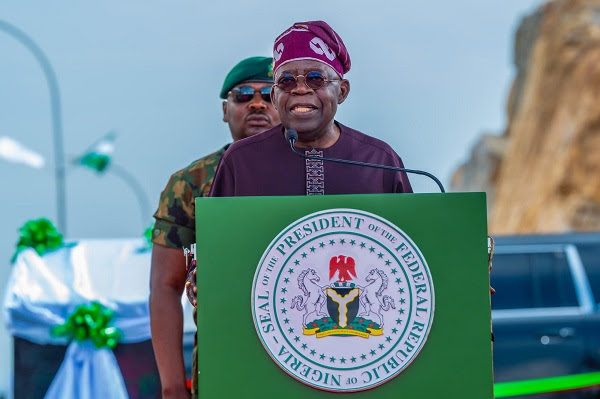
That was President Bola Ahmed Tinubu, speaking in a recent address to key political figures. Tinubu announced that Nigeria had met its revenue target for 2025 ahead of schedule and would no longer rely on borrowing to fund its budget. He attributed the feat to strategic economic reforms that were focused on the non-oil sector.
The president asserted that Nigeria’s economy is now on a predictable and stable path, that the era of illicit currency trading has ended, and that foreign exchange and imports are now transparently accessible without the need for personal connections. He made many sweet pronouncements and gave the hope of a promising future. Kudos to the Father of the Nation for this wonderful feat!
To a cross-section of Nigerians, the early achievement of the revenue target is a reflection of the effectiveness and efficiency of the government’s tax collection system. This surplus, coupled with a stable exchange rate, may signal a more predictable and stable economy, increased investment and new job opportunities.
It is also plausible that this success is a result of blocking revenue leakages and that revenue officers are now better trained and more committed to their duties. Most importantly, the success may be attributed to a new synergy between government agencies and the use of modern technology.
Conversely, cynics may not view meeting the annual revenue target in August as an achievement, given the widespread poverty. To them, it might be a reflection of a pattern of extortion and aggressive collection, an immense coercive power exerted over a vulnerable populace by state agencies, or a sign that the public has been burdened with increased costs across various sectors. This perspective raises important questions about the sustainability and equity of such revenue generation methods. Anyway, I will come back to that later!
The economic term, ‘Opportunity Cost’, is “the value of the next-best alternative that is foregone when making a choice between mutually exclusive options.” Opportunity cost is very critical in guiding both personal decisions and economic policies. In the case of a government grappling with a very difficult situation, the presentation of policies must be anchored on explaining the cost of doing things or not doing them at all.
Due to its ongoing period of transition and painful readjustment, it is not surprising that the Nigerian government is taking flak. Not unexpectedly – and this is acceptable in a democracy – those waiting to grab power are not slowing down in capitalizing on this temporary discomfort. In like manner, those who have lost unearned privileges and advantages in a rigged market are, unsurprisingly, screaming ‘blue murder’. But then, we must consider the path not taken. For instance, what would have happened if Nigeria had not put in place the reforms needed to reverse and correct a deteriorating economic situation?
Talking seriously, we need neither a rocket scientist’s intellect nor the gift of clairvoyance to see that the country was on the verge of financial collapse before the Tinubu government decided that a fundamental correction was necessary. What would have clearly happened was an Argentinian or Venezuelan-style currency crisis, reminiscent of the Asian financial crisis in 1997. Nigeria’s fragile democracy might not have had the shock absorbers to withstand such a tsunami. So, the necessary corrections had to be carried out, even at the great risk of losing some political support.
We will not subscribe to the ‘Great Man Theory of History’. However, any discerning analysis of the available options and the effective implementation of the counter-attack must focus on key individuals in the process. It appears to be a classic case of the right person for the job at the right time.
A key actor has been Zacch Adelabu Adedeji, the Executive Chairman of the Federal Inland Revenue Service (FIRS). His appointment came at a critical juncture and was not for the faint of heart. On the contrary, whoever was appointed to that post was handed a poisoned chalice.
By all accounts, Adedeji has proven more than capable of his task. He has demonstrated the tactical savvy needed to navigate stormy seas. He had to lead the charge in moving the economy away from consumption and toward production. He has positively shifted public discourse by leading a team that successfully convinced the public that funding deficits without adequate income is a self-defeating strategy.
While the FIRS on his watch also met its oil and gas targets, Adedeji has consistently emphasized that sustained success hinges on a robust non-oil tax system. His professional demeanor and an ambitious N25.2 trillion revenue target have positioned Nigeria’s tax system for long-term growth, with gains that will be impossible to reverse.
A shining example is the public commitment by the Imo State Government to pay its civil servants a minimum wage of N104,000 per month – approximately 48.57% above the national minimum wage of N70,000. “This includes all consequential adjustments.” Of course, this is significant in a country where many states once struggled to pay monthly salaries and pensions.
Imo State also increased doctors’ salaries from N215,000 to N503,000, with an entry-level salary now at N582,000. More states will likely follow suit, as increasing purchasing power parity is fundamentally important for revitalizing our country’s commercial and economic landscape.
In a positive trend reflecting robust economic management, Ondo State has demonstrated a remarkable ability to grow its revenue base. Its “Internally Generated Revenue (IGR) surged by an impressive 132.53% in the first half of 2025, reaching ₦28.15 billion compared to ₦21.24 billion during the same period in 2024.” This amazing achievement is not only part of a sustained upward trajectory but also a statement to the rest of the world that Nigeria’s subnational governments are becoming more fiscally disciplined and attractive for investment.
In Zacch Adedeji, Tinubu uncovered a true rough diamond; and this has once again demonstrated the president’s ability to assemble an effective team. A mere ‘job-for-the-boys’ appointment could have spelled disaster for the nation. Thankfully, Adedeji has proven to be a consummate professional, successfully reforming and legitimizing the tax system for the country’s benefit.
While these achievements are noteworthy, critics may argue that the economic reforms have not yet translated to widespread prosperity. Well, it is essential to acknowledge that economic progress often involves painful readjustments, and there has never been a silver bullet in economic history.
Also Read:FG raises concern over Carter Bridge, says damage below water frightening
Carter Bridge Condition Critical, Irredeemable- Umahi
Ten-Man Shooting Stars share points at Gombe United
FIRS recovers N4trn Tax liabilities from NNPCL-Frmr CEO,Nami
What we currently have is a marathon and not a sprint; and there will always be hidden landmines. Nevertheless, there’s been a decline in the rate of inflation. Unfortunately, this has been mixed up in the clamour for a decline in inflation itself.
Again, while these technical economic arguments may be valid, they offer little solace to citizens struggling with rising costs. So, these two concepts need to be clearly explained in simple terms: a decline in inflation will be preceded by a decline in the rate of inflation itself.
Last of all, Tinubu needs to do more to address the widespread hardship. For God’s sake, life shouldn’t be defined by the rising costs of international passports, tinted permits and flight tickets. Since the removal of the oil subsidy, more revenue has been generated and shared among the tiers of government. Why isn’t this wealth reaching the downtrodden? For all we care, governments across the board should channel existing revenues towards addressing critical social and institutional needs rather than imposing additional taxes.
This is an optimal path forward, and it is poised to be a defining element in President Tinubu’s legacy.
May the Lamb of God, who takes away the sin of the world, grant us peace in Nigeria!
_●ijebujesa@yahoo.co.uk;_
_●08033614419 – SMS only._