
Caption : Professor Steve Mordu
The glitch in 2025 Joint Admission and Matriculation Board (JAMB) results and its Process is as a result of corruption and it was an evidence to prove low assessment of JAMB in terms of national enrollment Test,
says a Political Sociologist and Public Policy Analyst at University of Port Harcourt Rivers State, Professor Steve Wordu in this interview with Omolara Akintoye. Prof. Wordu spoke on an Assessment of President Bola Ahmed Tinubu’s administration after two years among other sundry issues, he proffers the way forward. Excerpts..
How would you assess the performance of JAMB over the years with reference to the glitch on this year’s examination ?
J can categorically say that National educational performance index is one of the indicators used to assess the performance of a Country, Nigeria is running an education that is not in line with global standard, we cannot even handle simple matter of processing students for admission into our Universities which is the work of JAMB.
JAMB has become notable with corruption. You are aware of what has happened in this country arising from the mismanagement of funds collected from parents for the purposes of JAMB administration.
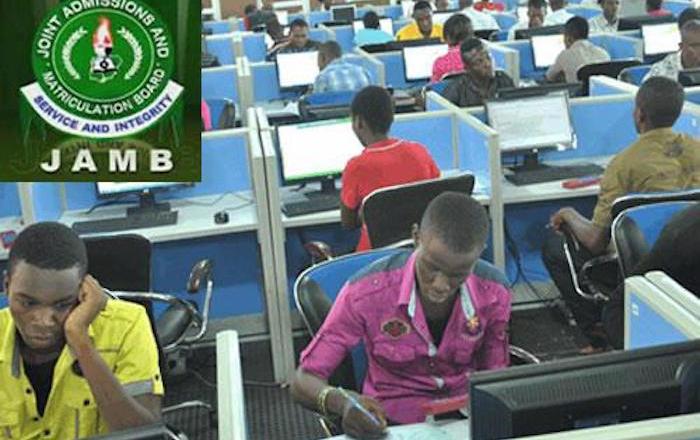
In a situation whereby JAMB is running Computer Based Test (CBT), I can says this authoritatively even from my own University, whereby none of those centres is nothing to write home about when it comes to decency, adequacy, preparation and management.
Most students stay and stand for hours waiting for their turns to be accredited into the Exam Hall and when they get into the halls, the Computers are not working.
Let lecturers and University management who run these CBT Centres during JAMB face the reality and be truthful that they are not doing well in terms of the arrangement made for students to write their CBT.
So the glitch in 2025 JAMB results and JAMB Process is as a result of corruption and it was an evidence to prove low assessment of JAMB in terms of national enrollment Test.
I will even suggest that JAMB should be scrapped completely and let universities, with oversight by National University Commission (NUC) handle their admissions. It used to be so in the past, if Universities are autonomous, that autonomy should include Universities being able to process their own admission of their Students. So JAMB is moribund, no longer relevant and JAMB is ineffective and has failed this country.
The next question is is JAMB reformable? If it is reformable what are the areas of reformation that is necessary to make JAMB become more effective and functional.
As I’ve said earlier that Universities are autonomous and can process their students or applicants for admission but it is good to have a national body so as to have a coordinated national policy and programs on recruitment of students into our universities. Other countries don’t have centralized body like JAMB but if we want to retain JAMB, it means that JAMB has to be purged drastically.
Punitive measures must be put in place to punish any officials of JAMB who are involved in corruption.
Universities should also raise facilities supported by JAMB to fund properly and equip the CBT Centres. I can tell you with empirical commitment that students stand under rain, under sun, some standing for hours waiting to queue for their turns in order to write JAMB exams.
This to an extent stress the students, most of the computers should be replaced, proper time should be given to students, proper convenience where students can sit down while waiting for their turn should also be improved. If these things are looked into it will help to improve the effectiveness of JAMB.
What has changed in the Security sector
If we take for instance the Security index, nothing has improved with respect to security sector management of the Country.
We can say that Nigeria has relapsed into the worst kind of insecurity experiences within the past two years.
Take for instance Poverty Index, since 2018, Nigeria has been ranked as the poverty capital of the world. This embarassing position in the rank order hasn’t even improved, Nigeria has slided deeper into poverty.
It goes like that with democracy and governance performance index.
In the democracy sector, we have not seen anything fundamentally transformative, there Is no transformational democracy, there’s nothing showing that the democratic political system in Nigeria has embarked on is closest to International best practices and so the expectations of Nigerian citizens on the basis of democracy and governance has not been satisfied.
Let me say that one of the things that endeared President Tinubu’s to most Nigerians was his role in anti military governance. He was very active in pro-democracy movement and suffered for it and paid huge sacrifice for it. So coming from that background and antecedent in democracy agitations it is expected that
His Excellency should be the number one citizen protecting the philosophy the virtues and the principles of democratic governance.
But what we are seeing under his watch in the past two years has not shown his full commitment to Democratic consolidation in Nigeria. If we are to score this regime on democracy and Governance Indicators, I can say that based on available statistical data, it has not been achieved.
That is why the other key performance indicators need to be strengthened, what is happening to security, what is this administration doing on terms of national security.
I have in recent speech addressed the issue of security sector reforms, Nigeria needs drastic security sector reforms. The security system in this country starting from equipments and motivation of military and security personnel is very low and inadequate. There is very low morale among the personnel, staff or officers of the armed forces and security agencies in this country, because of poor condition of service, poor renumeration, high risk involved in their work and lack of functional weapon systems.
So the weapon systems of the security has to be reformed, the training and motivation of military personnel has to be improved so that personnel will be motivated enough to sacrifice in the protection and security of their country.
Of what impact is the Bill of Debt given by IMF?
Another important indicator for measuring Performance or assessment of a government is Indebtedness, the indebted profile of a Country matters so much on how development and other governance activity be achieved.
Today Nigeria is ranked as most indebtedness Country in Africa, if not the most indebtedness Country in the world. It got worse with this administration.
This administration has become popular for continuously asking for external borrowing.
External borrowing is what has kept Nigeria in the lowest level of global indebtedness.
Nigeria is a highly indebted Country and any Country that is highly indebted cannot be assessed properly as being delivering governance. The worst of all is that Nigeria is borrowing not to engineer the productive sector but only to service the Country.
For instance, we borrow money to pay salaries. When a Country is borrowing money to pay salaries, that country is performing very low in terms of Global indebtedness Profile. It’s embarassing to emphasize that Nigeria is a highly indebted Country and we can link the indebtedness to dependency, the Country becomes dependent to its borrowers and lenders.
That is why If I have to address the question on IMF giving Nigeria a soft landing recommendation to borrow more money, I can say that IMF is not an institution for developing countries, rather it’s an institution for highly rich countries, IMF serve the purpose of ensuring that the global inequality in terms of the G8 and the rest of the world remains intact.
One way of achieving it is to encourage countries like Nigeria to continue to borrow and borrow, the more borrowing a Country embarks on, the more indebtedness that country is. Hence, Nigeria is indebted and therefore being ineffective in terms of managing national revenue and national resources. As long as Nigeria is highly indebted, Nigeria cannot be rated as a highly performing Country.
So this regime unfortunately has dragged Nigeria deeper into debts, debts that do not have strategic policies or strategic programmes to deliver Nigeria from Global indebtedness.
Few years ago Nigerian was trapped but during the period of Obasanjo and when Prof. Ngozi Okonjo-Iweala was Minister for Finance, Nigeria was let loose from the stronghold of International Indebtedness.
But now, Nigeria is highly trapped in terms of international indebtedness.
To be continued on Thursday, June 26