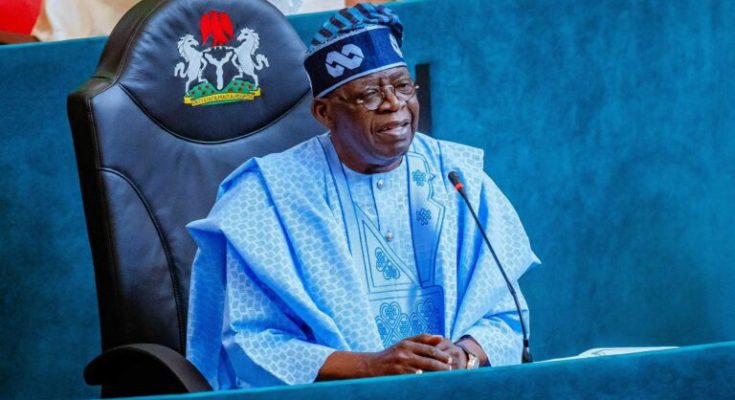

President Tinubu
A landmark $5 billion oil-backed loan agreement between Nigeria and Saudi Arabian state oil giant Aramco is facing significant hurdles, primarily due to a recent decline in global crude oil prices.
Four sources familiar with the negotiations, who spoke to Reuters, indicate that the price drop has triggered concerns among the banks expected to co-fund the facility, stalling what would be Nigeria’s largest oil-backed loan to date and Saudi Arabia’s inaugural participation of this scale in the West African nation.
Price Volatility and Production Challenges
The proposed facility, initially discussed by Nigerian President Bola Tinubu and Saudi Crown Prince Mohammed bin Salman at the Saudi-African Summit in Riyadh last November, represents a crucial component of Nigeria’s efforts to bolster its national budget.
President Tinubu last month sought approval for $21.5 billion in foreign borrowing, with the Aramco-backed loan intended to be a significant portion of this.
However, the slow progress in discussions directly reflects the strain imposed by the recent oil price downturn. Brent crude futures have fallen approximately 20% from above $82 per barrel in January to around $65 per barrel currently.
This decline is largely attributed to a strategic shift in OPEC+ policy aimed at regaining market share rather than curtailing supply.
A lower oil price means Nigeria would need to collateralise more barrels to back the $5 billion loan.
This presents a challenge, as years of under-investment in Nigeria’s oil sector are complicating the country’s ability to meet ambitious production goals.
Nigeria’s 2025 budget assumes a crude price of $75 per barrel and a production target of 2 million barrels per day (bpd). However, in April, the country pumped just under 1.5 million bpd, according to the May OPEC market report, highlighting a significant shortfall.
Lender Concerns and Existing Debt Load
Sources indicate that banks involved in the talks, expected to co-fund part of the loan with Aramco, have expressed considerable concerns over oil delivery guarantees, further slowing discussions.
Gulf banks and at least one African lender are reportedly involved, though their identities remain undisclosed. “It’s hard to find anyone to underwrite it,” one source told Reuters, citing worries over the availability of crude cargoes.
Nigeria has extensive experience with oil-backed loans, typically utilising them for budget support, shoring up foreign reserves, or financing the revamp of state-owned refineries.
At $5 billion, the Aramco loan would require backing by at least 100,000 bpd of oil, potentially almost doubling the roughly $7 billion in oil-backed loans Nigeria has taken in the last five years.
Currently, Nigeria is already allocating at least 300,000 bpd to repay existing oil-backed loans from its state-owned oil company NNPC Limited, though one facility is expected to be paid off this month.
Also Read:Oil price hits $84 per barrel as OPEC cuts supply
Oil price crash will bankrupt Nigeria’s economy
June 12: Reinstate Fubara now,Bode George urges Tinubu
The fixed volume of oil committed to existing loans means that when crude prices fall, it takes longer to repay these facilities. Additionally, lower prices necessitate that NNPC Limited funnel more crude oil to its joint-venture partners for operational costs.
“You have to either find more oil, or find a way to renegotiate those deals,” another source commented. Nigerian trading firm Oando is reportedly expected to manage the offtake of the physical cargoes for the proposed Aramco loan.
NNPC Limited is actively trying to boost oil output, and President Tinubu has issued an executive order aimed at cutting production costs, which would free up more revenue from each barrel produced.
However, the current challenges underscore the precarious balance Nigeria faces in leveraging its oil assets for much-needed financing amidst global price volatility and domestic production constraints.
Source:Global Financial Digest/Reuters