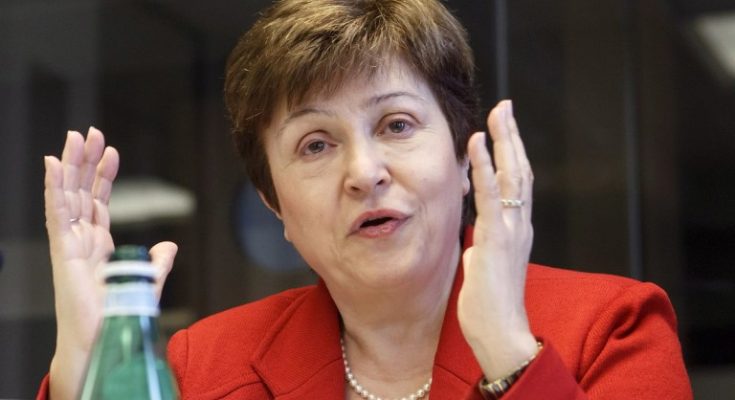

IMF Managing Director Kristalina Georgieva
International Monetary Fund (IMF) Managing Director Kristalina Georgieva has raised fresh concerns about the impact of newly announced U.S. tariffs, cautioning that the measures could further dampen an already fragile global economy.
Her statement, issued in Washington on Thursday, comes as markets digest a sharp downturn in investor sentiment following the White House’s escalation of trade restrictions.
“We are still assessing the macroeconomic implications of the announced tariff measures, but they clearly represent a significant risk to the global outlook at a time of sluggish growth,” Georgieva said.
The IMF chief’s remarks highlight growing alarm within the global financial community over the resurgence of protectionist trade policies, which analysts say could undermine the tentative recovery underway in advanced and emerging markets.
Georgieva emphasized the importance of restraint and multilateral cooperation:
“It is important to avoid steps that could further harm the world economy. We appeal to the United States and its trading partners to work constructively to resolve trade tensions and reduce uncertainty.”
The IMF’s full analysis of the potential fallout will be included in its upcoming World Economic Outlook (WEO), set for release during the IMF/World Bank Spring Meetings later this month.
Global Economic Uncertainty and the Road Ahead
The timing of the tariff hikes could prove consequential, as global growth projections remain subdued amid persistent inflationary pressures, tight monetary policy, and weak trade volumes.
The IMF’s upcoming WEO will likely include revised forecasts for GDP growth, global trade flows, and investment trends across developed and emerging economies.
Economists warn that an escalation of trade barriers—particularly between major economies such as the U.S. and China—could spark ripple effects through commodity markets, global supply chains, and financial market stability.
Impact on Nigeria and Emerging Markets
For commodity-dependent economies like Nigeria, where oil exports remain the primary source of government revenue and foreign exchange, prolonged global trade disputes could exert downward pressure on crude prices, weaken budget expectations, and further complicate monetary policy responses.
Also Read:With $259b, GDP,Lagos now Africa’s second largest city economy
Phase out electricity subsidy,IMF tells Nigeria
“Nigeria is highly exposed to fluctuations in global demand and pricing of crude oil. A slowdown in global trade can hurt oil demand and by extension, government revenues and currency stability,” said Lagos-based economist Tunde Ajayi.
With the naira under pressure and inflation still elevated, Nigeria’s policymakers will be closely watching global trade and fiscal developments for signals that may influence external financing conditions, foreign investment inflows, and economic recovery prospects.