…triples 2023 spending by over 300%
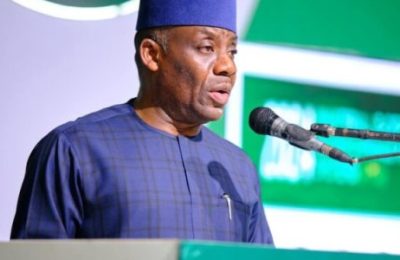
Caption:Wale Edun Finance Minister
Nigeria’s federal government is grappling with a significant fiscal imbalance, as the 2023 fiscal year saw government expenditure exceed revenue by more than threefold.
According to data from the Accountant General of the Federation, the federal government generated N5.99 trillion in revenue while spending N19.50 trillion, leading to a deficit of N13.50 trillion—equivalent to 225% of its total revenue.
The stark deficit underscores the country’s ongoing struggle to achieve fiscal responsibility, as the government continues to borrow heavily to finance its operations.
Read ALSO:Economic hardship:Let Governors live up to their responsibilities to the people -IMPI
Of the total revenue, N3.80 trillion came from the Federation Account Allocation Committee (FAAC), N1.98 trillion was from the federal government’s share of independent revenue, and N2.39 trillion from its share of the Federation Account.
Additional sources included N715.75 billion from exchange rate differences and N441.87 billion from Value Added Tax (VAT).
Debt servicing emerged as the largest expenditure category, accounting for 43.9% of the budget, or N8.56 trillion.
Non-debt spending followed, consuming 27.8% at N5.42 trillion, while capital expenditure accounted for 23% at N4.49 trillion. The disproportionate allocation towards debt servicing highlights the growing financial burden of Nigeria’s debt obligations, which now surpasses the revenue generated.
The burgeoning deficit and reliance on borrowing pose serious implications for Nigeria’s economy. With government spending significantly outpacing revenue, the country risks increased inflation, devaluation of the naira, and rising interest rates.
Furthermore, the high cost of debt servicing constrains the government’s ability to invest in critical infrastructure and social services, potentially exacerbating the already challenging living conditions for many Nigerians.
Economic analysts warn that the fiscal imbalance could lead to further economic instability, calling for urgent reforms to improve revenue generation and reduce reliance on borrowing.
“The government’s current fiscal trajectory is unsustainable,” said an economist at the Lagos Business School. “Without significant policy shifts to boost revenue and curb spending, the deficit will continue to widen, putting more pressure on the economy and citizens.”
The imbalance between revenue and expenditure has also raised concerns about Nigeria’s ability to meet its debt obligations. With a growing portion of revenue directed towards debt payments, the government may struggle to fund other essential services, including education, healthcare, and infrastructure development, further impacting the country’s socio-economic landscape.
The situation calls for a reassessment of fiscal policies, including strategies to diversify revenue sources, enhance tax collection, and manage public expenditure more effectively.
As the government contemplates its fiscal future, the impact of its current spending patterns will be felt across the nation, affecting everything from the cost of living to the broader economic stability.
The federal government has yet to outline specific measures to address the deficit, but analysts suggest that reforms aimed at boosting economic growth, improving the efficiency of public spending, and reducing dependency on debt financing will be critical to restoring fiscal balance and ensuring sustainable economic development.
Source:Global Financial Digest.