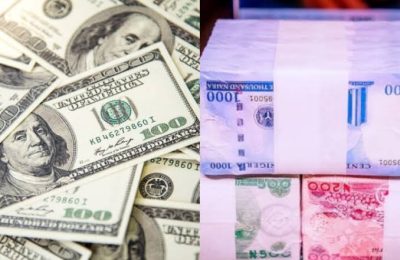
United States Bundles of 100 dollar bill
–
Nigeria’s external reserves have seen a slight decline of 1.16%—equivalent to $430 million—in the past two weeks following the reintroduction of the Retail Dutch Auction System (rDAS) by the Central Bank of Nigeria (CBN) in the foreign exchange (FX) market.
Data from the CBN indicates that foreign currency reserves dropped to $36.44 billion as of August 22, 2024, down from $36.86 billion recorded on August 6, 2024.
The CBN resumed FX sales to end users through rDAS on August 6, aiming to alleviate demand pressures and enhance price discovery. In two auctions, the apex bank sold a total of $1.7 billion to retail end users through commercial banks.
Head of Financial Institutions Ratings at Agusto Consulting, Ayokunle Olubunmi attributes the decline in reserves to a seasonal surge in FX demand rather than solely to CBN interventions.
“I do not think the intervention should be the only reason because if you check the last auction, what they sold was not up to a billion dollars,” Olubunmi remarked, highlighting other obligations that impact reserve levels.
The Nigerian government has expended $2.19 billion on debt service payments from January to May this year, adding to the pressure on reserves. Olubunmi compared the reserves to a bank account, noting, “External reserves are like a bank account; money will go out, and go back inside.”
July through September typically sees heightened FX demand due to school fees payments, summer travel, and businesses stocking up. Olubunmi noted, “This is a period when the demand for FX is high. People going to school will buy their school fees.
People are going for summer, and businesses want to stock up.” He expressed optimism about future reserve levels, citing the potential inflow from the Federal Government’s planned $500 million bond issuance. “By the time it becomes successful, it will also make the reserves come up,” he said.
CEO of the Centre for the Promotion of Private Enterprise, Muda Yusuf attributed the reserve situation to fluctuations in inflows and CBN’s intervention frequency. He also highlighted the potential impact of the proposed dollar bond on the economy.
“I think the first statement was to announce a change in their intervention method to the Dutch auction,” Yusuf said, adding that reserve levels depend primarily on inflows, including those from the Nigerian National Petroleum Corporation (NNPC), remittances, portfolio investments, and foreign loans.
Yusuf pointed out that lower inflows from NNPC, possibly due to forward crude sales and securitization deals, could contribute to reserve declines. He suggested that increased CBN interventions could elevate outflows, further depleting reserves if not balanced by sufficient inflows.
“Maybe they are intervening now more frequently. That means the outflows will increase. When outflows increase more than the inflows, then the reserves will be going down,” Yusuf explained, though he reassured that the decline is not yet at a critical level.
Also Read:CBN currency swap jumps to $12bn
DSS seizes Emefiele’s passport, plans home, office search
Regarding the Federal Government’s dollar bond, Yusuf downplayed any link to bank recapitalization, emphasizing its appeal to Nigerians in the diaspora and those with funds in domiciliary accounts.
“The dollar bond is to attract dollar inflows into the economy,” Yusuf said, citing favourable rates compared to those available to diaspora Nigerians investing abroad.