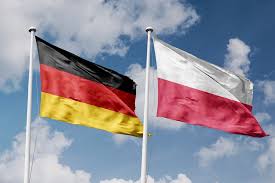

German and Polish leaders agreed an action plan on Tuesday to tackle not only past wrongs such as reparations from World War II, but also current issues, such as defence policy.
The plans were outlined in a paper circulated by the German government as Chancellor Olaf Scholz and a group of ministers visited Warsaw for government consultations.
There was however no concrete figures on war reparations or military aid in the document.
Poland’s previous national address is conservative Law and Justice Party (PiS) government, which led the country from 2015 to 2023, had demanded reparations totalling 1.3 trillion euros (1.39 trillion dollars).
Now that both countries have centre-left governments, bilateral relations are witnessing something of a new start.
The government consultations, for example, were the first such talks since November 2018.
Polish Prime Minister Donald Tusk has said in the past that he expects Germany to make material and moral reparations for the damage caused during World War II.
The action plan states: “The two governments are conducting an intensive dialogue on measures to support the surviving victims of the German aggression and occupation in the years 1939 to 1945, remembrance and security.’’
The paper refers to the construction of a German-Polish House in Berlin as a further project for reconciliation.
The house is intended to commemorate the complicated German-Polish history and the brutal German occupation from 1939 to 1945 and create a place of remembrance for the Polish victims.
Defence needed a major part of the action plan
Scholz was welcomed earlier with military honours to Warsaw by Tusk, marking the start of the joint government consultations.
He travelled to Poland with 12 federal and state ministers.
According to government sources in Berlin, the consultations should provide a strong impetus for good neighbourly relations.
A large part of the 40-page action plan deals with the countries’ current defence issues.
EU and NATO member, Poland was one of the most committed political and military supporters of Ukraine, bordering Ukraine and Russian ally Belarus.
The action paper says: “We will strengthen the interoperability and standardisation of our defence capabilities, increase production capacities and promote investment in our defence industry.’’
Specifically, the paper referred to the development of joint initiatives in the field of tanks and ammunition, including increasing the availability of spare parts for Leopard battle tanks, which both countries have supplied to Ukraine. (dpa/NAN