
Even the most unschooled person knows the classic
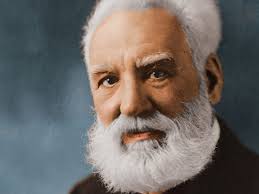
story of Alexander Graham Bell, the Scottish-Canadian inventor (and U.S. citizen), who, in 1876, shouted the first documented telephone transmission to his assistant, Thomas Watson: “Mr. Watson, come here! I need to see you.” Bell was in an adjacent room, struggling with his invention, when he spilled battery acid on himself and made his famous cry. (At least, that’s according to Watson, who recorded the story in his memoirs written nearly a half-century after the fact). In reality, the history of the telephone’s invention involves dozens of colorful historical characters and more than 600 separate court cases.
Johann Phillip Reis (1860) A schoolmaster and self-taught scientist, the German inventor Johann Philipp Reis initially was heralded by many European scientists as the first inventor of the telephone. Some still credit him with the achievement. In 1859, Reis documented the results of experiments he had conducted proving that electricity, like light, can propagate through space without the need for wires.The next year, he constructed a device in which sound waves struck a membrane, which actuated a platinum lever that would open and close an electrical circuit as it bounced on a contact made of platinum foil. Reis claimed that his “telephon” could transmit sound along a wire conductor for a distance up to 100 meters.
There is some evidence that Reis lectured on his telephon as early as 1854. What is known for certain is that he outlined how the invention worked in detail during a speech before the Physical Society of Frankfurt on October 26, 1861.50 The next year, he demonstrated an improved model to the Inspector of the Royal Prussian Telegraph Corporation, who showed little interest. However, models of his device were sent to London, Dublin and elsewhere.Reis’s telephon aroused some controversy when it was introduced into evidence in a series of patent cases in which Bell would ultimately prevail. In the courtroom, Reis’s telephon could be made to transmit sounds, but not intelligible speech. Rather than support the contention that Reis’s telephon pre-dated Bell’s, this apparent failure—demonstrated by purported electrical “experts,” not the inventor himself—was seen by the court as evidence of Bell’s singular achievement. No one appears to have invited Reis to the courtroom, even though he had successfully demonstrated in 1861 that his device could reproduce speech when he transmitted (distinctly) the phrase “The horse does not eat cucumber salad.” Sadly, however, no documentation of his demonstration found its way into the legal record. In an interesting historical footnote, in 1947, engineers from STC (a British telephone company),made a few minor adjustments to a Reis prototype and found that it was able to reproduce speech “of good quality, but of low efficiency.” However, at the time of their discovery, STC was in negotiations with AT&T (formerly the American Bell Telephone Company).
Fearing that evidence undermining Bell’s claim to the invention would disrupt negotiations, STC’s chairman ordered that the tests be kept secret. It was years later,
when documents were found at the London Science Museum, before anyone outside the company knew of the successful tests of Reis’s device.
Source:~ Bethune, B. (2008). “Did Bell Steal the Idea for the Phone (Book Review),” Maclean’s, February 4. http://www.the-canadianencyclopedia.com/en/article/
did-bell-steal-the-idea-for-the-phone-book-review.
~