
“The act seeks to prohibit and prescribe punishment for corrupt practices and other reated offences.
It establishes an Independent Corrupt Practices and Other Related Offences Commission vesting it with
the responsibility for investigation and prosecution of offenders thereof.
Provision has also been made for the protection of anybody who gives information to the commission in
respect of an offence committed or likey to be committed by any other person”
The above is the abridged opening paragraph of Independent Corrupt Practices and other related Offences Commission (ICPC) one of the commission’s former President Olusegun Obasanjo established t make Nigeria a corrupt free country.
That was after his famous speech of ‘no longer business as usual’ on inauguration day on May 29, 1999.
Obasanjo was worried at the high level of corruption involving Nigerians of all strata and decided to set up ICPC in 2000 that was supposed to checkmate corrupt activities among low-level Nigerians and civil servants. and appointed late Justice Mustapha Akanbi s it’s pioneer Chairman.
Since then, the Commission has survived two presidents and secured the conviction of many, the latest being that of a former academic staff of Waziri Umaru Federal Polytechnic, Birnin Kebbi, Kebbi State under the then government of President Buhari who also vowed to fight to corruption to standstill with his clinche, ” if we do not kill corruption, corruption will kill us.”
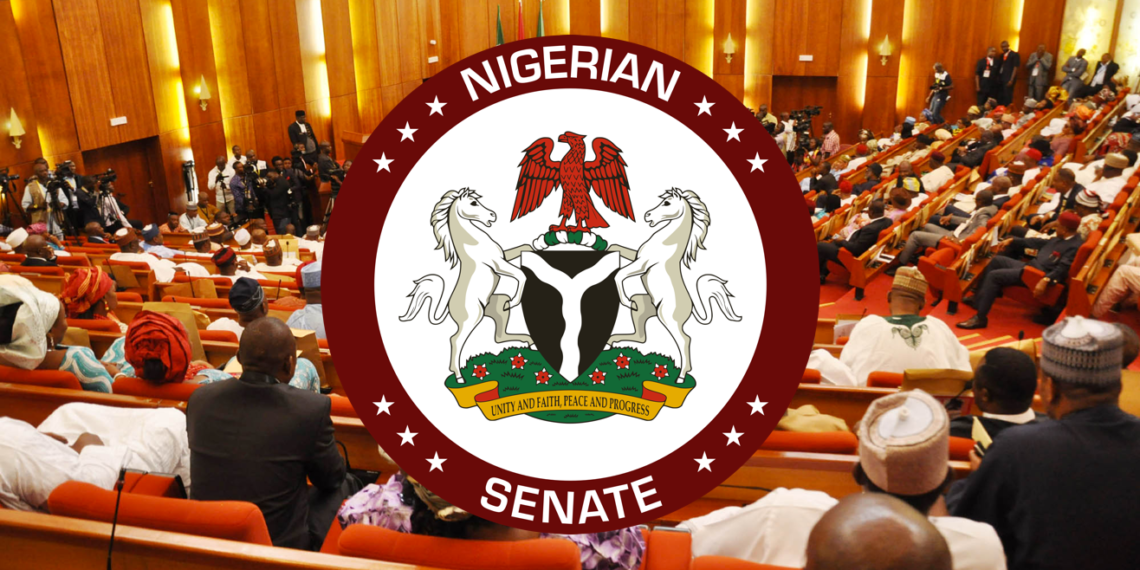
However, the out-going 9th senate of the Federal Republic of Nigeria, that had pledged to assist Buhari in his fight against corruption seem to be helping courruption in sending Nigeria and Nigerians to their early graves with its recent amendment of the act setting up the commission. They are fighting back at the Commission’s present chairman, Bolaji Olufunmileyi Owasanoye, who has been unbending in his fight against the lawmakers and the constituency project scam, which a lot of the legislators are neck deep in. And they have found willing horse (s) in the directors of ICPC who are hell bent in sharing powers with their chairman.
Lawyers who spoke to us on the amendment said that it is a calculated attempt by the legislators to make the commissionan in potent commission and called on the new president, Bola Ahmed TInubu, not to let it stand.
“The action of the senators is not unconnected with the uncompromising stand of the Chairman on the Constituency Projects where over 500 contractors have been forced to return to project sites by the ICPC,” a source in the office of the out-going senate president told this reporter. “The constituency projects are sponsored by the legislators but they now see it as a cash cow to amass wealth. The criminal amendment has whittled down the powers of the ICPC chairman and the Commission,’ the amazed lawyer said.
Our source who does not want his name in the print went further to reveal that in amending the act, “the Senate amended Sections 3(5), 3(6), 3(7), 3(8), 3(9) and 3(10) of the Principal Act by substituting the word ‘board members’ with the word ‘commissioners’ thereby creating a new Section 3 of the Principal Act by inserting subsection 3(11) that established offices for the Commissioners of the Commission.
The new subsection 3(11) now states that the Commissioners of the Commission shall have the following offices:
Commissioner (Investigative, Matters), Commissioner (Legal Matters), commissioner (Prevention, Systems Review and Financial Intelligence), Commissioner (Asset Recovery and Management) among others.
And that in assigning responsibilities to the Commissioners, the President shall have regard to their geo-political zones and respective disciplines.”
The import of these amendment of Section 3 of the Principal Act and the new subsection 3(11) is the whittling down of the powers of the Chairman of the Commission unlike other law enforcement agencies such as the Economic and Financial Crimes Commission, National Drug Law Enforcement Agency and Nigeria Customs Service, among others , thus, making the commission a dog that can only bark but not bite.
But even at that the legal experts we sought their opinions on the amendment, however, are of the belief that the powers of law enforcement agencies cannot be subject to decisions of Committees and political considerations.
The senate did not stop at the amendment of section 3, it also tampered with section 4(2) of the Principal Act. While Section 4(2) of the original ICPC Act states that states the Chairman and any four board members of the Commission shall constitute a quorum for meetings, the Senate amended the existing subsection (2) for a new subsection (2). that now states that quorum for meetings shall be ‘any five board members’ and the five members in attendance shall appoint a Chairman to preside over the meetings.
The import of this amendment is that ‘any five members’ of the board can meet and take far reaching decisions. And in further attempts at whittling down the powers of the Chairman of the Commission, the Senate also amended Section 7 of the Principal Act on the issuance of administrative orders by the Chairman of the Commission called “standing orders”.
Section 7 (1) of the Principal Act states that the Chairman may issue administrative orders to be called “standing orders”, which shall conform with the provisions of the general control, training, duties and responsibilities of officers of the commission and for such other matters as may be necessary or expedient for the good administration of the Commission and to ensure the efficient and effective functioning of the Commission. The Senate amended Section 7(1) of the Principal Act by substituting the word ‘Chairman’ for the word ‘Commission’.
The legislators also shamelessly whittled down the provision of punishment from 7 to five years for anyone caught offering or accepting gratifications in Sections 8, 9 and 10 of the Principal Act.
The amendments as it stands now poses serious threat to the fight against corruption in the country, which the Commission has doggedly fought for over two decades.
Some members of the Senate Committee on Anti-Corruption and Financial Crimes are known to have also been compromised by some board members of ICPC who have been seeking for more powers for the board members unlike what obtains in other anti-corruption agencies and law enforcement agencies, a case of enemies within. Some board members are trying to get more powers to decide investigations, prosecutions and others rather than what the law says which is the responsibility of the chairman.
ICPC secures 15 years conviction of ex-poly staff
The full implications of these amendment, if allowed to stand unchecked through veto by the new president, Bola Ahmed TInubu, are as follows.
The amendment of the ICPC ACT by whittling down the powers of the ICPC Chairman conflicts with the globally recognised standard for law enforcement agencies where responsibility is not shared but actually vested in the Head of the Agency.
The amendment of fines by the Senate may be counter-productive to prosecution, stretch trial or lead to judicial pushback.
By substituting members of the board with commissioners will be misleading to the general public. Section 5 of the Principal Act provides that ICPC officers have the powers and immunities of a police officer under the Police Act and any other law conferring power on the Police or empowering and protecting law enforcement agents.
Therefore, an attempt to transmit the titles of commissioners to board members, who are political appointees on a law enforcement agency would create an absurdity unknown within law enforcement circles.
The boards of Police Service Commission, Code of Conduct Bureau and Tribuna, EFCC and NDLEA do not refer to their board members as commissioners.
The provisions of the Senate vesting Committees of the Board with such powers or functions is tantamount to empowering the Board to carry out the functions of staff of the Commission
On meetings of the board, it is the accounting officer of the Commission which is the Chairman that can only preside at all meetings of the Baird or whoever he so designates. A random appointment of any of the members to preside at a board meeting as passed by the Senate will go against his responsibility as the accounting officer.
On divesting the powers of the ICPC Chairman, it has grave implication. As the accounting officer of the Commission, the Chairman was given certain administrative and operational powers in Sections 7 and 70 of the Principal Act. It stands to reason that with responsibility as the accounting officer comes certain powers on which basis the Chairman can be held accountable. Therefore, the amendments to Sections 7 and 70 by the Senate to vest those powers in board members of the commission are antithetical to the Chairman’s position as accounting officer of the commission.
ICPC secures seven years conviction of fraudster over crude oil racketeering
The Senate’s deletion of “oral directives” in Paragraph 4(8) of the Principal Act will cause a clog in the operations of the Commission. Oral directives are as valid as written directives in law enforcement circles. Limiting action to written directives alone will slow down the Commission’s effectiveness and efficiency.
So, the amendments by the Senate if not expunged have the potential to hinder the Commission from being an effective law enforcement agency in the critical task of investigation and prosecution of crime, recovery of stolen or diverted public assets, assessment of corruption risk in MDAs and ability to prevent same and stability in the management of the agency.
In the final analysis, it will not be out of place to ask if the senate is the masses of Nigeria or against them?