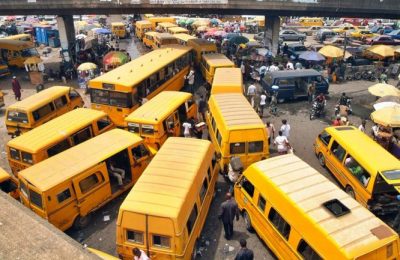
danfo
By Muritala Sule
That minibus called Danfo was once called “Kiakia Bus” (Yoruba for ‘quick bus’). The reason is, it filled up more quickly than the bigger BRT-type bus that existed before the minibus arrived on the roads of Lagos in the mid-60s. The foremost public transport operators at that time were the Zappas Transport Company, run, I think, by some Lebanese; Benson Transport Service and Oshinowo Transport Service, the last two owned by some Ijebu family. Those two bore similar colours and were said to have belonged to a husband (Benson) and wife (Oshinowo) duo.
Portable on why he rejected N5m to perform at Tinubu’s concert
It was the Zappas company that became Lagos Municipal Transport Service (LMTS), when the Municipality acquired it. It further transformed to Lagos City Transport Service.
Those big buses sometimes took eternity to fill up at the bus terminals – Idioro (at Mushin), Yaba, Tinubu, Race Course (Tafawa Balewa Square) and Obalende. None of them operated beyond Idioro, Yaba and Obalende. The rest of the routes from Idioro to other locations in the Lagos suburbs were plied by Bolekaja (Yoruba for “Come off the bus and let’s fight”) and Molue (a name that also implies violence), very crudely- coupled up wooden or metal contraptions that dehumanized their human cargo by cramming them in like sardines in a tin.
All these buses would never leave their terminals until they had a reasonable load of passengers and they wasted a lot of commuters’ time.
Then, somebody introduce the minibus, initially, just the Volkswagen brand. It filled up quickly because it was smaller and its drivers and bus boys were impatient. They loaded kiakia and drove fast and furiously.
Somebody came up with a new name for them: Danfo! It implied how they floated and flew over the road rather than travel within speed limits.
It seemed that the qualification for being its driver was impatience, recklessness and a gift for spewing insults or curses at passengers. The drivers were mostly recruited from Mushin. They drove the way the Son of Nimshi of the Bible’s Old Testament rode a horse. The drivers seemed to derive some kicks from seeing pedestrians scamper in panic out of the road to avoid being run over by them. And it was common that people so menaced shouted: “Ìwọ Danfo yii, ò n ṣièrè ooo!” (Danfo -driver- you must be crazy!”)
About that time, the Apala musician Ayinla Omowura happened on the scene with his vigorous brand that was a contrast to the gentle brand of the most popular Apala player at the time: Haruna Ishola. Instantly, Omowura attracted the energetic youth of the time the way magnet does metals. Most of his fans were the transportation workers and butchers.
A new cult of music lovers had emerged! It came with a signature dress code, dance style – which was energetic and irreverent – and an unconventional hairstyle that was the precursor of punk. That crowd was culturally rebellious and spiteful of anything conservative. It vomited a crude language that wasn’t respectful of sex matters as the older generation was. Even its musicians, especially Omowura and Fatai Ayilara (another Apala popular artist) blatantly sang about the act of copulation.
Omowura sang the praise of his fans, especially the transporters and the butchers and held the franchise of their Ogun Ajobo dance held at different parks all year round. It was a religious propitiation to the god of Iron believed to be the patron saint of the transport business. In one of his numbers, he responded to the public’s labelling of Danfo drivers as the insane lot by singing: “Danfo ò ṣìèrè” (Danfo – drivers – are not mad”)
The Police/Traffic managers tried to check the “madness” of Danfo drivers who contravened traffic regulations at every turn and smoked hard stuff and drank strong drinks even at the wheels.
It would seem, though, that law enforcement has lost the battle of will with Danfo drivers since the drivers still break all traffic rules at will even today, aided by bribe-taking traffic wardens. That puts all of us in danger of falling victim to Danfo’s lawlessness.