Oil marketers insisted on Sunday that the supply of Premium Motor Spirit, popularly called petrol, was still very low despite claims by the Federal Government that it had over one billion litres of PMS, enough to keep the country wet.
Dealers faulted the claim of the Nigerian Midstream and Downstream Petroleum Regulatory Authority and the Nigerian National Petroleum Company Limited on the availability of surplus PMS in-country.
The NMDPRA recently stated that the NNPC had “PMS sufficiency of over 1.6 billion litres as of January 26, 2023 both on land and marine,” as this was re-echoed last week by the national oil company.
But the National President, Independent Petroleum Marketers Association of Nigeria, Debo Ahmed, told our correspondent that the scarcity had failed to abate in many parts of Nigeria because of the very low supply of petrol by NNPC.
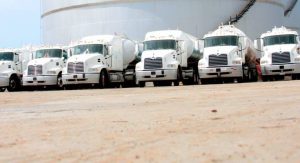
“The government, through its NNPC, should make sure that petroleum products are available. I won’t tell you a lie, the products are not available. It is not enough. I got a phone call from Calabar depot, where trucks are parked and they said there is no product,” he stated.
“They initially said there was product, but it has finished. Go to Pinnacle in Lagos you will see a lot of trucks, all of them waiting. The product is not there.”
When told that the NNPC announced last week that it had over one billion litres of petrol both on land and marine, Ahmed replied, “They don’t have it please. Since how many days have they been telling you that they have 1.6 billion litres, is it not since December?
He stated for the product volumes mentioned above, the oil company and regulator knew where they were.
Kyari said, “We know where the products are. For the 831 million litres, we know the vessels, whether they are mother vessels or shuttle vessels, we know where they are, even as we speak now. So it is not data that is in dispute.
“Every depot owner, including NNPC, submits the data of the volume of trucks that leaves any depot, as validated by our regulator. So every truck that leaves any depot is known to the authority, including the truck number, registration, driver, etc.
“And in most cases, we also know the destination fuel stations, once they are not leaving from a bridging depot. So there is data around these issues and they are specific.”
Kyari insisted that the company had enough products to keep the country wet, stressing that there was no need to complain about lack of products.