
By Simbo Olorunfemi
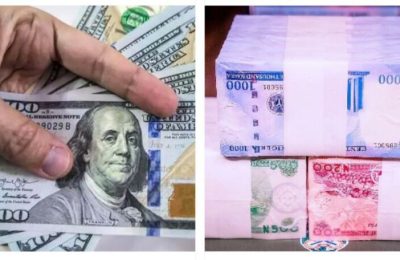
Over the years, an import-addicted Nigeria has been confronted with rising imports even in the face of dwindling receipts from export. That should have some effect on the rate at which the Naira exchanges with other currencies, shouldn’t it? Falling Naira:EFCC raids Bureaux De Change, others
Of course, we like to import everything – from water to toothpicks. It is our way. So, policy makers, recognising that a weakened Naira will affect the cost of goods and services in an import-dependent economy, have come up with initiatives to shore up the value of the Naira, making Fx available through an ‘official window’ for those with ‘genuine’ needs.
Invariably, not all genuine needs are met and there is, in fact, a basket of ‘non-genuine’ needs for FX by people, who insist on these being met, no matter the cost. So, that threw up a thriving parallel market. Even as experts experimented with ideas to bring about a convergence if not elimination of the parallel market, it has not worked.
If anything, the gap between the two markets kept widening more than closing up, making room for Banks, Bankers and other elements to make a kill through round-tripping, especially with weak or often non-existent governance regime. Everyone who was anyone accessed FX at official rates and disposed at the other market. At a point, the economy had been so dollarised that the business of buying political support and other dirty deals were now being done in dollars.
Such was our appetite for Dollars that even a combination of fiscal and monetary measures introduced have not been able to curb it. A ban on importation of certain items at some point only meant those same goods coming in from land borders. A restriction of access to FX from official window for some goods hardly scratched the surface.
As we all know, it is simply a question of dwindling receipts, increased or consistent demand, even when we are not producing for exports.
But to our experts, the fault had more to do with the pegging of the Naira. They argued that we should let it float, let it depreciate, that we should devalue it. They said with that the Naira will find its true level.
Well, some of us queried the sense in a devalued Naira when we know we have no capacity for exports to take advantage of it. We queried the sense in it, asking if such move was not going to lead to an increase in price of many items. They told us not to worry that once that is done, there are these people with so much Dollars outside only waiting for devaluation to bring the money in. They told us how a devalued Naira will change everything, how it will encourage foreign direct investment?
I once asked an Expert, what he considers fair value for the Naira in line with his call for devaluation, he said N350. How will that be advantageous for us beyond releasing more Naira into the pockets of state government officials, sometimes deployed to come chase dollars in the market again? There was really no answer.
All we needed to do was simply float and our questions will be answered, we were told. Government finally floated and of course, Naira has really been struggling. What we saw, at least immediately, was many who had been want to take out Dollars (many, legitimate proceeds and earnings) quickly shipping out. When we ask the experts what is going on now, they mumble something about government having not moved to do this earlier and how delay has damaged the economy.
Point is, we all know or should know that the gap between demand and supply of Fx is the problem. Simply letting the Naira out in the rain, when the weakness in supply is difficult to address, at least in the short term, and appetite for demand still remains largely intact, is what is worrying to me. But what do I know?
The experts have it all figured out. Soon, the Naira should find its fair value.