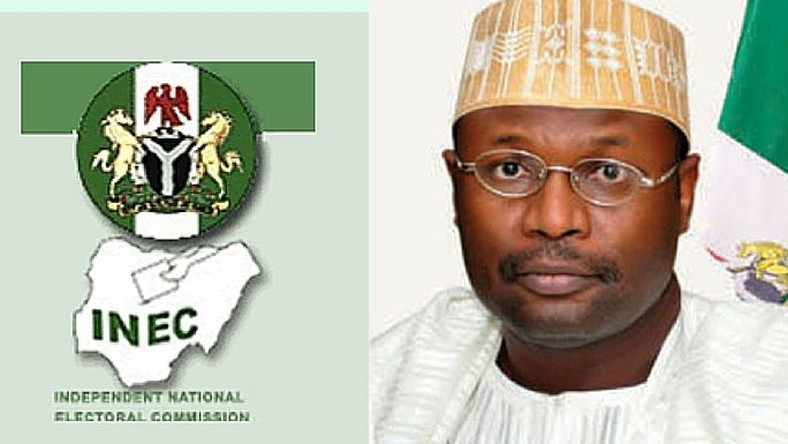

Chairman of the Independent National Electoral Commission, Prof Mahmoud Yakubu, on Tuesday warned political parties over the manners in which they conduct their primaries ahead of coming elections.
The INEC Chair during a meeting with Resident Electoral Commissioners in Abuja, said that parties must realize that while INEC will not monitor their primaries, they have the duty to hold to the best ethics in the choice of their candidates as the commission would not condone any acts that violates its rules on election conduct.
Said he “The Commission wishes to remind political parties that in choosing their candidates for these elections, they must abide by the provisions of the law, INEC’s regulations and guidelines as well as their Constitutions and guidelines. INEC will monitor the primaries as required by law.
“Political parties must therefore hold themselves to the same high standard of free, fair, transparent and credible elections that they expect from INEC during general elections. Any political party that fails to conduct democratic primaries within the timeframe provided in the Commission’s Timetable and Schedule of Activities cannot be expected to submit the names of candidates to INEC for elections.”
While expressing appreciation to all stakeholders over the recently concluded Anambra state governorship poll, Yakubu said the commission did excellently well, adding that the exercise passed off successfully.
He noted, “Let me similarly thank the security agencies for working cooperatively and professionally with the Commission to secure the environment for the peaceful conduct of the election. Our appreciation also goes to all the stakeholders from political parties and candidates; civil society organisations that deployed thousands of observers across the State despite the security challenges; the media for the extensive coverage of the election; the religious, traditional and socio-cultural associations for working for a peace during the election; and the National Peace Committee for bringing parties and candidates to commit to peace before, during and after the election. Above all, the Commission appreciates the voters in Anambra State for their resilience and orderly conduct.”
The chairman said its new technologies that were piloted in Anambra proved successful, adding that the Bimodal Voter Accreditation System (BVAS) that was deployed for the first time in a major election after the successful pilot in the Isoko South I State Constituency in Delta State in September this year was a great success in the governorship poll.
“The BVAS has replaced the Smart Card Reader for verification and authentication as part of our improved voter accreditation process. The new technology was designed in-house by INEC engineers. Like every new technology, glitches were observed and important lessons learnt. We wish to assure Nigerians that the Commission has reviewed the performance of the BVAS in Anambra State and there will be a tremendous improvement leading to optimal performance in future elections,” he added
Saying the BVAS has come to stay, he said the uploading of Polling Unit results on the INEC Result Viewing (IReV) portal in real-time on Election Day was a great success.
“We are convinced that the introduction of technology in voter accreditation and result management is better than the best entirely manual process. It also increases public confidence in the process. We will continue to deepen the use of technology in our elections,” he added.
He explained that the second technological innovation introduced in the Anambra Governorship election went virtually unnoticed.
He said, “For sometime now, dedicated portals were created by Commission to handle different aspect of the electoral process. For instance, the nomination of candidates by political parties, including the uploading of nomination forms, is now done online.
“So too is the accreditation of election observers and the media. In addition, and for the first time in the history of the Commission, the accreditation of polling and collation agents nominated by political parties was done online. This has ensured that all such agents were provided with identification tags bearing not only their party logos, names and other personal details but personal photographs as well. In all, the Commission issued 63,745 identification tags to agents of the 18 political parties that sponsored candidates for the election.”