
Journalists’ gain from IOM 20 Years after
By Ajibola Abayomi,
The journey started in August 2001 when the Federal Government signed a Cooperation Pact with the International Organization for Migration (IOM). This led to the setting up of the United Nations’ (UN) agency structures in Nigeria. 20 years after, the impact on the lives of millions of Nigerians is huge as evident in its activities.
This piece takes a look at the Journalists International Forum For Migration (JIFORM) headquartered in Lagos, Nigeria comprising over 300 journalists covering migration across the continents’ assessment of the pact which encompasses resettlement of internally displaced persons, rehabilitation and integration of returnees and persons returned from abroad, counter measures on human trafficking and child slavery, migration health services and activities which comprise of technical assistance on migration matters.
Since 2002, the IOM has been supporting the efforts of the government to manage migration through capacity-building, advisory services, and technical assistance on migration matters, including migration health and information, assisted voluntary returns, and counter-trafficking. Strong collaborations were established with the media and the national migration stakeholders in order to enhance border management, fight trafficking in persons, and reduce irregular migration and mainstream migration in the country’s development plans.
The organization played a significant role in the actualization of the publication of the National Migration Policy in 2015 even though the Nigerian government was responsible for the content following the National Conference on migration held on April 4 2007 leading to the presentation of the National Border Management Strategy and Action Plan on September 19, 2019 by the IOM and the Nigeria Immigration Service (NIS).
Strategy and action plan were designed to further boost effectiveness and efficiency in the management of Nigeria’s borders, and address the changing realities and new challenges of migration in the country.
Aside from these, technical support is being rendered to the Nigerians in the Diaspora Commission (NiDCOM), the National Agency for Prohibition of Trafficking in Persons (NAPTIP) and other government agencies.
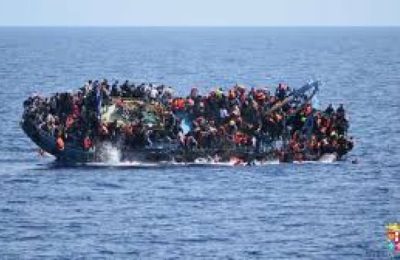
Intervention on the returnee-migrants’ challenges reflect the deep feeling for humanity. A Nigerian, Eiguedo Christian saved on a death row at the Alaharam prison in Libya where he was detained for 10 months in 2017, told the JIFORM that the IOM would continue to occupy a special place in his heart. He was one of the migrants who were trapped in the country while attempting to cross the Mediterranean Sea to Europe and was about to be executed after he was apprehended but the IOM Intervention saved his lives.
The speed at which the IOM also followed up to help rescue and repatriate a 20-year-old Nigerian lady that was dumped at a sexual camp in Ghana for over two years after a petition sent to the NAPTIP on May 6 this year by the JIFORM was exciting. The rest is now history.
Working with various government institutions like the National Bureau of Statistics, National Population Commission, National Commission for Refugees Migrants and Internally Displaced Persons, Nigeria National Volunteer Service, Nigeria Immigration Service, and the Federal Ministry of Labour and Productivity involved in the implementation of its projects, the IOM has in the last two decades exhibited high level transparency and the willingness to improve the Nigerian migration concepts.
Huge resources running to billions of naira are being expended yearly on different migration programmes that are beneficiary to Nigerians. Since 2017 over 22,500 stranded Nigerians were brought home and rehabilitated through the IOM’s Assisted Voluntary Return and Reintegration (AVRR) from 20 countries across North Africa, the Middle East and Europe.
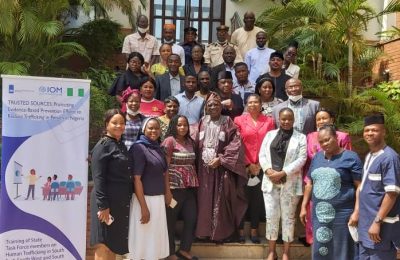
The Nigerian media capacities have been enhanced on safe, regular and orderly migration advocacy. Apart from several training workshops and information sharing sessions, in 2020, the IOM initiated the annual media competition for the Nigerian journalists backed by cash and Information Communication Technology tools as rewards for the winners.
These engagements have further equipped and schooled thousands of journalists on the need to be