By Charles Okogene
The first time I saw a mobile telephone hand set was in the late Oliver De-Coque’s office in the 1990s; that was shortly after the release of one of his album’s, ‘A na ewen obodo ewen.’ The next time I came in contact with it was sometimes in 1999 or thereabout. This time in the neighbouring Republic of Benin. As a journalist, I had accompanied Femi Anikulapo-Kuti to the small francophone country when he went there to perform as part of activities marking the county’s 10th anniversary as a democratic country. Also in our entourage was Biodun Kupoluyi, then of Punch newspapers. In Benin, I not only touched it but was allowed to make a call to one of the managers of the artistes billed to perform alongside Femi Kuti by the young damsel who was our tour guide. The next time I saw the handsets was in a shop, on display, in Switzerland.That day, I had wished I owned one of them but then GSM had not entered Nigeria.
It finally came two years later during the days of Olusegun Obasanjo as president with Airtel taking the lead as ECONET and Mobile Telephone Nigeria,MTN.
Years later, Glo came and raised the bar with its per second billing, a billing system the likes of MTN and Airtel had said will take a longer time to achieve. Etisalat now 9Mobile later surfaced on the scene.
While this is not an attempt at documenting the history of GSM in Nigeria, suffice it to say that almost three decades after, the industry is still graping with a lot of infrastructural and operational challenges if what stakeholders said at the recently concluded Nigerian Communications Commission (NCC), is to be believed. It is surprising that the networks face frequent damage of its under- ground cables that enables subscribers to hear themselves by this activities of road construction companies, which damage their cables in the process of reconstructing and repair of existing roads without fixing back the underground cables with government looking the other way.
This is aside other issues like the stealing and vandalisation of their giant generators, which each network installs anywhere it has cell sites all over the country because of epileptic supply of electricity by DiSCOs. What of the cost of fueling and maintaining the generators? I can hear you say “but it is not perculiar to them.Yes, but is that what obtains in the countries where most of the networks come from except Glo.?
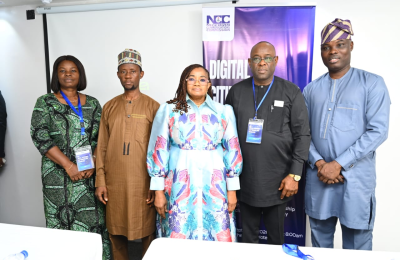
This complain was brought to the fore Thursday November 4 2021 by stakeholders at the Nigerian Communication Commission,NCC,Stakeholders Engagement Forum to Draft Information Memorandum for the Auction of the 3.5Hz band for 5G deployment.
Dr. Adedoyin Adeola the acting Chief Technical Officer,CTO of Airtel raised the curtain for the deluge of complaints by stakeholders present when he disclosed what seems to be the biggest headache of networks in the country. Adeola disclosed that his network alone for instance, records not less than 400 cable cut monthly all over the country as a result of activities of construction companies digging up roads and damaging it’s cable. To make matters worst he said such companies are not compelled by government that in most cases gave them the contract to repair the road to fix the damaged cables, neither can the networks do so. He, therefore canvased for a framework that will enact a law that makes it not only bidding but compulsory on the construction companies to fix any underground cable they destroy.
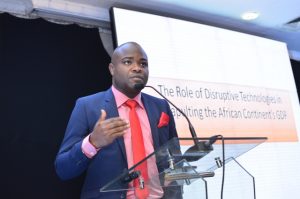
Dr. Adeola, Ag, CTO, Airtel
Adeola said that when such a law and framework is put in place contractors employ to construct roads will be liable to pay for such damage to cables, which the telecommunication companies have had the burden to repair with the attendant additional cost of running and maintaining it’s infrastructures and operations all over the country.
The construction companies he added should also be made to inform telecommunication companies of road repairs and construction such that companies can remove their cables.
Hear him,”It doesn’t come cheap to repair damage cables and the rate at which this damage is done is quite high,we need to put a framework in place to reduce cost of operations by the telecommunication companies,”
Said he, “when the federal and state governments employ the contractors, they dig our cables, cut it and only repair the roads without fixing our cables with it’s attendant cost of repair to us. This is unacceptable.
“A framework should be put in place such that those who willfully damage telecommunications and other equipments without fixing them will be prosecuted.”he added.
To checkmate the reckless manner in which the constitution companies destroy the cables, he canvassed for the setting up of a joint committee comprising the Federal Ministry of Works officials, which will mandate road contractors to give notice of relocation of fibres to telecommunication companies to effect replacement before they embark on road repairs or construction.
According to him, until this is done, telecommunications operators and regulators can then talk on how to improve service delivery in the industry as frequent damage to infrastructures is a hinderance to efficiency of services rendered to consumers.
On his part, Engineer Abiodun Orisadare of the Mobile Telecommunication Network, MTN, called on the NCC to reconsider a reduction of the auction price of licenses to $50 million dollars and that such licenses should be for a period of not less than 20 years go promote efficiency in the operations of the companies.
He is also of the view that the payment for spectrum allocated should be staggered over a period of five years.
He also debunked the claim that the deployment of 5G network has health implications saying that there is no linkage between the two.
In his contribution, Barrister Adeleke Adewolu,Executive Commissioner, Stake holders of NCC,said the essence of the stakeholders forum is for Nigeria to have the full benefits of the emerging digital economy.
On the auction price, he noted that the NCC will spend a lot of money to procure the spectrum adding that Nigeria must get the full benefit of the emerging digital economy with the support of all stakeholders.