
In the first quartre of 2021, I had the opportunity to tour the eleven states in the two geographical zones viz; South-South (Edo, Delta, Bayelsa, Rivers, Akwa Ibom and Cross Rivers states) and South East (Imo, Abia, Ebonyi, Anambra and Enugu states). The trip was full of many discoveries and confirmations of the already known facts.
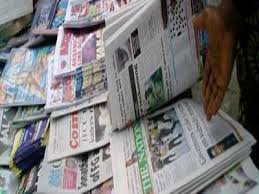
This piece is basically on the national newspapers that circulate in the two regions more so, many of them had mounted printing presses in the regions. The Punch and The Nation have printing presses in Port Harcourt, Rivers state. Vanguard and Independent own printing presses in Asaba, Delta state. The Sun printing press is situated in Aba, Abia state. This Day once had a press in Agbor, Delta state. The media firms that do not own printing presses get their newspapers printed through strategic arrangements or on a commercial basis. This has really helped in getting the newspapers to the newsstands very early.
It was discovered that none of the printing machines prints up to its maximum capacity. For example, each of the machines has the capability to print 100,000 copies per hour but the highest and the lowest daily print runs of the media firms for the two zones was 5,000 and 1,000 copies respectively. This literarily means that the total daily print runs of all the newspapers are not up to capacity of one printing machine. Regrettably, there is nothing to take care of the idle time.
The low print run is highly responsible for the poor quality of print. The printing qualities of all the papers are very horrible! This is understandable because the print run might have been completed while the engineer is busy on the console to achieve a perfect print. This is a big minus. There is likelihood that those saddled with managing the media businesses will be regretting having printing presses in the regions because returns on those investments remain doubtful in many years to come.
It is disheartening to observe and see many media houses deploying their distribution vans along various routes when all the supplies meant for a particular location could be conveyed by just a van. A situation whereby a van is deployed to deliver 100 copies of a particular newspaper does not make economic sense. Monetary value of 100 copies, even if all the copies are sold won’t cover the cost of fuelling the delivery van.
Some media drivers and Independent Transporters are making money from this untidy arrangement of newspapers distribution because they carry other newspapers at a fee; however, this is not known to the company because remittance of such a fee is absent. Copies meant for Abakaliki, Ebonyi state and Calabar, Cross Rivers state are mostly delivered by public or commercial vans because the copies are very few. Supplies of newspapers are largely limited to state capitals save few big cities like Warri, Aba, etc.
Media managers need to come together and embark on joint distribution in order to reduce the delivery cost. The interested media firms need to have a meeting and agree on the take-off time for different routes of which it must be fully complied with. Agreement reached has to be properly documented and signed by those concerned. If ten media houses buy into this suggestion, it means each one of them will embark on a delivery exercise at least, three times in a month.
The sales figures of most newspapers are not encouraging at all; total sales value cannot even defray the cost of plates talk less of the costs of newsprints, inks, diesel, etc. It was observed that the media firms are competing for a share of the contracting markets; readers are being recycled and not created. The job of marketing is becoming tedious in the regions. It seems that the media managers have resigned to fate based on the quality of marketing personnel that are managing the sales functions in the zones.
The sales staff merely practices distribution and sales collection. Sales monitoring is largely lacking because provision for this important function is not there. Some media houses had disengaged their sales representatives and settled for those who get stipends of between N25,000.00 and N35,000.00 per month. It is crystal clear that revenue being generated by each of the media firms in the zones is not enough to offset operational costs. None has attained break-even point talk less of profit declaration as all are still struggling to survive.
Furthermore, it was discovered that a newspaper with its headquartres in the South West is practically not feasible in the zone because it decided to abbreviate its reach due to poor sales. This is traceable to a very long neglect by the successive company’s managements to change the narrative being peddled about the role of its late publisher during the civil war. Since time immemorial, the newspaper has never had it good, sales wise, in the two zones save places like Warri, Benin, etc. There are many other glorified national newspapers.
Most of the local newspapers are doing far better than some of the national newspapers in terms of sales. The community newspapers that readily come to mind are South South Voice, The Atlantic Observer, The Witness, Independent Monitor, National Network, Igweocha, Feel Rivers, Lagos News, Daily Brief, National Advocate, Today’s Top News, The Wind, Rivers Today, Weekly Sunrise Nigeria, Weekly Star, Beacon, Africa Update and Orient Weekend.
The numbers of agents and vendors have dropped drastically. In most sales locations, it was difficult to differentiate between agents and vendors because one person performs the functions of the two. It was observed that the table vendors engage in the sales of recharge cards, nose masks, groundnuts, biscuits, etc in order to compliment their daily income.
Also, electronic media in the two zones review the newspapers in the early hours of the day. As being done in all states, everything in the newspaper is reviewed and listeners are giving opportunities to make contributions on the headlines that catch their attentions via phone calls, text/whatsapp messages, facebook and other social media avenues. Review of newspapers is a prime programme in all the radio/television stations; it attracts sponsorships and advert placements. This has given publicity to the newspapers in the zones.
There was a research conducted in the United States of America in 2015; two major findings were progressive declining in the sales figures and that major newspapers houses loose half of their readers every five years. These are applicable to Nigeria media industry because the present total daily sales figures of all newspapers in Port Harcourt, Rivers state are not up to what an agent sold per day few years ago. The agents that fall under this category are Ezedom, Sokens, Andy, Flomick, among others. Presently, the media firms are fighting over marketplaces that are constant and limited. Important role of media managers remains creating and keeping the readers. The population, literacy level and income distribution of the target audience in the zones are more than enough to lift the media houses out of the woods.
I noticed that the news being published by most of the newspapers are the same; read one and you might have read all the newspapers. The same thing is applicable to the weekend titles. Saturday, Sunday or weekend Editors have a whole week to produce their newspapers; regrettably, they are busy reporting “yesterdays news today” that are not even national in all ramifications! There is basically lack of capacity to create new opportunities; media managers should be busy with provoking tales of missed opportunities instead of relying on government stories and press releases. For example, Deputy Speaker in Ogun state was to be impeached; this was the lead story of a weekend newspaper that was circulated in the two zones. Of what relevance is this news to those in the two regions?
The essence of simultaneous printing is to achieve early delivery of the newspapers and product differentiation but the latter has been jetitioned by the Editors who sit in the comfort of their offices and be determining what goes on in the marketplace. The newspapers are failing in their responsibilities to educate because most of the cover pages stories are regularly laced with avoidable errors. Inner pages are not error free either.
Without further delay, the zones should be turned into cost centres. Business plan needs to be drawn because the existing business model is not working. Business plan is a formal written document that contains the goals and methods of attaining the goals within a specific time frame. This will assist in no small measure in identifying, describing & analyzing business opportunities, creating strategies for growth and determination of future financial needs. Experts should be engaged to come up with workable document because the ones in use by various media firms in the regions had outlived their usefulness.
Finally, it is a statement of fact that newspapers do experience declining or flattering demand at one time or the other. As at today, all newspapers in the two regions are in a state in which the demands for their newspapers are lesser than their various former levels and where further decline is expected in the absence of remedial efforts to revive the target markets. The challenge of flattering demand is revitalization and the marketing task involved is remarketing. Remarketing involves or implies starting a new life cycle and searching for new marketing programmes for a sales declining newspaper.
In conclusion, understanding marketing philosophies will contribute in no small measure in appreciating the position of readers in the newspapers business. Readers are the foundation of print media business and are the reasons why the business exists. Emphasis should be on readers satisfaction and retention rather than just sales transaction. Long term readers engagement occasioned by provision of relevant information that suits their interests should be the watchword more so servicing function like media that fails to generate much needed revenue should be repackaged.
Abiola Ayankunbi is MD/CEO at AbingMO3 Marketing Management Consultancy
abiolaayankunbi@yahoo.com
0802 305 1315