
10 Year-old $1bn Ogoni Clean-Up : Global NGOs berates successive governments over poor handling
….activists Accuse Shell Of Interference In Program
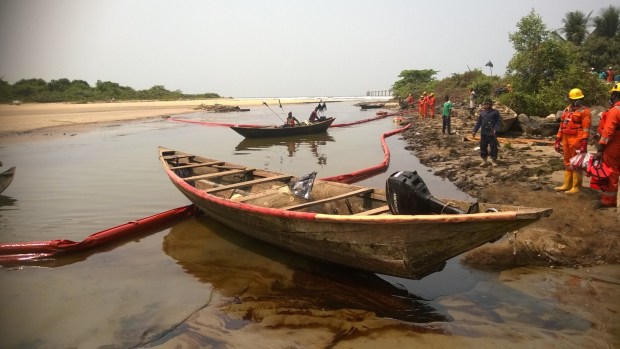
10 years after the United Nations Environment Programme (UNEP) clean-up of Ogoniland and other contaminated areas in the Niger Delta, a new report has unveiled the failures of successive administrations at the federal level since 2010 to decontaminate the devastated sites .
The report allege that throughout the President Goodluck Jonathan’s administration, the Ogoni-clean up programme as recommended by UNEP was neither flagged-off nor implemented throughout his six years tenure.
On President Muhammadu Buhari’s part, the report allege that though his administration flagged-off the Ogoni clean-up programme in 2016, the exercise has been very poor in implementation. The report asked the Buhari administration to therefore fast-track the process of clean-up by implementing strategies to address the root causes of oil pollution and devastation in Ogoniland. The Buhari administration first came into office in 2015 and the president won re-election in 2019 to commence a second tenure in office.
It would be recalled that the despoliation of the Ogoni sites dates back to the early years of black gold discovery on Nigerian soil and Royal Dutch Shell Plc which is as old as the country itself had carried out oil production activities in Ogoni for decades until 1993. The Oil crisis in Ogoni land had provoked agitations led by activist writer, poet, and global environmentalist, late Mr Ken Saro-Wiwa who formed the Movement for the Survival of the Ogoni People(MOSOP), to among other things call public attention to the devastation in Ogoniland. The endless environmental pollution persisted not-withstanding the public outcry.
However, the Nigerian government kicked off the clean-up exercise in 2016 and had since then made multiple statements to the effect that it is progressing with the implementation of the excercise.
Despite government’s claim, a recent report released following investigations carried out by activist’s groups however revealed that work has begun in only 11% of the planned sites while vast areas remaining heavily contaminated.
The groups that undertook the report include Environmental Rights Action/Friends of the Earth Nigeria (ERA/FOEN); Friends of the Earth Europe and Amnesty International.
According to their findings, only about 5% of the sites were included in the current clean-up efforts, alleging further that no site has been entirely cleaned up in the area so earmarked for clean-up.
In 2011, UNEP had released a report documenting the devastating impact of the oil industry in Ogoniland, and set out urgent recommendations for clean-up.
Notwithstanding UNEP’s categorical recommendations and clarity of purpose, the above three global NGOs in their report titled: ‘No Clean-Up, No Justice: Shell’s oil pollution in the Niger Delta’, the implementation process has been so far been fraught with alleged flaws. According to them, actions classified by UNEP as “emergency measures” which include immediate action on drinking water and health protection have not been implemented properly as communities continue to lack access to clean water supplies.
Also, the NGOs in their report accused firms contracted or engaged to carry out the clean-up of lacking requisite expertise in oil pollution remediation as well as not demonstrating accountability as “there has not been any public accounting for how the 31 million USD funding provided since 2018 has been spent.”
“11 of 16 companies contracted for the clean-up are reported to have no registered expertise in oil pollution remediation or related areas,” the report alleged. The activists groups further allege that Hydrocarbon Pollution Remediation Project (HYPREP), an agency under the ministry of Environment, handling the $1bn clean-up has numerous conflicts of interest as Shell, a multinational carrying the baggage of Ogoni contamination “continues to be involved in the governing boards for the clean-up and even places its own staff in HYPREP.”
In 2020 alone, Shell has been facing series of court battles in European nations over the conduct of its business operations in Africa’s largest oil producing nation — Nigeria.
“Over five decades, oil and gas extraction have caused large-scale, continued contamination of the water and soil in Ogoni communities. The continued and systematic failure of oil companies and government to clean up have left hundreds of thousands of Ogoni people facing serious health risks, struggling to access safe drinking water, and unable to earn a living,” the report said.
Reacting to findings of the report, Mr Godwin Ojo of Environmental Rights Action/Friends of the Earth Nigeria said: “After nine years of promises without proper action and decades of pollution, the people of Ogoniland are not only sick of dirty drinking water, oil-contaminated fish and toxic fumes. They are sick of waiting for justice, they are dying by the day. The Nigerian government should acknowledge this project has been a failure and reinvigorate HYPREP with technical skills and strategic thinking, fully involving the community.”
Similarly, Colin Roche of Friends of the Earth Europe berated the Nigerian government agency especially HYPREP for its lack of transparency in handling the clean-up exercise in Ogoni.
“Nine years on, there is still no clean-up, no ‘emergency’ health and water measures, no transparency and no accountability. Without urgent action there will be no justice. While oil companies like Shell spend millions greenwashing their image, tens of thousands of people continue to suffer from their pollution and negligence. European governments like the UK, the Netherlands, France and Italy must act to support a truly effective clean-up and ensure these companies are held accountable for the devastating pollution of the Niger Delta,” Roche said.
In the same vein, Osai Ojigho of Amnesty International Nigeria says ” the discovery of oil in Ogoniland has brought huge suffering for its people.” He said: ” Over many years we have documented how Shell has failed to clean up contamination from spills and it’s a scandal that this has not yet happened. The pollution is leading to serious human rights impacts – on people’s health and ability to access food and clean water. Shell must not get away with this – we will continue to fight until every last trace of oil is removed from Ogoniland.”
The organisations asked the President Muhammadu Buhari’s administration to fast track the process of the clean-up by implementing strategies to address the root causes of oil the pollution.
While calling for the full involvement of local communities, the groups want government to strengthen HYPREP and transform it to an independent, transparent agency without the involvement of Shell in its oversight and management structures which has led to a conflict of interest in the implementation process of the Ogoni clean-up project.8