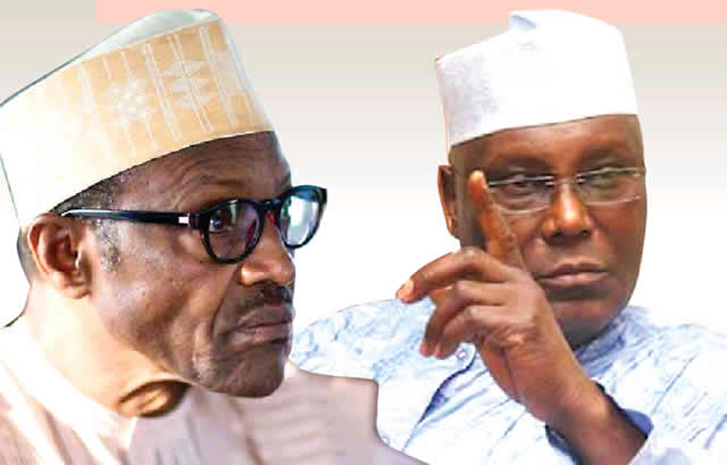

Recently, presidential candidates of various parties have been releasing their policy document for the presidential election which is coming up on the 16th of February,2019.
These documents have been subjected to criticisms from different quarters in the last one week. Discussions and issues have been raised particularly about the policy document of the two major candidates who are Atiku Abubakar of the People’s Democratic Party{PDP} and the incumbent President Muhammadu Buhari of the All Progressives Congress[APC].
Note:My write up is centred on the two major candidates.
Both candidates released their policy document (manifesto) almost the same time and stated what they want to offer Nigerians if elected into power.But the real question is whose plan is more encompassing and can be achievable under the given time frame.
Here,I would be focusing on education and I would state their different policies and give detailed analysis of both documents.
The Current State of Education In Nigeria.
Recently the media reported that about 13 million Nigeria children were out of school which also accounts for 47% of the global out-of-school population.This situation is degrading and has led to national embarrassment.
Since 1999 ,Nigeria has been one of the worst performers in the world when it comes to education,we have a lot of youths and children who are meant to be in school but due to wrong policies, poor learning environment, infrastructural deficit and high cost of acquiring education in Nigeria.
The Atiku Plan
I truly believe that an educated population forms the backbone for a progressive and prosperous society… education is the key to unlocking opportunity, prosperity and progress… education can and should be this key – Atiku Abubakar
Atiku’s in his policy document stated that Nigerians presently spend in excess of $1 billion annually to acquire education outside the country which represents a significant leakage in the economy,particularly when a fraction of the amount over 5 years can make a huge improvement in the country’s health care and educational systems.
Policy Objectives
- Improve and strengthen the education system to make it more efficient,more accessible,more qualitative and relevant to the needs of the Nigerian economy and society.
- Work with the States to carry out far reaching reforms of the systemwith a view to developing a knowledge-driven economy: that is, one in which the generation and exploitation of knowledge would play a predominant part in the creation of wealth.
- Promote a system that will endeavor to catch the recipients young at atime when they are receptive to creativity and critical thinking and equip them with the education and skills required to be competitive in the new global order driven by innovation, science, and technology and to lead healthy, productive, meaningful lives.
- Promote an all-inclusive system which will carry along our citizens with special needs by ensuring that the rights of persons living with disabilities are protected and existing laws are implemented and encouraging states to adopt these laws.
- Also in his document,he promised to rehabilitate decayed and construct new education infrastructure. Added to that he also promised to promote computer education in all schools so as to ensure that Nigeria grows into the 21st century science and technology era.
Next Level Policy Document.
Meanwhile, the APC candidate and incumbent president, President Muhammadu Buhari policy document states only four objectives for the educational sector.
10,000 schools per year would be remodeled and equipped transforming classrooms to labs, workshops and collaboration centers – President Buhari
Policy Objectives.
- To achieve our aspiration of a knowledge economy ‘Every Child Counts’ is our road map to make our primary and secondary school students digitally literate with an emphasis on Science, Technology, Engineering,Arts and Mathematics (STEAM).
- We will interpret the curriculum by imparting functional skills such as coding and robotics,design thinking, collaboration, critical thinking,project management, we will also place emphasis on civic education.
- 10,000 schools per year would be remodeled and equipped transforming classrooms to labs, workshops and collaboration centers.
- All teachersin public primary and secondary schools would be retained in their primary areas of teaching as well as to deliver digital literacy.
Detailed Analysis
- Though both of the policy documents didn’t give a full explanation of their plan on building educational infrastructure,The Atiku Plan stated that it would rehabilitate decayed and construct new education infrastructure but did not state the stipulated time while the Next Level policy document stated it would remodel 10,000 schools every year,to which I doubt the sincerity in that statement due to this administration’s gesture to the educational sector in the last three and half years.
- Both documents did not also state how they plan to reduce the number of children currently out of school.
- The documents also didn’t give plans on how to make sure tertiary institutions are self funded so as to avoid unnecessary strikes rocking tertiary institutions in recent times.
- The Atiku Plan did not plan on re-visiting the curriculum but the Next Level policy document stated that it would reinterpret the curriculum and add functional skills with emphasis on civic education.
By: Tope Oluwabiyi