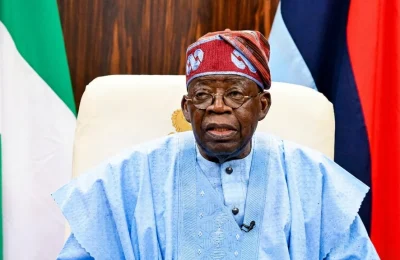
When presidential spokesman Bayo Onanuga challenged television presenters to visit Nigerian markets and acknowledge falling food prices, he reopened a familiar controversy: is President Bola Ahmed Tinubu transforming Nigeria’s economy, or is the Presidency celebrating statistics while ordinary Nigerians continue to struggle?
Onanuga reportedly cited rice selling below N50,000 per bag, compared with approximately N120,000 previously. The claim deserves investigation, not automatic dismissal. Equally, the media should not confuse criticism of government with an obligation to deny every achievement.
As I have consistently argued in The Gauge, the responsibility of journalism is neither to defend government nor to destroy it. It is to measure performance against verifiable evidence.
And food security provides an excellent test.
The statistics tell two stories
According to the National Bureau of Statistics, Nigeria’s headline inflation declined from 15.39% in August 2026 to 14.63% in September. Yet food inflation increased marginally from 19.57% to 19.59%.
These figures establish an important distinction. Inflation declining means that the general rate of price increases is slowing. It does not necessarily mean prices are falling.
Some commodities may indeed have become cheaper. But the purchasing power of households, the profitability of farmers and the availability of food throughout the year remain equally important indicators.
Tinubu’s agricultural interventions deserve recognition
On 13 July 2023, President Tinubu declared a food-security emergency. His administration subsequently pursued fertiliser distribution, agricultural financing, mechanisation, and support for smallholder farmers.
The National Agricultural Growth Scheme–Agro-Pocket programme and its associated financing arrangements have sought to improve access to agricultural inputs.
The administration also inherited longstanding structural problems: insecurity, inadequate irrigation, weak storage facilities, poor rural roads and dependence on imported agricultural inputs.
These difficulties did not originate in May 2023.
The Yar’Adua administration pursued food-security initiatives; President Goodluck Jonathan introduced the Agricultural Transformation Agenda and electronic fertiliser distribution reforms; and President Muhammadu Buhari expanded import-substitution policies and the Anchor Borrowers’ Programme.
Yet, after 16 years, Nigeria still faced serious productivity and food-distribution challenges.
Tinubu’s government has therefore inherited both the achievements and the failures of previous administrations. But after three years and nearly five months, it must increasingly be judged by implementation rather than intentions.
The 2024 import-duty waiver: relief or contradiction?
One of the clearest examples of Tinubu’s intervention occurred in July 2024.
With food inflation exceeding 40%, the Federal Government introduced temporary import-duty and VAT relief on selected essential food commodities. The Nigeria Customs Service subsequently published implementation guidelines covering 15 July to 31 December 2024. The concessions were substantial: Wheat, Beans, Maize, Sorghum, and Millet were slashed from an average of 20% duty and levies to zero percent.
These figures are drawn from the official Nigeria Customs Service announcement and corroborated by the United States Department of Agriculture.
This was a reasonable emergency measure. When millions of citizens cannot afford food, government cannot simply wait for the next harvest.
However, it raises a fundamental economic question.
If imported rice becomes cheaper because government removes a 30% tariff, should the Presidency claim the resulting price reduction as evidence of increased Nigerian agricultural production? Not necessarily. Lower import duties can improve supply and ease consumer prices without increasing domestic output.
Indeed, cheaper imported produce can create additional competition for local farmers who already contend with expensive fertiliser, fuel, machinery and credit.
The Customs guidelines attempted to address this risk by restricting eligibility to established agricultural and processing companies and requiring at least 75% of imported commodities to pass through recognised commodity exchanges.
Nevertheless, the policy’s actual impact must be assessed against import volumes, domestic production, farmgate prices and consumer prices.
Import relief may be an achievement in consumer protection without necessarily being an achievement in agricultural production. That distinction matters.
The scandal on our highways
Perhaps the most disturbing evidence emerged from a BusinessDay investigation published on 16 September 2026.
Investigative journalist Sodiq Ojurongbe documented how food transporters moving through Southwestern Nigeria encounter repeated charges imposed by transport unions, local authorities and other roadside collectors.
One transporter travelling from Iwo in Osun State towards Lagos described successive demands of N2,000, N2,000, N1,500, N3,500 and N1,300 at different points, alongside additional charges.
He estimated that approximately N12,000–N15,000 could disappear into such payments during a journey, excluding fuel costs.
More than 20 transporters interviewed for the investigation described similar practices.
The report also cited a 2025 study estimating that road taxes accounted for an average of 15% of transportation costs on the routes examined, rising to 19% on Lagos routes. Consider the implications.
A farmer produces tomatoes, pepper or vegetables. The transporter must pay fuel costs, vehicle maintenance and legitimate operating expenses. Then come overlapping tickets, unauthorised collections and alleged demands involving some law-enforcement personnel.
The transporter increases freight charges. The wholesaler adjusts prices. The retailer passes the burden to consumers.
Meanwhile, the farmer may receive little additional income. This is not merely a transportation problem. It is a food-security problem.
Some road levies are lawful. Others may be duplicated, improperly collected or entirely unauthorised. Government must distinguish them and enforce the law.
What is the value of subsidising fertiliser if the savings are subsequently swallowed by extortion between the farm and the market?
Human Rights Watch and the farmers who cannot farm
The 2026 World Report of Human Rights Watch, reviewing events in 2025, presents another troubling picture.
It documents persistent killings, kidnappings and violent raids across Nigeria’s Northwest, alongside deadly farmer-herder violence in the Northcentral region.
Citing SBM Intelligence, Human Rights Watch reported that 2,938 people were kidnapped in the Northwest between July 2024 and June 2025, representing more than 60% of reported kidnappings nationwide.
Zamfara recorded 1,203 abductions, Kaduna 629, Katsina 566 and Sokoto 358.
In April 2025, attacks on six villages in Plateau State reportedly killed 52 people and displaced nearly 2,000. In June, attackers struck Yelewata, a farming community in Benue State, killing at least 59 people according to state authorities. These are not merely security statistics.
Every farming household displaced represents potential agricultural production interrupted. Every abandoned field threatens future harvests. Every community afraid to cultivate its land becomes more dependent on food produced elsewhere.
Nigeria cannot achieve sustainable food security while farmers require extraordinary courage simply to reach their farms.
When traditional authority meets the limits of the law
In Southwestern Nigeria, another threat to agriculture is the activities of Ajagungbales—land grabbers who allegedly invade farms, destroy economic trees, intimidate cultivators and seize ancestral land.
Ogun State enacted its anti-land-grabbing legislation in 2016. Yet enforcement remains a challenge.
A revealing example occurred in August 2024, when the Ogun State House of Assembly recommended the suspension and prosecution of the Olu of Obafemi following allegations involving disputed land and the destruction of cash crops across more than 30 hectares.
The monarch was subsequently arraigned in April 2025. The allegations remain subject to judicial determination, and the presumption of innocence must be respected.
There is an important institutional lesson.
Traditional rulers remain valuable custodians of culture, community relationships and peaceful mediation. But their moral influence is not a substitute for the statutory authority of the police, the courts and government prosecutors.
We have seen in recent times that a palace can summon disputants, investigate grievances and recommend peace. It cannot independently enforce a court injunction, prosecute land grabbers or authorise violent possession of disputed property.
We have seen the Paramount Ruler of Yewaland, Oba Kehinde Olugbenle, who is desirous that his domain often regarded in the early 70s as the food basket of Ogun State become the agricultural industrial centre, but to his chagrin, land grabbers from other regions are continually turning the dream into nightmare.
Indeed, where farmers have secured restraining orders, the law must protect those orders. Allegations that police officers assist aggressors, overlook palace injunctions, ignore court directives or treat criminal intimidation as an ordinary civil land dispute should be investigated independently by the federal government.
A country that cannot protect a farmer’s right to cultivate his land cannot guarantee its citizens’ right to affordable food.
The real test of presidential performance
President Tinubu deserves credit for recognising food insecurity as a national emergency, introducing agricultural interventions and pursuing economic reforms intended to restore stability. He deserves commendation for foreign Direct Investment in agriculture.
He also deserves scrutiny over the consequences foreign-exchange liberalisation, insecurity and weaknesses in policy implementation. And, the exit of foreign investors in agriculture because of land grabbing and the extremely slow speed of justice in the courts.
Read Also:The Gauge: Media bias : Fox and Arise news as fated kindreds.
Obi running away from party primaries-Onanuga
2027:Tinubu nominates 4 INEC national commissioners, 2 RECs
Meanwhile, the media should acknowledge genuine reductions in commodity prices. The Presidency should equally acknowledge that falling prices can result from imports, seasonal harvests, weaker demand or increased domestic production—and these are not interchangeable explanations.
My recommendations are practical.
First, government should publish independently verifiable figures showing agricultural production, imports, farmgate prices and retail prices, enabling Nigerians to distinguish improved productivity from temporary market relief.
Second, federal and state authorities should eliminate illegal road collections, harmonise legitimate transport levies and investigate officers implicated in extortion.
Third, the protection of farming communities must become a measurable security priority. Government should report not merely arrests but successful prosecutions, restored access to farmland and the safe return of displaced farmers.
Fourth, governors, traditional institutions, police authorities and the judiciary must cooperate in enforcing lawful land rights. Court orders should never become ceremonial documents while armed aggressors remain in possession.
Finally, Nigeria must invest consistently in irrigation, rural roads, storage, mechanisation and affordable agricultural financing.
Bayo Onanuga may be right that some food prices have fallen. His critics may also be right that millions of Nigerians remain under pressure.
Neither position should be dismissed without evidence.
For the ultimate measure of food security is not how loudly a government celebrates falling prices, but whether its farmers can produce profitably, its roads can carry food without extortion, its courts can protect agricultural land and its citizens can eat affordably.
Until then, cheaper rice may be welcome news. But it is not yet proof that Nigeria has solved its food-security problem.