
….FG Plans Safety Reforms
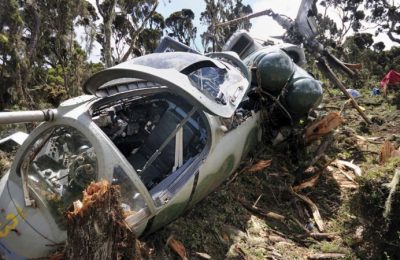
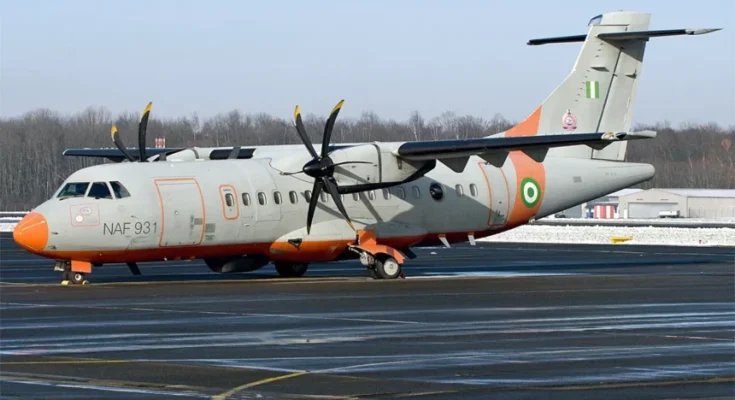
The Nigerian Air Force has constituted a board of inquiry to investigate the cause of a military aircraft crash that occurred in Igbokoda, a swampy area of Ondo State.
Also, recovery operations and preliminary investigations are underway, it was gathered.
Speaking on the investigation process, a military source confirmed that a board of inquiry, traditionally chaired by the Superintendent of Standards and Evaluation, was activated after the crash.
“A board of inquiry has been set up. Immediately after an aircraft crashes, we activated the board of specialists. The Superintendent of Standards and Evaluation is automatically the chairman of the board. It’s a permanent appointment. They have to be on the ground as they are recovering those things, because part of the recovery process forms part of the investigation,” the official stated.
Asked if the bodies had been recovered, the source said the response crew were facing hurdles at the crash site due to the dense vegetation and terrain.
The official added that a private construction firm provided specialised floating heavy equipment to clear thick vegetation in the swamp before recovery teams can access and extract the aircraft’s fuselage.
“I don’t think they’ve recovered all the bodies yet. The aircraft is deeply submerged in the swamp, and we are currently clearing the area. A construction company brought a floating buggy, or whatever it’s called. So, that’s what is clearing that path.
“Until we clear that part, we can look for what to use to lift the fuselage out of that swamp. It is going to take time before we can recover the bodies. The clearing operations remain ongoing at the site,” the source added.
Read Also:NAF releases names of personnel and passengers on ill -fated crash
28 burnt to death in Ondo crash
How Nigerian Airforce strike Killed 20 fishermen: Report
Addressing public speculation regarding the age and airworthiness of the aircraft, the military official dismissed claims that the plane was outdated.
The source clarified that the aircraft was a relatively modern acquisition delivered around 2010 and properly maintained.
When contacted, the NAF spokesman, Air Commodore Ehimen Ejodame, said a comprehensive investigation into the recent military aircraft crash is already underway under the direct order of the Chief of Air Staff, dismissing concerns over the non-constitution of a formal board of inquiry.
The Air Force spokesperson explained that the service relies on standard, established aircraft investigation protocols rather than ad hoc panels, adding that official findings will be made public once the preliminary report is concluded.
“The most important thing is that the Chief of Air Staff has directed a comprehensive investigation and the outcome of that one will be communicated. Whether it’s a board, committee, or a one-man army,” he said.
Rebutting reports circulating online that 32 or more casualties were involved, the spokesman explained how the Air Traffic Control terminology led to public confusion regarding the victims.
“For air traffic controllers, when they normally communicate ‘25 souls on board inclusive of seven crew’, it is minus the seven — the seven is in the 25. It doesn’t mean you add.”
Clarifying further, he explained, “In this case, there were 25 souls on board: five were active crew, then two were passengers, but they are crew. So, there are seven crew on board reported, but only five were flying at that time. The other two were on board as passengers.”
Meanwhile, Governor Lucky Aiyedatiwa on Wednesday visited the scene of the crash, 72 hours after the tragic incident.
He ordered that search and recovery operations should continue for the victims and the wreckage.
The ill-fated aircraft had yet to be removed from the swampy area where it crashed with 25 people on board on Monday.
Aiyedatiwa, who described the crash as a national tragedy, had declared that no survivor had been found at the scene as of the time of his visit, adding that only the pilot could have explained the cause of the crash.
The governor visited the site alongside personnel of the Nigerian Navy and Air Force, divers, the National Emergency Management Agency Director for the South-West, the State Emergency Management Agency Director, and residents who had participated in rescue efforts since Monday.
He described the scene as a “very gory sight”, with body parts, clothes and possessions of the victims and broken aircraft parts recovered and preserved for further investigation.
He said, “The main body of the aircraft has not been sighted, because it has been submerged in the swamp.”
According to him, the difficulty in accessing the site prompted him to direct the Ministry of Works to deploy two amphibious machines, popularly known as swamp buggies, to open wider access through the waterways.
“The machines have enabled rescue teams to move bigger boats closer to the crash site and are being used to excavate the swamp in search of other parts of the wreckage or the main body of the aircraft,” he noted.
The governor added that the aircraft had still not been sighted as of the time of his visit, while Navy personnel and local divers continued searching the deeper sections of the area.
As part of efforts to locate the wreckage of the aircraft, the Chief of Naval Staff, Vice Admiral Idi Abbas, ordered the deployment of the Nigerian Navy Hydrographic Department’s state- of-the-art sonar scan equipment to the scene of the incident.
The sonar was deployed to get a clear underwater picture of the mapped-out area due to the turbidity of the swamp.
The Flag Officer Commanding, Western Naval Command of the Nigerian Navy, Rear Admiral Abubakar Mustapha, disclosed this during the assessment visit to the scene of the crash on Tuesday.
Mustapha, who interacted with the technical crew and other recovery team, encouraged them to intensify efforts towards the prompt execution of the recovery operation, which involved collaboration by military formations, emergency response agencies, security organisations, technical personnel and other stakeholders.
The Mustapha-led delegation was received at the Officers’ Mess of the Forward Operating Base Igbokoda by the Commanding Officer, Navy Captain Andy Alemongwa, before proceeding to the base where government officials, community leaders, emergency management agencies and other stakeholders gathered to express their condolences and support for the Armed Forces.
Safety collaboration
The tragic incident at Igbokoda has prompted a fresh push for closer cooperation between Nigeria’s civil and military aviation authorities, with the Minister of Aviation and Aerospace Development, Festus Keyamo, and the Chief of Air Staff, Air Marshal Sunday Aneke, agreeing to deepen knowledge sharing and safety collaboration.
According to a statement released by the minister’s media aide, Tunde Moshood, the agreement was reached on Wednesday when Keyamo paid a condolence visit to the Chief of Air Staff following the crash.
After signing the condolence register, the minister reportedly met privately with Aneke before both leaders addressed journalists on plans to strengthen cooperation between the Nigerian Civil Aviation Authority and the Nigerian Air Force.
Keyamo expressed sympathy to the Air Force, describing the incident as a national tragedy and commending the courage and sacrifice of personnel.
“We value the Air Force. We value the efforts of the gallant men and women of the Air Force and what they do for the country,” the minister said.
He said the incident underscored the need to bridge the traditional divide between civil and military aviation, noting that accidents do not distinguish between the two sectors.
The minister said the Air Force already uses parts of the country’s civil aviation infrastructure, including air traffic control, making closer cooperation a natural next step.
He disclosed that he had contacted the Director-General of the NCAA and facilitated direct communication between the agency and the Chief of Air Staff.
Keyamo said, “It is one country, one people. When disaster happens, it affects everybody. There were civilians in that air crash, and when there’s an air crash in civil aviation too, there can be military personnel. And so, it is important that we cooperate in the area of safety.
“We have decided that we will cooperate in terms of capacity building.”
As part of the arrangement, Keyamo said a joint committee involving the NCAA and NAF would be established to promote cooperation in airworthiness, certification, training and other aviation safety areas, while respecting the statutory responsibilities of both institutions.
He also offered Air Force personnel access to relevant training programmes organised by the civil aviation authorities.
He stated, “There is no reason why we cannot take some names from the Air Force. We have a lot of training we go for, so there is no reason why we cannot,” he said.
Keyamo said the partnership would not be one-sided, stressing that the Air Force also possesses specialised expertise that could strengthen the civil aviation sector.
“This is a kind of cross-pollination and symbiotic relationship we have decided to build for the safety of the lives of Nigerians,” he stated.
Aneke thanked the minister for the condolence visit and his support for the Air Force, describing the gesture as evidence of the growing relationship between the two aviation sectors.
He said discussions were already underway on a framework that would allow civil aviation professionals to support the Air Force in areas such as airworthiness and certification, while military aviation personnel could also share their expertise with the civil sector.
Aneke welcomed the training opportunities offered to Air Force personnel, saying stronger professional capacity would ultimately improve aviation safety across the country.
He stressed that both institutions had a common duty to protect Nigerians, regardless of whether they operate in the civil or military aviation space.
The Chief of Air Staff stressed, “We have both agreed that we need to move the aviation industry, whether military or civil, to a higher level.
“We are serving the same government; we are protecting the same Nigerians. So we are just a blend of each other.”
‘Crashes too frequent’
The President of the Alumni Association of the National Institute for Security Studies, Mike Ejiofor, has called for a broader investigation into the operations, maintenance and condition of Nigeria’s military aircraft following the October 5, 2026 crash of a Nigerian Air Force aircraft in Ondo State.
Ejiofor, a former Director of the Department of State Services, made the call during an interview on Arise News on Wednesday, saying the frequency of military aircraft crashes had become a cause for concern.
“I think it’s becoming one too many—the incidents of air crashes involving the military. So I think the investigation should go, not the immediate cause of this, that should be looked into, but the frequent crashes of our military aircraft should be looked into.
“What is the state of maintenance of all these aircraft? How long have they been in service? What is the state of aircraft—we can’t continue to have—I think from records, from what I was reading, we’ve had over 10 crashes in the last 10 years. You remember the one that claimed the life of the Chief of Army Staff.
“So we should look into the general operations of the Air Force and look at them— I mean, it’s sad, very, very sad. So the government has taken the right initiative. It’s quite unfortunate, because this is the highest so far in military crashes of a number of casualties that were just recent, which is very sad,” he lamented.
Ejiofor also raised concerns over the conflicting figures initially reported about the number of people aboard the aircraft, saying the discrepancy pointed to weaknesses in record-keeping.
“It goes again to the issue of data keeping. It should have been easier to, or simple, to get the manifest and know the number of people. But you know the way we keep records, my only surprise, there might be more people in the aircraft who were not contained in the manifest.
“So I think that is what is responsible for the disconnect—the Aviation Minister saying a different thing, and the Air Force, the Defence, saying another thing. But I think we should rely more on the manifest of the aircraft if they actually complied with that—the people in the aircraft, their names were contained there in the manifest. And it’s a sad situation that this simple record-keeping can just have a conflict.”
On the difficulty in recovering the wreckage and victims, Ejiofor attributed the challenge to the terrain around the crash site and stressed the importance of recovering the aircraft’s black boxes.
“It’s the terrain. The terrain is very bad, and you’ll recall we had a case like that—I think in 2012—involving Dana Air where the aircraft dived into the deep; it was on a swamp, as to speak.
“So the terrain where this crash took place—and from what people have been saying, even though the investigation has not concluded- is that the pilot managed to avoid areas to reduce the number of casualties at the risk of his own life and the life of others.
“So, I think as the investigation goes on, we should be able to know what actually happened. But the fear is that, except the black boxes are recovered, the fear is that they lost contact, they lost signals from the aircraft as soon as it took off.”
Glitters online