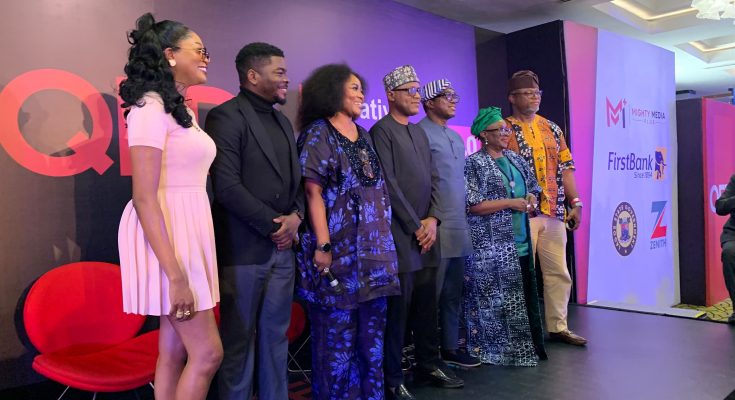

By Olajumoke Jegede
Nigeria’s creative industry can become a stronger driver of economic growth, job creation and national development if government and other stakeholders provide the structures, investment and policies needed to support creative professionals, stakeholders have said.
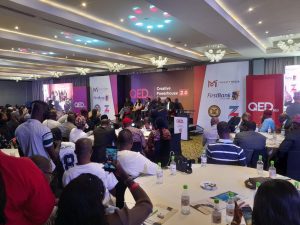
This formed the major focus of discussions at the second edition of the QEDNG Creative Powerhouse Summit, held on Tuesday at the Radisson Blu Hotel, Ikeja, Lagos.
The summit, organised by Mighty Media Plus Network Limited, publishers of QEDNG, was themed “Creativity, Culture and Nigeria’s Next Chapter.” It brought together professionals across the creative, media, technology, business and cultural sectors to discuss the future of Nigeria’s creative economy.
The event was hosted by comedian and compere Gbenga Adeyinka, while Olumide Iyanda, Publisher of QEDNG, delivered the welcome address.
In his opening remarks, the Chairman of the summit, Sir Demola Aladekomo, set the tone for discussions on the need to build a stronger creative economy.
Read Also:Intimate Affairs: The men who pay for sex, by Funke Egbemode
Lagos,First Bank, Zenith backs QEDNG Summit
Creative industry needs patient capital, fresh mindset, experts declare at QEDNG Summit
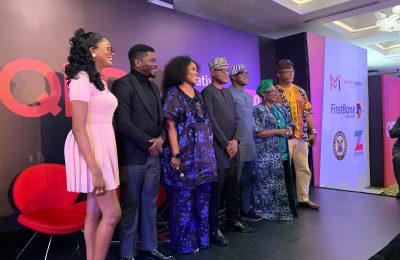
Faces of some stakeholders at the event:
The keynote address was delivered by Ife Adebayo, National Coordinator of the Investment in Digital and Creative Enterprises (iDICE) programme at the Bank of Industry. Adebayo, who has experience in technology, innovation and enterprise development, spoke on the importance of building structures that can support Nigeria’s creative ecosystem.
The first panel session, titled “Building Tomorrow’s Creative Economy Today,” was moderated by veteran journalist and culture advocate Steve Ayorinde. The panel featured Steve Babaeko, advertising executive; Omotayo Inakoju, media and intellectual property lawyer; Dr Olamide Okulaja, technical adviser to the Lagos State Ministry of Commerce, Cooperatives, Trade and Investment; and Anwuli Ojogwu, Co-founder/CEO, Narrative Landscape Press Ltd .
The session examined the challenges facing creative professionals and what must be done to make the industry more sustainable.
A recurring concern was the gap between the abundance of creative talent in Nigeria and the structures available to help those talents thrive.
Participants stressed the importance of investment, infrastructure and policies that would enable young Nigerians to turn their creative abilities into sustainable careers.
The second panel, “What Creatives Need from Nigeria,” was moderated by broadcaster and creative director Anike-Ade Funke Treasure.
The panel featured veteran actress Joke Silva, theatre practitioner and cultural administrator Yibo Koko, Founder, Buckwyld Media Network Efe Omorogbe, Actor , Media Personality &Brand Influencer Oluwabukunmi Adeaga-Ilori (KieKie) and technology and finance content creator Fisayo Fosudo.
The discussion broadened the conversation beyond entertainment, highlighting the importance of government policies, funding, safe working environments and opportunities for young creatives.
Stakeholders also considered the role of the creative industry in improving Nigeria’s international image. They argued that Nigeria possesses stories and talents capable of influencing how the country is perceived globally, but that more of these stories need to be deliberately documented and promoted.
The issue of government support featured prominently in the discussions, with calls for increased grants and the development of facilities that can provide creative professionals with appropriate environments to work.
Participants also examined the growing influence of social media and the need for young Nigerians to use digital platforms to promote productive creative work.
Another significant issue raised was the impact of artificial intelligence on jobs in the creative sector.
While AI was recognised as a technology capable of performing some tasks traditionally carried out by humans, the discussion emphasised that the technology still requires human direction and creativity to produce meaningful work.
Rather than viewing AI solely as a threat, the discussions suggested that creatives should learn how to adapt to the technology and use it as a tool to improve their work.
The conversations ultimately pointed to the need for a more deliberate approach to developing Nigeria’s creative economy.
The summit’s theme, “Creativity, Culture and Nigeria’s Next Chapter,” reflected the broader argument that creativity should not be treated merely as entertainment but as an important component of Nigeria’s economic and cultural development.
For a country with a large youthful population and a rapidly expanding digital space, stakeholders believe that investment in creative talent could generate employment, create new businesses and strengthen Nigeria’s cultural influence globally.
The QEDNG Creative Powerhouse Summit therefore ended with a clear message: Nigeria’s creative talent is abundant, but talent alone is not enough. Without the right structures, policies, investment and support, much of that potential may remain untapped.
The challenge now, stakeholders suggested, is to turn the conversations into practical action that gives Nigeria’s creatives the environment they need to build the country’s next chapter.