
……Allow constitutional institutions to work-Ex NUJ President tells Makinde
…….Says Nigerias security issues should not be externalised
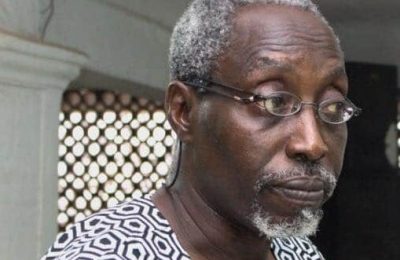
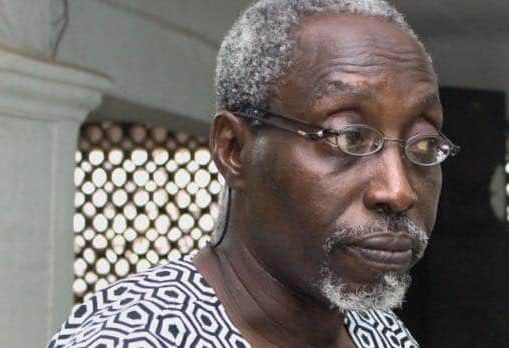
Lanre Ogundipe,Executive NUJ President
A former President of the Nigeria Union of Journalist,Lanre Ogundipe, has frowned at what he described as externalisation of issues surrounding abduction of pupils and teachers from Oriire Local Government saying institution of state already on investigations should be allowed to conclude their work.
Ogundipe in a statement Tuesday praised the security agencies for the rescue of the pupils and teachers adding that since they have continued investigations to unravel circumstances surrounding the abduction recent calls for international scrutiny of the abductions calls for public concern.
Oyo State Governor,Seyi Makinde it will be recalled last weekend called on the United Nations to investigative the abductions.
According to the former NUJ President, while accountability is indispensable in every constitutional democracy, it is equally important that ongoing investigations are not overtaken by political narratives or premature conclusions.”
Full statement below:
The successful rescue of the pupils and teachers abducted from schools in Oriire Local Government Area of Oyo State has brought immense relief to the nation. We thank Almighty God for preserving the lives of the victims and commend the Armed Forces, the intelligence community, the Nigeria Police Force, the Nigeria Security and Civil Defence Corps, Amotekun Corps, local hunters, vigilantes and all those whose professionalism, courage and sacrifice made the operation successful. We equally honour the memory of the teacher who tragically lost his life in captivity and the gallant security personnel who paid the supreme price in the course of the rescue mission.
Also Read:Oriire abduction: Makinde seeks UN probe, mourns victims
War against Terrorism: Adeboye, Oyedepo thank Trump, seek more US action
Rescue of Abducted Children:Tinubu commends security operatives
With the rescue now accomplished, public discourse has understandably shifted to questions of accountability. Recent calls in some quarters for international scrutiny of the incident reflect genuine public concern.
However, while accountability is indispensable in every constitutional democracy, it is equally important that ongoing investigations are not overtaken by political narratives or premature conclusions.
The Defence Headquarters has officially stated that the rescue resulted from a carefully coordinated, intelligence-led operation involving multiple security and intelligence agencies over several weeks and that further investigations and follow-up operations remain ongoing. The nation should therefore allow these investigations to proceed to their logical conclusion without undue interference or premature externalisation.
At this stage, no public evidence has been presented to demonstrate that Nigeria’s constitutionally established investigative, oversight and accountability institutions are unwilling, unable or legally incapable of discharging their responsibilities in relation to this incident. It is therefore both prudent and constitutionally appropriate that these institutions be allowed to complete their work before recourse is sought to external accountability mechanisms.
International cooperation remains an important feature of contemporary democratic governance. However, such engagement should ordinarily complement, not supplant, domestic constitutional processes. Constitutional democracies derive their legitimacy not by claiming perfection but by demonstrating the capacity to investigate, correct and reform themselves through institutions established by law. Confidence in those institutions is strengthened when they are allowed to function independently and without prejudice.
This unfortunate incident should also provoke sincere institutional introspection at every level of government. Accountability follows constitutional responsibility. The Federal Government, State Governments, Local Governments and every institution whose statutory responsibilities relate to forest governance, rural administration, intelligence, education and public safety should objectively examine whether their respective obligations were effectively discharged before, during and after this tragic incident. No institution should be exempt from lawful scrutiny, and none should be condemned without due process.
This intervention should not be misconstrued as opposition to international engagement, nor as an attempt to shield any public institution or public office holder from legitimate scrutiny. Rather, it is an affirmation of the constitutional principle that accountability should ordinarily begin within the institutions established by the Federal Republic of Nigeria. Should those institutions ultimately prove unwilling, unable or legally constrained to discharge their responsibilities, other lawful avenues of accountability may then be considered.
This is not the time for partisan recrimination or political triumphalism. It is a moment for constitutional fidelity, institutional self-examination and evidence-based reforms. The rescue of the Oriìre pupils and teachers deserves national celebration. The lessons arising from their ordeal demand lasting reforms to strengthen governance, restore public confidence and prevent similar tragedies.
The integrity of this national moment will ultimately be measured not by the volume of competing political narratives, but by the courage of our institutions to follow the evidence wherever it leads—without fear, favour or political convenience.
Lanre Ogundipe
Public Affairs Analyst
Former President, Nigeria and Africa Union of Journalists (NUJ/AUJ) writes from Abuja.
14 July 2026