
I tried to save Ironsi’s life during July 29, 1966 coup but failed – Gowon
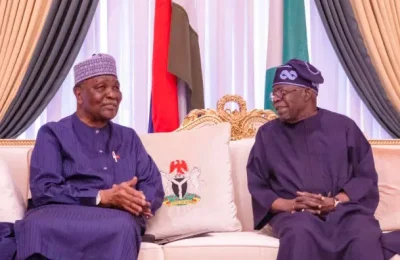
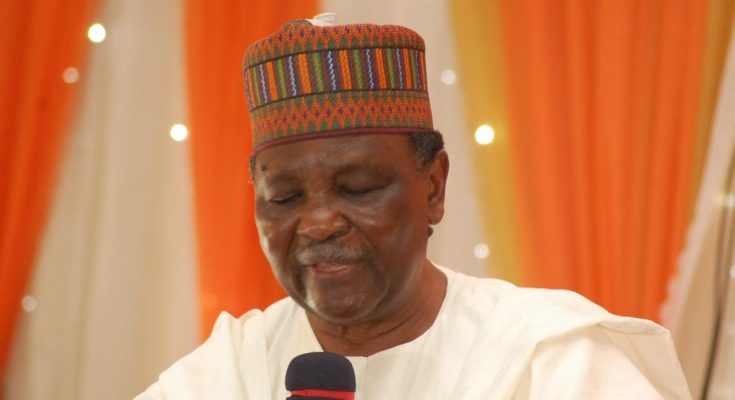
General Yakubu Gowon, Nigeria’s former head of state, on Tuesday recounted how he tried to save the life of his former boss, former military head of state General J.T.U. Ironsi, during the counter-coup of July 1966.
Yakubu Gowon
General Yakubu Gowon, Nigeria’s former head of state, on Tuesday recounted how he tried to save the life of his former boss, former military head of state General J.T.U. Ironsi, during the counter-coup of July 1966.
The former Head of State recollected the events in his autobiography with the title My Life of Duty and Allegiance, which was launched in Abuja Tuesday.
Ironsi was assassinated during a counter-coup on July 29, 1966, in Ibadan. He had seized power during the ensuing chaos after the January 15, 1966, military coup. Ironsi ruled from January 16 until his assassination. He was killed alongside his host and the first military governor of the former Western Region, Col. Adekunle Fajuyi.
Recalling the events of Friday, July 29, 1966, Gowon said he received a phone call at about midnight from Major Martin Adamu, who told him that a mutiny had broken out in Abeokuta.
The mutiny, he said, was triggered by rumours of the disarming of Northern commanding officers and soldiers in the barracks by the Commanding Officer, Col. Gabriel Okonweze.
He said, “My immediate worry was that General Ironsi’s life might be in danger if I did not make an effort to reach him as quickly as possible to give him a situation report.”
Gowon noted that Ironsi’s original itinerary was to return to Lagos by road from Ibadan through Sagamu-Ikorodu or Ibadan-Abeokuta.
“I reckoned that if a mutiny had broken out in Abeokuta, it would be unsafe for him to travel via the city, and Ikorodu would have been blocked by the mutineers. In the end, I felt it might be a lot safer for him to fly from Ibadan to Lagos.
“On impulse, I called the airport at Ikeja to instruct Major Paul Dickson, who oversaw the airport, to send a helicopter to Ibadan to evacuate the Supreme Commander. At once, he responded, “Yes, Sir.”
The former head of state, however, noted that Major Dickson had no intention of carrying out the instruction because he was a member of the group that planned the uprising.
“I therefore called the Government House, Ibadan, intending to give General Ironsi the sitrep, advise him to avoid Abeokuta, and intimate him of the contingency plan I had made to keep him safe. But I did not realise that by this time the mutineers had closed in on Government House.”
He added that he was surprised when the operator passed the call to Major Theophilus Danjuma, who told him he was Ironsi’s escort for the tour that was ending in Ibadan.
“I requested that he pass the call to the Supreme Commander, but he told me it would not be possible then, as Ironsi had been placed under close arrest by some officers. The presence of so many hot-headed young officers from the North at the scene momentarily unsettled me because they felt hurt by the events of January 15, 1966 and were, therefore, capable of doing anything,” he recalled.
He stated that while it would be pointless to issue a desist order, he instructed Danjuma to handle the situation with extreme caution to prevent needless bloodshed.
“Not willing to take chances, I instructed him to ensure that Ironsi was kept safe.”
Gowon said he suggested to Danjuma that Ironsi should be moved to Bida or somewhere close to Ilorin, which he considered relatively safe.
“I kept my phone line open after the brief discussion with Danjuma in the hope that there would be follow-up calls from him. Unknown to me, however, as I would later learn, the Supreme Commander and his host governor, Col. Adekunle Fajuyi, had already been taken away in a Land Rover by their abductors without waiting for Danjuma to give them any last instructions,” the former head of state said.
Meanwhile, Gowon has called on Nigerians to ignore naysayers, adding that the country will not fail as a result of the 2027 general elections.
He stated this during the public presentation of his autobiography at the Bola Ahmed Tinubu International Conference Centre, Abuja, on Tuesday.
The former military Head of State said he only needed to tell his truth, not take issue with anyone or sit in judgment over what is right or wrong.
He said speaking out became necessary because his “story and that of Nigeria became intertwined,” adding that the book reflects his modest attempt to document the opportunity he had to serve Nigeria.
Ahead of the 2027 election, he advised Nigerians against listening to “naysayers,” maintaining that the nation, which did not fail under his watch, will never fail despite the country’s challenges.
President Bola Tinubu, who was represented at the event by Vice President Kashim Shettima, described Gowon’s autobiography as an important national document that offers guidance for Nigeria’s future, regional cooperation, and the preservation of national unity. The Nigerian leader particularly called for the wide circulation of the memoir across the country, noting that it is a civic inheritance for all Nigerians.
Tinubu said the reflections of leaders who witnessed defining moments in the nation’s history remain essential to strengthening democratic stability and national cohesion. According to a statement by the Vice President’s spokesman, Stanley Nkwocha, President Tinubu said Nigeria must preserve its historical memory to avoid repeating past mistakes, stressing that societies that fail to learn from their history risk drifting into division and uncertainty.
“A nation that misplaces its memory soon begins to quarrel with its own reflection. A society without memory becomes an orphan in time,” he said.
President Tinubu observed that the former Head of State’s account arrived at a time when Nigeria and the wider West African region continue to grapple with insecurity, economic pressures and social fragmentation, making the lessons of reconciliation and statesmanship even more relevant.
The Nigerian leader praised Gowon’s post-civil war reconciliation efforts, particularly the declaration of “No victor, no vanquished,” describing it as one of the defining principles that helped preserve Nigeria’s unity after the civil war.
He said peace and national healing require deliberate policies built on trust, inclusion, and shared citizenship.
“The decisions of that period cannot be understood by those who examine them with the arrogance of comfort. Every generation that inherits peace must learn to speak gently about the choices made in the season of peril,” he said.
The president added that national unity must be sustained through institutions and policies that encourage interaction, fairness and mutual understanding among citizens.
He highlighted the role of the National Youth Service Corps as one of the enduring legacies of Gowon’s administration, saying the programme has helped bridge ethnic, cultural and religious divides across generations.
According to him, shared national experiences remain vital to building a stronger federation and deepening trust among Nigerians.
President Tinubu also said Gowon’s life stands as a rebuke to divisive narratives that attempt to reduce Nigeria’s diversity into rigid regional or religious stereotypes.
“His story teaches us that the Nigerian project becomes stronger when a citizen refuses to become a weapon in the hands of sectarian entrepreneurs,” the president said.
On regional affairs, the president commended General Gowon’s role in establishing the Economic Community of West African States, describing the regional body as one of the continent’s most important platforms for economic cooperation and collective security.
He said the founding vision behind ECOWAS remains critical as West Africa confronts terrorism, political instability and economic disruption.
“We need cooperation against insecurity. We need trade that empowers our young people. We need diplomacy that prevents conflict from becoming contagious,” he said.
The president maintained that Nigeria’s prosperity and security are closely tied to the stability and development of neighbouring countries.
President Tinubu said General Gowon’s influence extends beyond his years in office, describing him as a statesman whose commitment to peace, unity and national service has endured across generations.
On his part, former President Goodluck Jonathan, who was the chairman of the occasion, described the book as a fitting presentation of the living testimony and reflection of a leader during Nigeria’s turbulent history.
He said the former leader deserved commendation for his farsightedness and vision for a united and prosperous nation, which, according to him, is manifested in the many legacies of General Gowon.
Jonathan observed that memoirs such as My Life of Duty and Allegiance will help preserve institutional memory and deepen public understanding of critical phases and decisions in Nigeria’s history.
Also Read:Obasanjo, Gowon, Ooni join First Lady of Nigeria at 2025 Christmas Carols,
Alleged coup plotters arraigned remanded in DSS custody
In his review of the book, the Bishop of the Catholic Diocese of Sokoto, His Lordship Matthew Kukah, noted that the book is a vivid account of Nigeria’s turbulent history through a civil war and General Gowon’s personal travails and life’s journey, which is important as the nation continues to navigate through similar challenges.
He added that different sections of the book provide valuable insights into events during the General’s reign as Head of State, noting, however, that no autobiography summarises history in totality, as each account presents a particular point of view.
While praying for Nigeria’s continued unity and progress, Bishop Kukah assured the gathering of God’s continuous favours and blessings for the country, noting that “God will continue to do great things for Nigeria.”
In his welcome address, the CEO of Havilah Group, Akogun Lanre Adesuyi, emphasised the significance of publishing biographies and autobiographies as a civic duty that goes beyond keeping records to the preservation of history and promotion of thought leadership as critical tools for national development.
He said the publication of the Gowon autobiography was a befitting icing on his career as a publisher and preservation of Nigeria’s cherished history, describing the book as a quintessential history to be read by students and enthusiasts of Nigeria’s historical development.
Also present at the event were former Head of State, Gen. Abdulsalami Abubakar; representative of the First Lady of Nigeria, Sen. Oluremi Tinubu; former First Lady of Nigeria, Dame Patience Jonathan; Governor of Plateau State, Barr. Caleb Mutfwang; Minister of Budget and Economic Planning, Sen. Atiku Bagudu; Minister of Arts, Culture and Creative Economy, Hannatu Musawa; Minister of Defence, Gen. Christopher Musa; Sultan of Sokoto, His Eminence Muhammad Sa’ad Abubakar III; CAN President, Archbishop Daniel Okoh; serving and retired senior military officers, as well as traditional and religious leaders, among others.