In 1963, when the winds of liberation still trembled across Africa, Nigeria declared that the freedom of the continent was incomplete while apartheid endured in South Africa. Nigeria gave not merely speeches, but money, diplomacy, scholarships, oil support, and moral muscle to the African National Congress (ANC). Nigerian workers voluntarily contributed to the “Mandela Tax.” Nigerian musicians sang against apartheid. Nigerian students marched. Nigerian passports became symbols of African solidarity. There were other “unspeakable” things that the military regime led by Chief Obasanjo did to assist South Africans in their quest for freedom.
Today, history watches with disbelief as Africans, especially Nigerians, Ghanaians, Tanzanians, Zimbabweans, Mozambicans, and Congolese are hunted, humiliated, and killed sometimes striped naked and beaten to death on South African streets in daylight.
The tragedy is not merely xenophobia. It is Africa consuming itself.
South Africa’s democratic rebirth in 1994 was celebrated from Lagos to Nairobi. Yet, paradoxically, post-apartheid South Africa also birthed one of the continent’s most persistent anti-immigrant crises. According to Xenowatch and migration reports, xenophobic violence since 1994 has led to more than 669 deaths, over 127,000 displacements, and more than 5,000 looted migrant-owned shops.
The major explosions occurred in 2008, 2015, 2019, and now again in 2026.
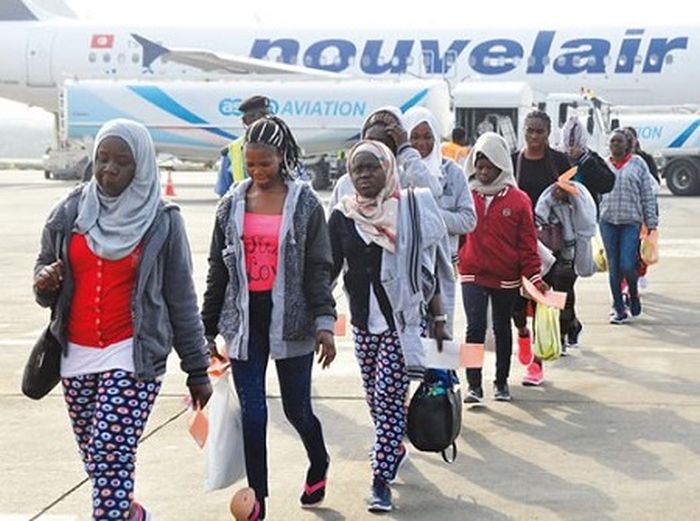
This week alone, Nigeria confirmed that at least 130 Nigerians requested emergency repatriation from South Africa after renewed anti-foreigner protests in Pretoria and Johannesburg.
Ghana, Kenya, Zimbabwe, Malawi, and Lesotho have all issued warnings to their citizens.
Why are Africans targeted? The answers are painful but layered.
South Africa battles one of the world’s worst unemployment rates—above 30 percent.
Millions of poor South Africans live amid inequality that apartheid structurally created. Into this combustible environment entered migrants willing to work harder, longer, and often cheaper. Nigerian traders dominate informal commerce in some districts; Zimbabweans fill labor gaps; Somalis run township shops; Congolese and Ethiopians compete aggressively in micro-enterprise. Migrants became convenient scapegoats for state failures.
Ancient Greek philosopher Plato warned that “the price good men pay for indifference to public affairs is to be ruled by evil men.” South African politicians, fearful of confronting corruption, unemployment, crime, and collapsing municipal systems, have too often tolerated dangerous populism against foreigners.
Groups like Operation Dudula openly mobilize against migrants. Some politicians flirt with anti-immigrant rhetoric. Viral videos of Africans being forced to produce identity papers evoke chilling memories of apartheid “pass laws”. Worse still, some security operatives are accused of complicity or selective silence. Nigeria recently demanded investigations into the deaths of two Nigerians allegedly assaulted by security officials.
Yet, the South African government’s position remains conflicted. President Cyril Ramaphosa and ministers routinely condemn xenophobic violence publicly, while simultaneously acknowledging citizens’ frustrations over illegal immigration. This duality unintentionally legitimizes extremists.
But here lies the deeper African tragedy: Why do migrants remain despite the violence?
Also Read:Again,Nigerians under attack in South Africa as xenophobic violence erupts
Because many African states have failed their own citizens. Nigerians endure South Africa because even danger abroad can appear economically preferable to hopelessness at home. Ghanaian traders stay because remittances feed families. Tanzanians, Zimbabweans, and Mozambicans persist because survival has become transnational. Africa’s migration crisis is therefore not merely South Africa’s problem indeed, it is the mirror of continental governance failure.
Thomas Hobbes once described life without security as “solitary, poor, nasty, brutish, and short.” That description now stalks African migrants in parts of South Africa.
The solution must be continental, not emotional. The African Union must establish enforceable migrant-protection protocols. Nigeria and other African powers must stop reacting episodically and begin negotiating binding bilateral protections. South Africa must prosecute xenophobic violence as domestic terrorism, not “community unrest.” African governments must urgently create economies strong enough that migration becomes a choice—not desperation.
Otherwise, the dream of African brotherhood will remain buried beneath the ashes of burned shops, broken families, and brothers killing brothers on African soil.