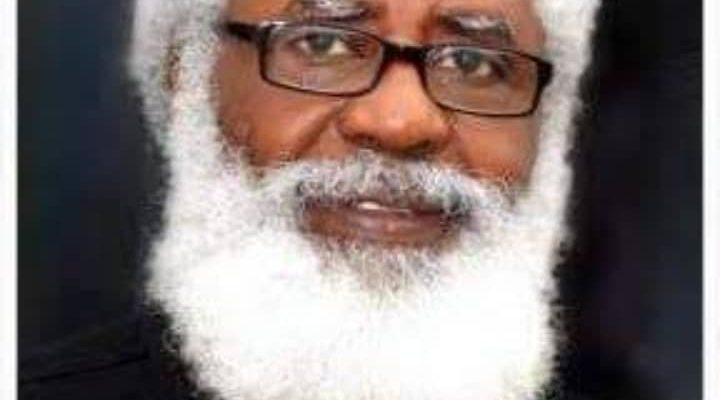

By Yemi Farounbi
Ambassador Yemi Farounbi, OON, iconic media administrator and former ambassador to the Philippines and Cambodia, gave this keynote address in Ibadan on Monday April 13, 2026, at the 70th post-humous birthday of Tunde Idowu, an ace broadcaster who died during the eerie days of military dictatorship, when fuel scarcity compounded the public angst against the annulment of the June 12 presidential election in Nigeria.
In the 80s Dr. Farounmbi was General Manager , NTA, Ibadan and NTA, Akure, where he made a lot of impact particularly in the area of entertainment. As director of information in the old Oyo State, he led the team that established the Television Service of Oyo State, TSOS (now BCOS TV) in the administration of late Chief Bola Ige. When the Ondo State government wanted to establish the Ondo Radiovision Corporation, he was the one the state government commissioned to the job. He was to later chair the board of the Osun State Broadcasting Corporation, OSBC, a tenure that witnessed a turn around at that broadcast company.
Either as administrator or lecturer at the University of Ibadan, he has mentored scores of people in the media. He also has to his credit the authorship of the scripts that produced a number of films and crowd-pulling television dramas like ARELU. Aside from the innovations in the electronic media, Farounmbi also wrote columns for the defunct Daily Sketch and the Nigerian Tribune. He published a light hearted magazine known as LADY LOVE. Before the administration of Chief Olusegun Obasanjo sold the Daily Times Plc, he had spent four years working to reposition the media company.
He was an ambassador to the Philippines, during which time he worked tirelessly to improve the cultural and trade relations between that country and Nigeria. .
Introduction: The Noble Calling and Its Hidden Cost:
Journalism in Nigeria is more than a professionit is a calling. A calling to speak truth to power, to amplify the voices of the unheard, and to defend the fragile pillars of democracy. Yet, beyond the headlines we write and the stories we break lies a quieter, often ignored reality: the cost of doing this work. These are not always the dangers we signed up for. They are the unintended hazardsthe risks that creep in quietly, shaping our lives, our safety, and even our sanity.
The Hazard of Physical Danger:
We have seen colleagues brutalised while covering protests such as the End SARS protests. We have seen reporters caught in the crossfire of insurgency, particularly in areas affected by Boko Haram. The simple act of holding a microphone or a camera has, in many instances, become an act of courage.
The Hazard of Silence Through Fear:
There is a growing, unspoken danger in our profession not just violence, but fear.
Fear of arrest.
Fear of lawsuits.
Fear of losing ones job.
When journalists begin to self-censor, democracy itself begins to suffocatenot loudly, but quietly.
The Hazard of Economic Vulnerability:
Let us speak honestly.
Many journalists in Nigeria operate under harsh economic realities:
Poor remuneration
Irregular salaries
Lack of insurance and welfare
This creates a dangerous environment where integrity is constantly under pressure, and survival sometimes competes with ethics.
When journalists begin to self-censor, democracy itself begins to suffocatenot loudly, but quietly.
(Journalism practice in Nigeria) demands courage not just to report the truth, but to live with its consequences
The Hazard of Psychological Burden:
We report tragedies, but we rarely process them. We tell the stories of victims of violence, disasters, and lossbut who tells the story of the journalist? Behind the bylines are human beings carrying invisible wounds:
Trauma
Anxiety
Emotional exhaustion
The newsroom does not always provide space for healing.
The Hazard of Digital Exposure:
In todays digital age, the battlefield has expanded. Journalists are now targets of:
Online harassment
Cyberbullying
Misinformation attacks
Surveillance
A single report can unleash a storm that follows a journalist beyond the newsroom and into their personal lives.
The Hazard of Ethical Crossroads:
Every journalist, at some point, stands at a crossroads:
Truth or convenience?
Integrity or compromise?
Public interest or personal safety? These decisions shape not only our profession but our legacy.
A Call to Reflection
Ladies and gentlemen,
If journalism is the watchdog of society, then who watches over the watchdog?
If we are defenders of democracy, then who defends us?
The Way Forward:
A Collective Responsibility:
To address these unintended hazards, we must act collectively and decisively.
Strengthen Institutional Protection:
Media organizations must prioritize the safety and welfare of their staff.
Also Read:Faces at the Media Career Fix Programme
Advocate for Press Freedom:
We must continue to demand laws and policies that protect, not persecute, journalists.
Invest in Journalist’s Welfare:
Insurance, mental health support, and fair wages are not luxuriesthey are necessities.
Uphold Ethical Standards:
Even in the face of hardship, integrity must remain our compass.
Build Solidarity Within the Profession:
An injury to one journalist must be treated as an injury to all.
Closing:
The Courage to Continue:
Let me conclude with this:
Journalism in Nigeria is not for the faint-hearted. It demands couragenot just to report the truth, but to live with its consequences.
Yet, despite the hazards, we continue.
We write.
We speak.
We expose.
We endure.
Because somewhere in this country, a citizen depends on the truth we tell. And that truthno matter how dangerousis worth defending.
Final Charge:
Let us leave here today not discouraged, but resolved:
To protect one another
To strengthen our institutions
To preserve the dignity of our profession
And above all, to continue telling the Nigerian storytruthfully, courageously, and responsibly.
Thank you.