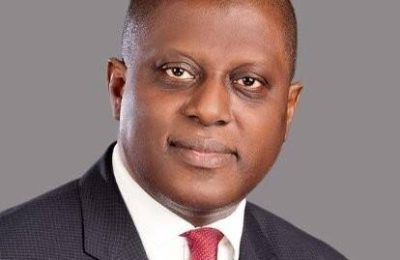
Olayemi Cardoso
Olayemi Cardoso, governor of the Central Bank of Nigeria (CBN), says the removal of petrol subsidy and expenditure rationalisation have helped to rebalance public finances and create fiscal space for productive investment.
Cardoso spoke on Friday during a press briefing on the sidelines of the annual meetings of the International Monetary Fund (IMF)/World Bank in Washington DC, the United States (US).
President Bola Tinubu announced the end of the petrol subsidy on 29 May 2023 during his inauguration.
But Nigeria fully exited subsidy in October 2024 when the federal government deregulated the downstream sector.
Speaking on the reforms, Cardoso said they have created room in the fiscal framework for more productive investments.
“The removal of fuel subsidies and expenditure rationalisation have helped to rebalance public finances and create fiscal space for productive investment.
“Bold reforms undertaken over the last two years have set a foundation for Nigeria to pursue the next phase of its economic agenda, driving inclusive growth and job creation to alleviate poverty.
“Critical initiatives are underway around infrastructure and human capital development, creating opportunities for the deployment of private sector capital in this journey.
“Public finances are in better shape, with rising revenues from the non-oil sector providing much-needed diversification and fiscal stability and reduced insecurity in oil-producing areas.”
Cardoso said targeted incentives have increased production and attracted over $8 billion in new energy investments.
Although he did not list the incentives, the economist said advanced analytics and artificial intelligence (AI) are also being leveraged to “strengthen monetary operations, enhance forecasting, and improve policy transmission, ensuring decisions are data-driven and forward-looking.”
On October 14, the presidency announced that, following Shell’s final investment decision (FID) on the HI gas project, total upstream investment commitments have risen to $8 billion since Tinubu assumed office.
Read Also:Economic Reforms:Nigeria saves $20bn-Edun
Subsidy regime is gone-FG insists
Further speaking, Cardoso said the naira continues to appreciate, with the gap between the official and parallel market rates now below 2 percent.
The CBN governor said the country’s foreign reserves now exceed $43 billion, offering over 11 months of forward import cover, driven by steady inflows and growing investor confidence across asset classes.
On the fiscal side, he noted that the federal government is advancing reforms aimed at enhancing revenue mobilisation, reducing the cost of governance, and directing spending toward infrastructure, education, and healthcare.
Newmail