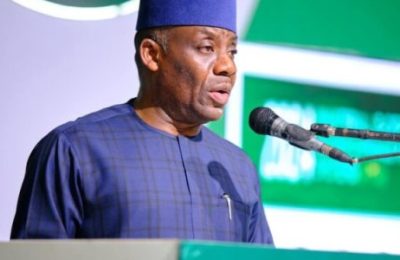
NNPC CEO Bayo Ojulari
NNPC CEO Bayo
Minister of Finance and Coordinating Minister of the Economy, Wale Edun, has announced a forensic audit of the Nigerian National Petroleum Company (NNPC) Limited, signalling renewed commitment to transparency and accountability in Africa’s largest oil producer.
Speaking at the Nigerian Investor Forum on the sidelines of the IMF and World Bank Spring Meetings in Washington DC, Edun told global investors—including representatives from J.P. Morgan and other financial institutions—that the audit aims to clarify NNPC’s historical financial operations and strengthen confidence in Nigeria’s economic reset.
“There’s a forensic audit of NNPC underway so that we can really understand what has happened in the past,” Edun said.
“We’re also undertaking a reconciliation of the arrears NNPC claims, particularly in relation to the fuel subsidy period.”
The forensic audit follows a series of allegations and financial discrepancies linked to the NNPC’s previous operations under former GCEO Mele Kyari.
The move also underscores the Tinubu administration’s wider reforms to improve fiscal discipline and attract capital into Nigeria’s oil and gas sector.
Background: NNPC Under Scrutiny
The NNPC has faced sustained criticism over opaque transactions, unremitted taxes, and controversial oil-backed loans.
The Nigeria Extractive Industries Transparency Initiative (NEITI) reported in 2023 that the company failed to remit $2 billion in taxes before its conversion into a limited liability entity. The NNPC denied the claims.
In December 2024, federal auditors began probing a ₦2.7 trillion subsidy refund claim made by NNPC. The following month, the Auditor-General’s Office flagged several financial irregularities in its report, raising pressure for a structural overhaul.
President Bola Tinubu, who campaigned on reform and energy sector revitalisation, responded with sweeping leadership changes on April 2. He appointed Bayo Ojulari as GCEO, replacing Mele Kyari, and named Ahmadu Musa Kida as non-executive chairman of the board.
On April 4, the company announced a fresh eight-member executive team to drive performance, governance, and investment attraction.
Reconciliation and Revenue Priorities
According to Edun, while NNPC has legitimate claims linked to the gradual removal of petrol subsidies—announced in May 2023 but implemented in phases—a full reconciliation is ongoing to determine accurate liabilities and ensure fiscal integrity.
“NNPC needs to come to the table with more oil production, more dollar revenue, and more contributions to the federation,” Edun emphasised. “That’s the mandate they have been given—and I believe they will deliver.”
Outlook: Reforms, Investment, and Oil Ambitions
New NNPC chief Bayo Ojulari has outlined a bold vision for the company’s future, pledging to attract $60 billion in sectoral investments by 2030.
His administration targets a ramp-up of Nigeria’s crude oil production to 2 million barrels per day (bpd) by 2027, with an ambitious goal of 3 million bpd by 2030.
These targets come as Nigeria battles with underinvestment, pipeline vandalism, and oil theft, which have kept production below OPEC quotas in recent years.
The success of the forensic audit—and subsequent reforms—will be key to unlocking investment and boosting export revenues critical to Nigeria’s fiscal stability.
Meanwhile, investors and multilateral institutions are watching closely for transparency improvements, stronger governance, and a credible path toward monetising Nigeria’s vast energy reserves.
Also Read:Photo News:NNPCL/Chevron concludes Conversion of Assets to PIA
Global Financial Digest Insight:
The forensic audit of NNPC could be a litmus test for President Tinubu’s broader economic reform agenda.
If implemented transparently and followed by enforcement actions or structural changes, it may help restore trust in Nigeria’s extractive sector—a vital source of revenue for a country seeking to stabilise its currency, attract capital inflows, and deliver on its energy transition goals.