
Tank Farms In Nigeria
Tank Farms In
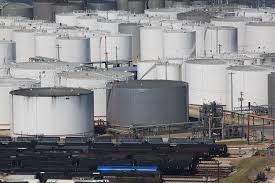
Nigeria’s downstream oil sector is witnessing a sharp decline in tank farm operations, with no fewer than 70 storage depots ceasing operations in the past two years.
This downturn, which accounts for 65% of the country’s 120 approved facilities, reflects the industry’s struggle to adapt following the removal of the fuel subsidy and the rise of local refining alternatives.
Once a crucial part of Nigeria’s fuel distribution network, these tank farms now stand idle as marketers and retailers bypass traditional storage systems in favour of direct trucking from refiners.
The shift comes as the market adjusts to a new pricing reality, following President Bola Tinubu’s decision to end fuel subsidies in May 2023.
Fuel Subsidy Removal Reshapes Market Dynamics
The elimination of government subsidies led to a staggering 488% surge in petrol prices, squeezing the purchasing power of fuel marketers and rendering many tank farms unviable.
Additionally, new supply chain dynamics—driven by Dangote Refinery’s entry into the mainstream market—have created an uneven competitive landscape.
Last year, business mogul Femi Otedola advised depot and tank farm owners to sell off their facilities before it became too late, when the Dangote Refinery came on stream.
While commending the launch of Dangote Refinery, Otedola stated, “The depot owners should take heed—it’s time to dismantle those depots and sell them as scraps while the market is still high. The world has changed, and those who do not adapt will be left behind.”
Otedola, Chairman of Geregu Power Plc, argued that the advent of the Dangote Refinery necessitates a shift in the fuel distribution landscape.
However, Iheanacho, a member of the Depot and Petroleum Products Marketers Association of Nigeria (DAPPMAN), has countered this stance, emphasising the continued crucial role of depots in the nation’s fuel supply chain.
“While there might be competitive elements in the market, collaboration and cooperation are essential for ensuring a stable fuel supply in Nigeria,” Iheanacho stated, refuting the notion that depots are obsolete.
He clarified that these facilities are not replacements for primary fuel sources like the Dangote Refinery or NNPC Limited, but rather vital components for storing and efficiently delivering fuel to consumers, particularly in a country with extensive and varied infrastructure.
In his rebuttal, Iheanacho underscores the vital storage and distribution support that depots provide, not only to NNPCL and the Dangote Refinery but also to petroleum importers. 1 He maintains that their presence ensures a more efficient and reliable fuel supply network, countering Otedola’s call for their immediate disposal.
In a turn of events, operators are now shutting down their tank farm due to the decline in functionality of tank farms, which started on May 29, 2023, when subsidy removal and deregulation took full effect. Their capital base tripled, while profits dwindled.
According to operators, the situation worsened in October 2024 when Dangote Refinery’s “naira-for-crude” pricing model gave it an extraordinary competitive advantage over importers and depot owners.
Many tank farm operators, unable to keep up with rising costs and dwindling margins, have shuttered their facilities, leased them out, or put them up for sale.
Market Leaders Dominate Fuel Distribution
Despite the downturn, a few tank farms remain operational across key regions. Data from Petroleumprice.ng indicates that out of 120 listed depots, only about 50 remain functional:
Lagos Axis: 30 active depots, led by NIPCO, AITEO, RAINOIL, and A.A. Rano.
Warri/Ogbara Axis: 10 functional depots, dominated by Matrix and AYM Shafa.
Port Harcourt/Onne Axis: 6 operational depots, with Bulk Strategic, SIGMUD, and Liquid Bulk as market leaders.
Also Read:Ali Baba, April Fool’s And The Media
Let’s have a tour of Port
Harcourt Refinery,NNPCL challenges Obasanjo
Lekki Deep Sea Port at a glance!
Obasanjo envious of Tinubu says Yoruba group
Stoppage of sale of crude in Naira: Anxiety over anticipated increase in prices
Calabar Axis: 4 active storage facilities, primarily operated by Sobaz and Mainland.
Dangote Refinery’s Impact on Distribution
Industry insiders point to Dangote Refinery’s pricing strategy and gantry-loading operations as key factors reshaping the fuel distribution market. Unlike traditional suppliers who rely on tank farm storage, Dangote’s direct-to-retailer sales model has disrupted longstanding industry structures.
Many depot owners are unhappy with Dangote Refinery because of its gantry loading system and high ship prices. This has discouraged some tank farm operators from patronising the refinery.